




Berberine Chloride Powder Factory Supply for OEM and Private Label
When searching for a reliable partner to supply high-purity Berberine Chloride Powder for your formulations, selecting a manufacturer with proven production capacity, comprehensive certifications, and flexible OEM and private label services becomes essential. We understand that procurement managers and formulators require not just a raw ingredient, but a strategic partner capable of delivering consistent quality, technical support, and scalable solutions tailored to nutraceutical, pharmaceutical, and cosmetic applications across global markets.
Understanding Berberine Chloride Powder: Properties and Benefits
What Makes This Compound Unique for B2B Applications
People in business to business can only use this combination. You can get berberine in the form of berberine chloride powder. Berberine is a quaternary benzylisoquinoline alkaloid that is mostly found in plants like Phellodendron amurense and Coptis chinensis (Goldthread). Broad-spectrum plant extracts have different amounts of active ingredients. This one substance, on the other hand, gives exact dose information that is needed for pharmaceutical-grade goods. It works for longer because the chloride salt form is more solid than the sulfate types. This is a big deal that impacts both how well your product works and how happy your users are with it.
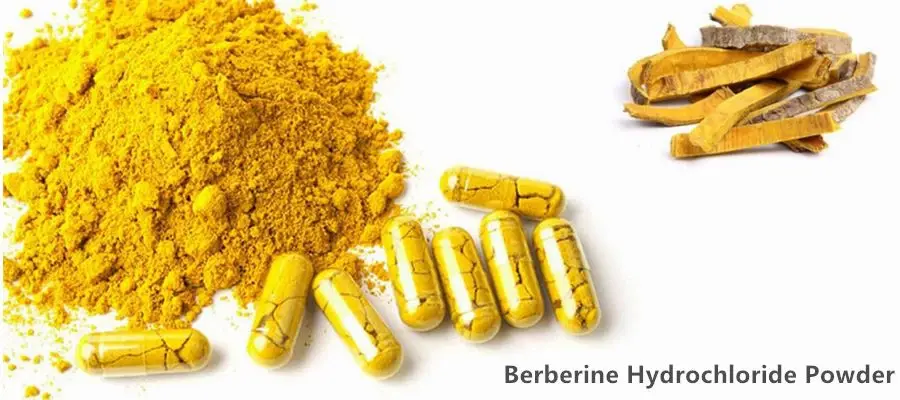
At Avans NutriHealth, the first step in making something is picking out the right Coptis plants. Then, we use modern extraction methods that protect the bioactive properties of the compound. The yellow crystalline powder that was made is 98% to 99% pure, according to HPLC tests. It meets both USP and EP pharmacopoeial standards. There is now a high level of standardization, which helps the research and development teams make formulas that work as they should. This keeps you from having to try things over and over again when you're adding natural ingredients.
Mechanism of Action and Clinical Relevance
Adenosine monophosphate-activated protein kinase (AMPK), which is often called the body's metabolic master switch, is strongly triggered by the drug. Formulators put it in goods that aim to improve glucose metabolism and control lipid profiles because it works at the cellular level. Clinical studies have shown that Berberine Chloride Powder is just as good as some synthetic substances at supporting healthy blood sugar levels. This makes it a natural option that today's health-conscious customers will like.
When making products to help with metabolic health, it's very important to understand the link between dosage and reaction. Typical effective daily doses are between 900 mg and 1500 mg, spread out over several doses to improve absorption. Though at first glance the compound's low systemic bioavailability may seem like a drawback, it actually works better in the digestive tract, where it can selectively kill harmful bacteria without harming healthy bacteria like synthetic antibiotics might.
Safety Considerations and Quality Impact
When buying things, people need to think about how the quality of the raw materials affects the safety and effectiveness of the final product. Our strict quality control procedures make sure that the amount of heavy metals stays below very high levels: lead must be less than 3.0 parts per million (ppm), arsenic must be less than 1.0 ppm, and mercury and cadmium must also be below these levels. Because this ingredient comes from plants, screening for pesticide residue is an important quality check that can't be skipped, especially for materials that will be used to make organic-certified products.
Microbiological tests show that Salmonella and E. coli are not present at all. coli, and the total plate counts were kept below 1000 cfu/g. These requirements aren't just legal boxes to be checked; they show how dedicated we are to safeguarding your brand's image and making sure your finished goods live up to the needs of picky customers in North America, Europe, and the Middle East.
Quality and Comparison Insights for Procurement Decisions
Comparing Different Berberine Forms for Formulation Optimization
Knowing the differences between the different forms of Berberine Chloride Powder helps buying teams choose the best ingredient for each job. There is another salt form called berberine sulphate, but the chloride form is more stable chemically when exposed to oxidation and dampness. Because of this stability, the shelf life can go beyond 36 months if stored properly. This makes it easier for makers to keep track of their inventory as their supply lines get more complicated.
The raw berberine alkaloid is hard to formulate because it doesn't dissolve well in water. On the other hand, the chloride salt dissolves better in water, which makes it easier to use in different delivery forms. Broad-spectrum berberis or coptis extracts may seem like a good deal at first, but their changing alkaloid profiles, which include palmatine, jatrorrhizine, and other related compounds, make standardisation harder and cause stability problems from batch to batch that can make it hard to believe product performance promises.
Vetting Suppliers Through Certification and Quality Assurance
There are a lot of sellers in the global plant extract market, so strict screening processes are needed. We keep our ISO system certification up to date, as well as HALAL, KOSHER, BRC, FSSC22000, and organic certifications at Avans NutriHealth. These aren't just marketing differences; they're certified proof that the way we make our products meets international standards for quality management, food safety, and tracking.
Procurement managers should demand more than just a Certificate of Analysis when it comes to analytical documentation. The "purity spiking" that can happen with less careful sources is avoided by HPLC chromatograms that clearly separate Berberine Chloride Powder from structurally related alkaloids. Testing for solvent residues to make sure that methanol levels stay below ICH Class 3 limits (under 3000 ppm) shows that pharmaceutical-grade processing standards were followed, even though the finished product is aimed at the nutraceutical market.
Customization Capabilities for OEM and Private Label Requirements
Strategic manufacturing partners are different from basic providers because they can adapt raw materials to meet the needs of specific applications. Our expert team works with clients to find the best particle size distribution for better flow properties during pill compression or encapsulation. We can change the amount of moisture in the dihydrate solid form within the normal range of 10–14%. This lets us balance the need for stability with the need for processing in a variety of production equipment setups.
Colour standardisation is another important but often forgotten requirement that affects the consistency of the end product. Berberine Chloride Powder has a bright yellow colour that can be a little different based on how it is processed. We have tight control over the organoleptic properties of your private label products, making sure that they look the same across all production runs. This is an important detail that helps end consumers and retailers judge the quality of your brand compared to competitors.
Bulk Procurement: Sourcing Strategies and Pricing Overview
Identifying Reliable Manufacturing Partners
The first step in making a supply chain more resilient is to choose makers who can actually make things instead of just working as middlemen. Avans NutriHealth runs factories with more than 100 workshop workers that can make more than 1,000 tonnes of products every year. This size makes sure that we can handle both small orders for testing new products and larger orders as your formulas become popular on the market.
Virtual or in-person factory audits show operational realities that documentation alone can't show when looking at potential suppliers. Check to see if the places where raw materials are stored have the right environmental controls, if the lab equipment looks up-to-date and well-kept, and if the production areas are organised in a way that matches certified quality systems. Most of the time, these real-world signs are more telling than certifications, which only show minimum standards rather than operational excellence.
Testimonials from happy customers and long-term relationships are also good proof. Some of our clients are nutraceutical companies making vitamins for metabolic health, pharmaceutical companies using the ingredient in products for the digestive system, and beauty brands using its anti-inflammatory qualities in skin care products. This variety shows how flexible our formulations are and how well our team can meet the technical needs of a wide range of industries.
Understanding Pricing Dynamics and Cost Factors
The prices of raw materials used to make botanical extracts change based on changes in farming yields, improvements in the efficiency of extraction, and changes in demand in the natural products business. The price of Berberine Chloride Powder is based on both the basic value of the materials used to make it and the complexity of the separation and purification steps needed to make it pure enough for medicinal use. When manufacturers say their prices are much lower than the market average, they often cut corners on quality control, purity testing, or the quality of the raw materials they use.
Unit prices are naturally affected by promises to buy in bulk, but buying strategies should weigh the benefits of lowering costs against the costs of keeping inventory and the risk of items becoming obsolete. Our flexible production schedule works with quarterly supply deals that make prices predictable without needing too much storage space. We keep standard specs in stock so that we can meet urgent needs quickly. For customised specifications, we offer wait time scheduling.
Logistics and Quality Assurance in Global Supply Chains
Buying things from other countries is more complicated than buying things from within the country, especially when it comes to items that have to pass strict regulations. Our export paperwork includes detailed quality certificates, analytical reports for each batch, and statements of regulatory compliance that are made to fit the needs of the destination market. We know that your receiving quality control team needs paperwork that makes it easy for things to be quickly approved and sent to production, so that delays don't happen that could throw off plans.
When choosing packaging, you have to balance the need for protection with the need to save money. Standard packaging for pharmaceuticals uses double-sealed plastic bags inside fibre drums, along with desiccant to keep the goods dry while they travel by ocean freight. We can meet your specific packaging needs, such as nitrogen flushing for applications that can't handle oxygen or breaking the packages up into smaller pieces that are easier to handle in your production environment without exposing the whole batch to air.
For ocean freight, the trip from our facilities in China to major ports in North America usually takes three to four weeks. If project deadlines need to be sped up, air freight is an option. We follow shipping rules that keep the quality of the goods safe throughout the entire supply chain. We know that our job doesn't end with packing the container; it also includes making sure you get the goods in perfect condition and ready to be used right away in production.
Integrating Berberine Chloride Powder into Your Products: OEM & Private Label Solutions
Customizing Formulations to Match Brand Requirements
Putting Berberine Chloride Powder inside capsules is not enough to turn it from a raw element to a finished product. Before we start our OEM services, we make sure we understand your target market positioning, regulatory pathway, and strategy for standing out from the competition. Are you making a high-end metabolic health supplement for people who care about their health and are willing to pay more for better quality? Or maybe a value-positioned product that needs to meet certain selling price points while still working? Formulation development is affected by these strategy factors, which affect choices about complementary ingredients, transport method, and dosage form.
Our R&D team has a lot of knowledge with a wide range of delivery methods. Standard choices include immediate-release pills and tablets, but we can also make enteric-coated versions that protect the ingredient as it passes through the stomach, making it easier for it to reach the right places in the intestines to be absorbed. Sustained-release matrices keep the active ingredient in the digestive system for longer, which could make the chemical more useful for digestive health. The bioavailability problems that come with this compound's chemical structure can be fixed by using new delivery methods that include absorption enhancers or lipid-based formulas.
Taste-masking is an important thing to think about for any transport method that could let people taste the bitter flavour of the ingredient. Our formulation scientists use a variety of methods, such as gastric coating technologies and flavour system development, to keep patients happy while keeping the natural appeal that makes people want to buy botanical-based goods. To find the right mix between "clean label" ingredient decks and functional necessity, you need to know a lot about the tastes of the people in your specific market group.
Packaging Solutions and Regulatory Compliance Support
Some of your private label's success will depend on how well the packaging communicates quality while also meeting the labelling rules of all of your distribution markets. We offer complete solutions that include choosing the right bottles, helping with label design, and serialising them so that they can be tracked and traced in places where that is required. Our team stays up to date on new rules and regulations, such as the FDA's supplement facts panel rules, EU health claim limits, and country-specific good manufacturing documentation requirements.
Product stability is maintained during distribution and retail shelf life with the help of tamper-evident seals, desiccant inclusion, and light-protective packaging. We do accelerated stability testing that tells you how long something will last on the shelf in real time and in different storage conditions. This gives you the information you need to set expiration dates that protect your brand's reputation and make the most of your inventory. These studies find possible interactions between active ingredients and packaging materials. This stops expensive problems after the product has been released that could lead to recalls or customer complaints.
After-Sales Support and Long-Term Partnership Value
When the shipment comes, the connection between the ingredient provider and the brand maker shouldn't end. Avans NutriHealth offers ongoing technical support that helps clients deal with formulation problems, problems with production scale-up, or needs for market-driven reformulation. When your quality control team has analytical questions or when your production staff needs help finding the best processing parameters, our technical service team can help. They can do this because they have both theoretical knowledge and real-world manufacturing experience.
Support for documentation goes beyond the original Certificate of Analysis. We keep detailed records of each batch, which lets us respond quickly to customer questions, government audits, or needs for supply chain verification. Our quality control system creates the traceability data that retailers and wholesalers are asking for more and more. This helps your goods get sold in high-end channels where strict documentation gives you an edge over suppliers whose systems aren't as strong.
Ensuring Long-Term Success: Market Trends and Future Prospects
Rising Demand for Natural Metabolic Health Solutions
The global nutraceutical market is becoming more and more interested in botanical alternatives to man-made metabolic health treatments. This trend is partly caused by people's growing desire for natural goods and partly by more and more clinical evidence showing that compounds like Berberine Chloride Powder can help control blood sugar and improve heart health. Manufacturers who build relationships with trustworthy ingredient suppliers will be able to take advantage of this growing market opportunity.
The compound can be used in a lot of different ways, from supplements on its own to formulas that combine it with other botanicals or nutrients that work well together. This makes it possible to develop a lot of different products. Brands are getting more creative with their formulations as they make women's health products, sports nutrition products, and digestive health solutions that use Berberine Chloride Powder's antimicrobial qualities to fight specific gut bugs. This variety of uses protects ingredient demand from changes in a single market group.
Innovation in Delivery Technologies and Formulation Science
Bioavailability improvement is something that people who work on formulations keep thinking about. Even though the compound works well in clinical trials at standard doses, technologies that make absorption better allow for claims of lower doses or higher potency. Nano-emulsion technologies, lipid-based delivery systems, and complexation with cyclodextrins or phospholipids are all new ideas that show promise. Manufacturers who keep working with ingredient sources who understand these new technologies can speed up the development of new products as these technologies get better and can be used in businesses.
Combination formulas that mix Berberine Chloride Powder with ingredients that work well together can help you stand out in the supplement market, which is already very competitive. When you combine milk thistle with chromium for better glucose metabolism, alpha-lipoic acid for antioxidant protection, or chromium with alpha-lipoic acid for complete metabolic support, you can make unique formulas that can help protect intellectual property. Our applications team helps clients find combos that are backed up by evidence and gives formulation reasons to back up marketing claims within the limits of the law.
Regulatory Evolution and Compliance Strategies
The rules about botanical supplements are still developing in different parts of the world. The FDA's focus on supplement quality verification, the EU's strict approach to health claims, and different countries' new food laws all make it harder for foreign brands to follow the rules. Suppliers who stay up to date on these changing needs add value beyond just providing ingredients by helping clients navigate the regulatory pathways that determine their access to the market.
As natural and organic product sections grow in big-box stores, organic certification becomes more important. Our ability to produce organically certified goods lets our clients make high-end products that can be sold in speciality channels that require organic certification as a minimum requirement. For the approval process to work, there must be detailed records of how the materials were grown, how they were processed so that they don't get contaminated with non-organic substances, and strict record-keeping all along the supply chain.
Building Resilient Supplier-Client Partnerships
In the past few years, problems in the supply chain have shown how vulnerable buying strategies are when they depend too much on a single source or don't keep enough goods on hand. When the market changes quickly, having strategic relationships with manufacturers who keep output flexible and clear communication during allocation restrictions is very helpful. We value long-term relationships over one-time interactions because we know that our joint success relies on being able to rely on each other in both normal and unusual situations.
Collaborative forecasting lets us plan production in a way that balances your inventory goals with the efficiency of our manufacturing. Every three months, there are business reviews where people can talk about market trends, new products in the process, and possible recipe improvements that could lower costs or make products work better. This partnership approach changes supplier relationships from bickering over prices to working together to create value that helps your business, your customers, and eventually the consumers whose health goals drive our industry.
Conclusion
When looking for a manufacturing partner for Berberine Chloride Powder, you need to look at more than just price per unit. Long-term success depends on things like certifications, production capacity, technical support, and a commitment to quality. Avans NutriHealth helps clients with nutraceutical, pharmaceutical, and cosmetic uses by combining large-scale production with recipe knowledge and a wide range of certifications. Focusing on consistent purity, quick response to customer needs, and adaptable OEM and private label options makes us a valuable partner for brands looking for a reliable source of ingredients and technical collaboration. There are a lot of great opportunities for companies that build relationships with ingredient sources that are dedicated to quality and new ideas in the growing market for natural metabolic health solutions.
FAQ
1. Is long-term use of berberine chloride considered safe for dietary supplement formulations?
A lot of clinical studies have shown that Berberine Chloride Powder is safe to take at the suggested doses (usually between 900 and 1500 mg per day) for longer than twelve months. Aside from mild stomach pain during the first few times it is used, the compound doesn't have many bad effects. But, the people who make medicines should put the right information on the labels about talking to their doctors, especially if they are taking medicines that are broken down by CYP450 enzyme routes and there are possible problems.
2. How does berberine chloride compare with berberine sulfate in terms of effectiveness?
Since both salt forms deliver the same active Berberine Chloride Powder alkaloid, the therapeutic effects are still pretty much the same. The chloride form is more resistant to damp and rust, which means it lasts longer and breaks down less during preservation. Because it is more stable, the chloride version is better for most business uses, even though it costs a little more to make. The chloride form is mostly used in clinical studies because it provides more evidence to back claims of effectiveness.
3. What methods verify purity and quality when evaluating new berberine suppliers?
Insist on HPLC methods for analysis instead of easier titration methods. This is because HPLC removes Berberine Chloride Powder from chemically similar alkaloids that could falsely boost purity readings. Ask for testing results for heavy metals like lead, arsenic, cadmium, and mercury, as well as screening for pesticide residues, especially for materials that will be used to make organic goods. Microbiological testing that shows no pathogens and low overall plate numbers is an important part of quality control. If a supplier is willing to give detailed batch documentation and answer technical questions, that shows they care about quality above and beyond what is required.
Partner with Avans NutriHealth for Premium Berberine Chloride Powder Supply
Pharmaceutical-grade Berberine Chloride Powder made to exacting standards is available from Avans NutriHealth to help you reach your product development goals. We are a well-known seller with a wide range of certifications, such as ISO, HALAL, KOSHER, BRC, FSSC22000, and organic credentials. We can give your products the quality consistency and technical help they need. Our OEM and private label services are very flexible and can be used for projects ranging from the initial creation of a product to full-scale commercial production. We can make more than 1,000 tonnes of products every year. Contacting our team at Lillian@avansnutri.com is a great way for procurement managers, formulators, and brand developers to get product samples and detailed quotes. Feel the difference when you use real manufacturing knowledge and service that is focused on the customer when you're looking for botanical ingredients.
References
1. Zhang, Y., Li, X., Zou, D., Liu, W., Yang, J., Zhu, N., et al. (2008). Treatment of type 2 diabetes and dyslipidemia with the natural plant alkaloid berberine. Journal of Clinical Endocrinology & Metabolism, 93(7), 2559-2565.
2. Yin, J., Xing, H., & Ye, J. (2008). Efficacy of berberine in patients with type 2 diabetes mellitus. Metabolism: Clinical and Experimental, 57(5), 712-717.
3. Imenshahidi, M., & Hosseinzadeh, H. (2019). Berberine and barberry (Berberis vulgaris): A clinical review. Phytotherapy Research, 33(3), 504-523.
4. Kumar, A., Ekavali, Chopra, K., Mukherjee, M., Pottabathini, R., & Dhull, D. K. (2015). Current knowledge and pharmacological profile of berberine: An update. European Journal of Pharmacology, 761, 288-297.
5. Feng, X., Sureda, A., Jafari, S., Memariani, Z., Tewari, D., Annunziata, G., et al. (2019). Berberine in cardiovascular and metabolic diseases: From mechanisms to therapeutics. Theranostics, 9(7), 1923-1951.
6. Tillhon, M., Guamán Ortiz, L. M., Lombardi, P., & Scovassi, A. I. (2012). Berberine: New perspectives for old remedies. Biochemical Pharmacology, 84(10), 1260-1267.