



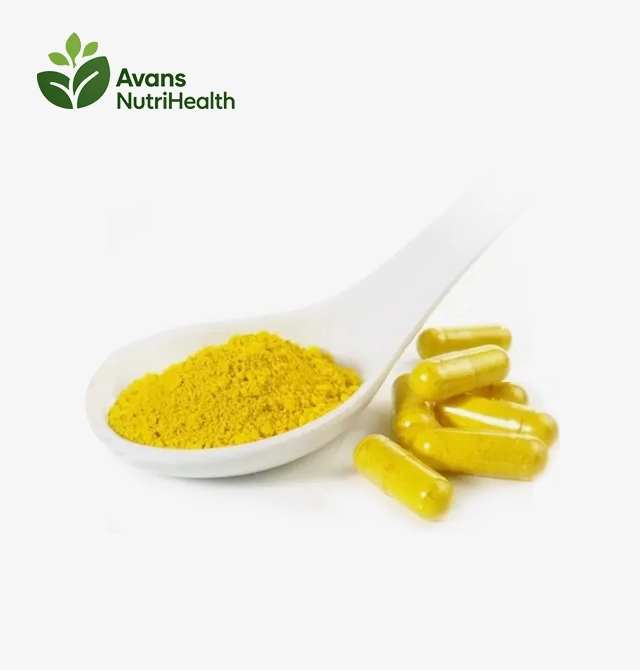
Berberine Chloride Powder
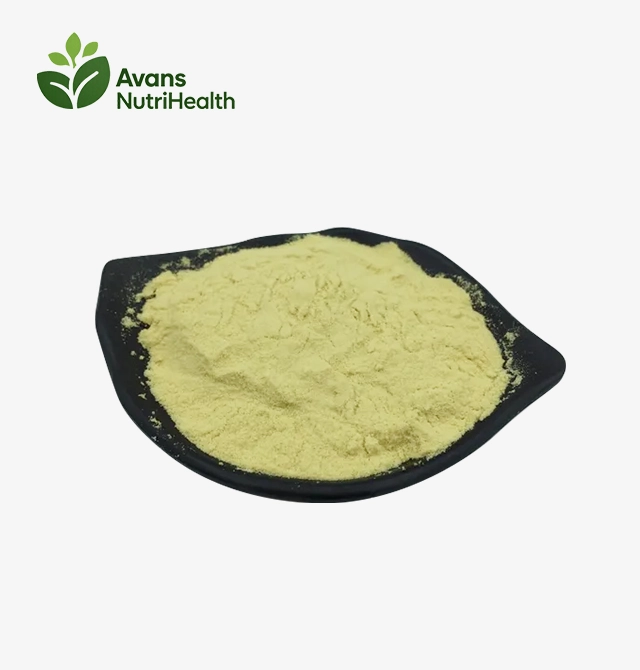
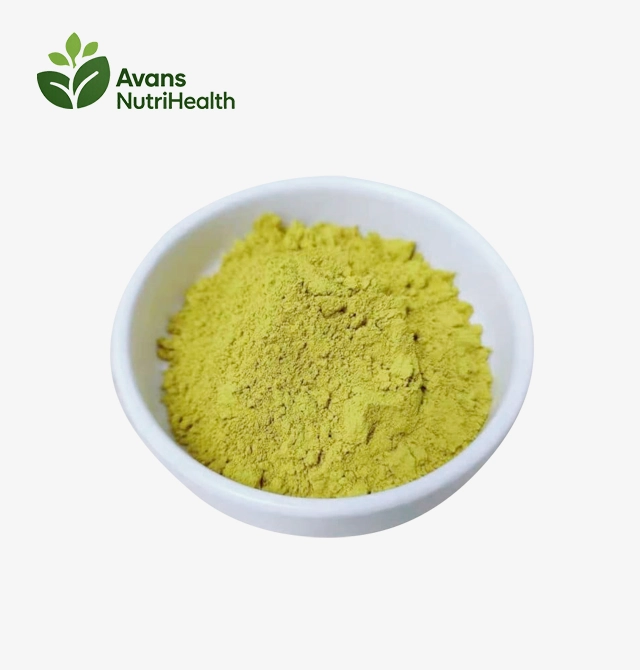
Appearance: Yellow Powder
Origin: China
Stocks: in stock
Certificate: ISO,USDA, HACCP, FSSC22000,HALAL,etc.
CAS no: 141433-60-5
Application: Health supplement, Medical field
- Product Description
Berberine Chloride Powder - Premium Natural Alkaloid Ingredient
Avans NutriHealth Co., Ltd. offers pharmaceutical-grade Berberine Chloride Powder with guaranteed ≥97.0% purity verified by HPLC analysis. We guarantee consistency between batches with our state-of-the-art extraction technology and rigorous quality control processes. The powder is a yellow crystalline powder (CAS No: 141433-60-5) derived from high-quality Coptis chinensis and Phellodendron amurense. The accurate molecular weight of the powder is 371.81 g/mol and the chemical characteristics are stable. We are fully ISO, USDA, HACCP, FSSC22000 and HALAL certified and can reliably support your supply chain with the group enterprise's integrated manufacturing capabilities. Our product exhibits excellent stability profiles and meets the international pharmacopoeia standards for metabolic health formulations.

What Makes Our Berberine Chloride Powder Different?
You want more than just another plant extract. You need an active ingredient that is standardised to a defined level, giving consistent results from batch to batch of your production.
Our chemical purity of product is unmatched. Thus, this pure molecule, unlike broad-spectrum herbal powders with fluctuating alkaloid levels, offers the dose accuracy needed for pharmaceutical applications. The hydrochloride salt form gives more stability than sulphate forms.
We have control over the entire supply chain from raw material procurement to finished packaging. This vertical integration avoids the quality inconsistencies that beset commodity vendors. Your recipes must be based on ingredients with full technical documentation and analytical certificates.

Technical Specifications
Understanding the precise parameters helps you optimize your formulation strategies and ensure regulatory compliance.
Parameter | Specification |
Chemical Formula | C20H18ClNO4 |
Molecular Weight | 371.81 g/mol |
Assay (HPLC) | ≥97.0% - ≥98.0% |
Appearance | Bright Yellow Crystalline Powder |
Solubility | Soluble in hot water; slightly soluble in ethanol |
Melting Point | ~200°C (with decomposition) |
Moisture Content | 10-14% (dihydrate form) |
pH Stability Range | pH 1-5 (optimal) |
Heavy Metals | Pb <3.0ppm, As <1.0ppm |
Microbiology | Total Plate Count <1000 cfu/g; Salmonella/E.coli: Absent |
The powder demonstrates excellent thermal stability. This characteristic proves valuable during tableting processes requiring heat exposure. However, its hygroscopic nature demands proper storage conditions in sealed containers.
Primary Application Scenarios
Your product development teams can employ this ingredient in several health-oriented areas.
The main market application is Metabolic Health Supplements . If you’re making capsules or tablets for glucose metabolism and lipid management, the product is activating AMPK pathways. The poor flowability of the chemical demands the use of certain excipients, such as microcrystalline cellulose. Even distribution of weight under compression is possible with wet granulation methods.
The powder's localised antimicrobial properties help Gastrointestinal Formulations. In the case of SIBO regimens and infectious diarrhoea products, the poor systemic bioavailability is actually a plus. The substance stays in the GI tract, working to attack harmful bacteria, while without disturbing the balance of the systemic flora.
This alkaloid is being increasingly used in topical cosmeceutical products due to its anti-acne and anti-inflammatory actions. In emulsion systems doses are usually 0.1-0.5%. Careful management of concentration is necessary to prevent skin staining, while retaining the bacteriostatic efficiency against Propionibacterium acnes. The natural yellow pigmentation is a problem.


Storage and Handling Recommendations
Proper storage protocols maintain product integrity throughout your supply chain operations.
Store Berberine Chloride Powder in tightly sealed containers away from light exposure. The hygroscopic nature requires humidity-controlled environments below 60% relative humidity. Temperature ranges between 15-25°C preserve optimal stability.
Avoid alkaline pH environments during formulation development. The compound precipitates in basic solutions above pH 7. Acidic formulation environments (pH 1-5) maintain maximum stability and solubility characteristics.
Use appropriate dust control measures during handling. The fine particle size can become airborne. Personal protective equipment including masks and gloves prevents skin contact and inhalation exposure.

Quality Assurance Standards
You want verification processes in place to ensure authenticity and safety for every cargo you receive.
We test above and above the minimal industry requirements. HPLC analysis is used to differentiate berberine from structurally related alkaloids, e.g. palmatine and jatrorrhizine. This prevents the distortion of purity as is frequent with basic titration procedures.
Heavy metals testing is done to strict international limits. Lead levels stays under 3.0 ppm and arsenic stays under 1.0 ppm. Pesticide residues are screened from botanical sources - cultivated.
The analysis of solvent residues confirms that the extraction solvents meet the ICH Class 3 requirements. Methanol level always less than 3000 ppm. Each batch of production is tested for the full absence of Salmonella and E. coli by microbiology.
Advanced source analysis techniques can detect if it was derived from natural sources or synthesised from petrochemicals. This transparency protects your brand reputation and regulatory compliance.

FAQ
Q: How does this compare to whole Coptis root powder?
Whole herb powders contain 3-8% total alkaloids with variable berberine content. Our standardized powder delivers 97%+ pure compound, enabling precise dosing and predictable biological activity across batches.
Q: What's the recommended dosage range for supplement formulations?
Typical dosages range from 500mg to 1500mg daily, divided into multiple doses. Your specific formulation should consider target indication and local regulatory requirements.
Q: Can this ingredient be used in liquid delivery systems?
Limited cold water solubility presents challenges. Consider hot water extraction, solubilization technologies, or liposomal delivery systems for liquid applications requiring enhanced bioavailability.
Q: What documentation do you provide with shipments?
Each order includes Certificate of Analysis, MSDS, allergen statements, and relevant certification documents. Additional regulatory support documentation is available upon request.
Partner With Avans NutriHealth
Ready to secure reliable supply of premium Berberine Chloride Powder for your formulations? Contact us today at Lillian@avansnutri.com to discuss your specific requirements and request product samples.