




Where to Buy Bulk Freeze-Dried Okra for Wholesale Supply
The simple answer is: if you need to get freeze dried okra in volume, deal directly with a reputable producer with validated food safety credentials, flexible bulk quantities, and clear supply chain documentation. One such provider is Avans NutriHealth Co., Ltd., and they are based in China but have a worldwide footprint in North America, Europe, and the Middle East. Avans offers lyophilized okra in whole and diced forms and observes the toughest procurement requirements. Certifications include HALAL, ISO, USDA, HACCP, and FSSC22000.
Understanding Freeze-Dried Okra and Its Market Value
Lyophilization, sometimes termed sublimation, freezes fresh okra below -40°C and eliminates the water under a high vacuum. The vegetable’s cells are transformed into porous, crisp okra, yet around 97% of its original bioactive compounds remain. They contain vitamin C, folate, vitamin K, antioxidants, and soluble fiber. It prevents the growth of microorganisms without the presence of stabilizers when the water activity is less than 0.2.
What food and nutrition procurement teams frequently overlook is how this method tackles an issue that continually rears its head in the supply chain. Okra tends to spoil within two to three days after it is harvested. The freeze-dried form lasts 18 to 24 months at room temperature, considerably reducing the possibility of rotting and enabling a typically tropical crop to be marketed worldwide.
The demand for high-integrity preserved vegetables, such as lyophilized okra, has grown with the growth in the clean-label and shelf-stable ingredients markets, particularly in the U.S. functional snack and ready-to-eat meal segments. Formulators working on fast soups, clinical nutrition powders, emergency ration packages, and high-end snack lines are moving to freeze-dried forms rather than dehydrated or vacuum-fried.
Key Criteria for Choosing a Wholesale Freeze-Dried Okra Supplier
Choosing a big provider is more than just negotiating prices. Your end product's compliance profile is directly affected by how trustworthy your supplier's quality infrastructure is. This is especially true when you're selling to controlled markets.
Here are the main factors that every buying manager should use to judge a supplier:
- Verified certifications: Look for HACCP, ISO 22000, FSSC22000, and relevant market-specific approvals such as USDA Organic, HALAL, or KOSHER. These credentials confirm that the facility operates under documented food safety management systems with traceability at every production stage.
- Production capacity and format flexibility: A reliable supplier should offer both whole pod and diced configurations, support custom moisture specifications, and accommodate private label or OEM packaging. Annual output capacity matters—a facility producing under 500 tons annually may struggle to serve large-scale food manufacturers consistently.
- Logistics infrastructure: For U.S.-based buyers, lead times and Incoterms flexibility are critical. Suppliers with established export lanes, proper cold-chain documentation, and responsive logistics coordination reduce total procurement friction significantly.
These three factors—certifications, capacity, and logistics—as a whole show if a provider can be a long-term strategic partner or just a business vendor.
Comparing Top Freeze-Dried Okra Suppliers for Bulk Purchase
The bulk lyophilized vegetable market is crowded, but what makes them different is the consistency of quality and the transparency of their certificates. When evaluating vendors, you need to look at more than simply the characteristics of their goods. You can also want to check their quality documentation reliability and the speed of their response to inquiries throughout the purchase cycle.
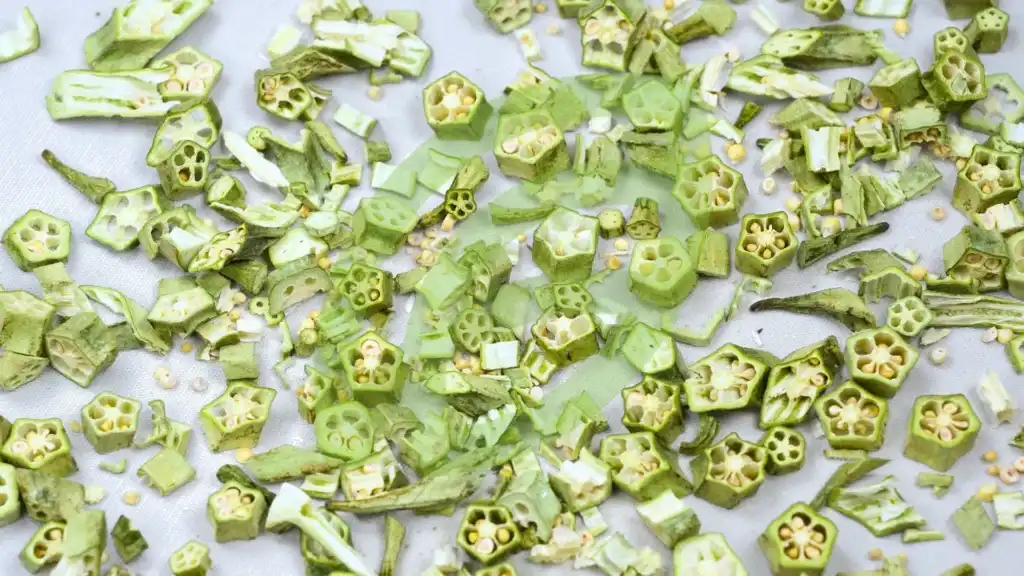
Avans NutriHealth Co., Ltd. has been in operation since 2005 with licensed facilities to manufacture more than 1,000 tons of food every year. The company’s freeze dried okra is offered in whole and diced formats. Moisture content is less than 5% and water activity is less than 0.2. The brilliant green hue is accurate since the product does not lose chlorophyll naturally. This is a significant visual quality signal for food brands that customers purchase.
What makes Avans even more special is the large number of certifications they provide. The organization can deliver to regulated markets in the Middle East, North America, and Europe from a single source, with certifications like as HALAL, ISO, USDA, HACCP, and FSSC22000. This removes the inconvenience of having to deal with a number of geographical providers for the same substance.
Unlike dehydrated okra, which is treated at higher temperatures and loses a lot of nutrients destroyed by heat, Avans's freeze-dried product maintains a rehydration ratio of 1:10 to 1:12 and, when reconstituted, has a texture and nutritional purity very near to fresh.
How to Effectively Source and Purchase Bulk Freeze-Dried Okra
Structured purchasing begins before price negotiations. Being able to clearly define your technical needs (particle size, moisture ceiling, package format, and any certifications you need) will make it simpler to evaluate providers and qualify quicker.
You will have to ask for a sample of the product. A competent vendor will provide you with a sample and scientific data sheets showing things like the moisture content, the water activity, the color values, and the results of microbiological testing. Before going to volume, make sure the rehydration performance, color stability, and flavor profile are right for your formulation.
For standard pricing, look at the whole cost of ownership, not just the unit price. Cost per kilogram varies on payment conditions, minimum order quantity, volume level, and freight arrangements. Suppliers such as Avans, who hold inventory, may minimize lead times and reduce the demand for safety stock.
Common standards of performance, delivery accuracy, certificate renewal time frames, and batch-to-batch consistency standards are an essential component of a long-term partnership with a competent supplier. These defined criteria safeguard both parties and provide the basis for a long-term supplier relationship.
Best Practices for Storing and Using Bulk Freeze-Dried Okra
It is very easy for water to get into lyophilized freeze dried okra because its cells are very porous. Even 15 to 30 minutes of exposure to ambient humidity can cause wetness to be absorbed and crispness to be lost. This is an important thing to keep in mind when handling things at the factory level.
For the best bulk storage, you need high-barrier aluminum foil packing that keeps air out, nitrogen cleaning to get rid of oxygen, desiccant inclusion, and storage temperatures below 25°C and relative humidity below 60%. The product can stay on the shelf for 18 to 24 months without being refrigerated in these settings.
Instead of rapid immersion, slowly controlled rehydration gives the most consistent texture results when adding the ingredient to soups, sauces, or ready-to-eat foods in production settings. When making powders like nutritional mixes or functional beverage bases, milling straight from the freeze-dried form keeps the dietary fiber matrix and soluble mucilage intact. This gives the final product a measurable viscosity and gut benefits.
Conclusion
To get freeze dried okra in bulk, you need a supplier with a lot of technical knowledge, certifications that can be checked, and the production capacity to keep up with rising orders. When you lyophilize something, you get a nutrient-dense item that lasts longer and works better than regular dried ones in a wide range of food and functional product uses. Avans NutriHealth Co., Ltd. has been making products for 20 years, has a long list of certifications, and can produce more than 1,000 tons of products each year. This makes it a reliable and skilled wholesale partner for food manufacturers, R&D formulators, and international distributors that work in regulated markets.
FAQ
1. Does freeze-dried okra retain the same nutritional value as fresh okra?
Yes. The lyophilization method keeps about 97% of the bioactive compounds that were in the veggie in their original form. These include antioxidants, dietary fiber, and heat-sensitive vitamins like folate and vitamin C. Using traditional ways like air-drying or cooking breaks down nutrients a lot more.
2. What is the standard shelf life for bulk freeze-dried okra?
The product stays fresh for 18 to 24 months if it is stored at room temperature and out of direct sunlight in high-barrier aluminum foil that has been flushed with nitrogen. There is no need for refrigeration.
3. Does Avans offer private label or custom packaging for bulk orders?
Yes. Avans NutriHealth works with both OEM and private label setups, and can make custom moisture specs and package forms to meet the needs of each client.
4. Why is freeze-dried okra more expensive than dehydrated okra?
The lyophilization process uses a lot of energy because it runs for 20 to 40 hours at a time under a high vacuum. The extra cost is worth it for uses where ingredient integrity is very important because of the benefits in texture, shelf life, and keeping nutrients.
6. Is freeze-dried okra suitable for use in nutraceutical or clinical nutrition formulas?
Yes. It can be turned into a powder that can be used in smoothies, clinical nutrition recipes, and functional food items because it naturally thickens and adds nutrients.
Partner With Avans — Your Trusted Freeze-Dried Okra Manufacturer for Wholesale Supply
With certification from HALAL, ISO, USDA, HACCP, and FSSC22000, Avans NutriHealth Co., Ltd. offers freeze dried okra in whole and diced forms. We're ready to help you reach your formulation and buying goals. We can produce more than 1,000 tons of goods every year and have a specialized export team. You can get samples or a price for buying in bulk right now by emailing Lillian@avansnutri.com.
References
1. Petropoulos, S. A., et al. — Food Chemistry, 2018.
2. Sengkhamparn, N., et al. — Food Hydrocolloids, 2010.
3. Ratti, C. — Journal of Food Engineering, 2001.
4. Fellows, P. J. — Food Processing Technology: Principles and Practice — Woodhead Publishing, 2022.
5. Grand View Research — Freeze-Dried Food Market Size & Share Report — Grand View Research, 2023.
6. U.S. Department of Agriculture (USDA) Agricultural Research Service — USDA National Nutrient Database for Standard Reference — USDA, 2022.