




Top 7 Uses of Piperine Extract Powder in Supplements
Piperine extract powder — the standardized alkaloid derived from Piper nigrum (black pepper), typically concentrated to ≥95% piperine via HPLC — has become one of the most strategically significant raw materials in modern supplement manufacturing. Its primary role as a bio-enhancer addresses a persistent formulation challenge: poor oral bioavailability of high-value actives. From curcumin complexes to multivitamin blends and weight management products, this off-white powder (CAS No. 94-62-2) delivers measurable efficacy improvements that formulators, R&D teams, and procurement managers increasingly rely on to differentiate their product lines.
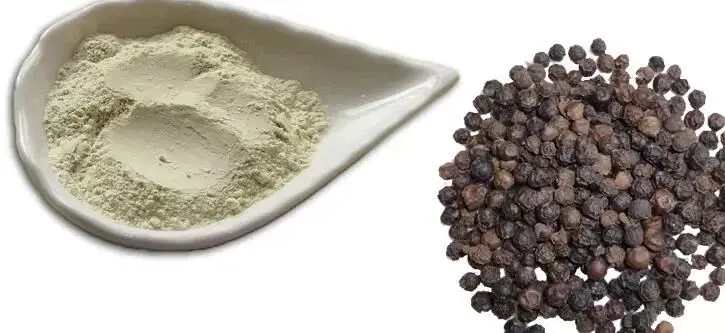
What Makes Piperine Extract Powder Distinct?
Composition and Standardization
A pharmaceutical-grade extract is standardized to ≥95% purity, which is proven by HPLC analysis. This is different from culinary black pepper, which only has 3–9% active piperine. This concentration level ensures consistent and repeatable dosing, which is a must in the controlled production of supplements and drugs. Pure natural piperine extract powder (Origin: China; Appearance: Off-White Powder) from Avans NutriHealth meets this standard and has ISO, USDA, HACCP, FSSC22000, and HALAL certifications, so it can be used in food, medicine, and healthcare.
The Bioavailability Mechanism
Piperine extract powder helps the body absorb nutrients in two ways that are linked: it stops glucuronidation enzymes (like CYP3A4) from working in the liver and intestines and stops the drug efflux transporter P-glycoprotein from working. These actions slow down the metabolic clearance of compounds that are given together and raise the levels of those compounds in the blood. A groundbreaking clinical study published in Planta Medica (Shoba et al., 1998) found that this greatly increases bioavailability—by as much as 2000% in the case of curcumin. Almost all of the applications below depend on this process.
Top 7 Uses of Piperine Extract Powder in Supplement Formulations
The seven uses below show where piperine extract powder gives supplement companies the most measured value in markets that are competitive and based on science.
Curcumin Bioavailability Enhancement
Curcumin is typically hard for the gut to absorb on its own. When combined with piperine extract powder at a dose of only 20 mg, clinical studies show that absorption is increased by up to 2000%. This combination has become the standard for turmeric-curcumin supplements, allowing companies to back up their claims of effectiveness with strong proof.
Multivitamin and Mineral Absorption Support
When nutrients like vitamin B6, beta-carotene, selenium, and coenzyme Q10 are mixed with a small amount of piperine extract powder, they are absorbed better. As a functional excipient, multivitamin makers use it to boost the mixes' perceived value and measurable performance without making the product's sensory profile too different.
Thermogenic and Weight Management Formulas
A study in the Asian Pacific Journal of Tropical Biomedicine shows that piperine extract powder can stop adipogenesis at the molecular level and start thermogenesis. This supports its use in metabolic health supplements. When used in amounts of 5 to 10 mg, it works well with other thermogenic ingredients like green tea extract and chili, making weight control products more effective.
Antioxidant and Anti-Inflammatory Support Products
Piperine extract powder directly removes free radicals and changes NF-κB signaling, which is a major inflammatory pathway. Because of this, it is an important secondary active ingredient in antioxidant mixes, joint health supplements, and formulas that focus on extending life, where it adds more than just nutrient delivery.
Digestive Health and Enzyme Stimulation
There is evidence from both clinical and preclinical studies that piperine extract powder helps digestive enzymes work better in the pancreas and makes the intestines move more easily. People who want to improve gut health, get rid of bloating, or make digestion work better can add this substance to probiotic or enzyme-based remedies to make them work better overall.
Pharmaceutical-Grade Bioavailability Applications
Piperine extract powder helps some active pharmaceutical ingredients (APIs) absorb better when they're mixed with other chemicals in pharmaceutical products. Researchers have looked at its enzyme-inhibiting qualities along with phenytoin and rifampicin. However, when formulators make these kinds of goods, they need to take into account known CYP3A4-mediated drug interactions.
Synergistic Botanical Combinations
Piperine extract powder works with resveratrol, quercetin, and other polyphenols that aren't easily absorbed by the body, along with curcumin. Supplement companies that buy high-quality botanical stacks use them to make their formulas more clinically relevant. This helps them stand out in a crowded market and keep customers.
Together, these seven uses show how piperine extract powder has gone from being a niche bio-enhancer to a main part in many modern supplements.
Purchasing and Sourcing Considerations for B2B Buyers
There's more to choosing the right supplier for this item than just comparing prices per kilogram. Procurement experts and R&D teams have to look at a lot of interconnected factors that have a direct impact on the quality of the final product, compliance, and the security of the supply chain.
The first step is standardization. The standard assumption is a piperine extract powder content of at least 95%, which can be proven using HPLC and a Certificate of Analysis. Also, buyers should make sure that the extract is natural or manmade. Carbon-14 radiocarbon dating can be used to prove that the piperine extract powder comes from natural sources, which is an important step for brands that want to compete in the clean-label or organic markets.
In regulated markets, certification coverage is very important. Suppliers should have well-known third-party certificates like ISO, HALAL, KOSHER, USDA Organic (if relevant), HACCP, and FSSC22000 in order to send goods to North America, Europe, and the Middle East. These credentials make it easier for regulators to do their jobs and back up label claims in more than one jurisdiction.
Logistics issues like minimum order amounts, wait times, packing formats, and storage compatibility (piperine extract powder is sensitive to light and needs UV-protective aluminum packaging) must be in line with production plans. It is usually easier to understand and deal with these factors when you deal directly with a vertically integrated manufacturer instead of a trading middleman.
Why Avans NutriHealth Stands Out as a Piperine Extract Powder Supplier
On the market are well-known brands like Sabinsa's BioPerine as well as a number of local suppliers. Avans NutriHealth is a manufacturer-direct provider that stands out because it has full control over production, a wide range of certifications, and a lot of expert support.
Since 2005, Avans NutriHealth Co., Ltd. has been making specialty nutritional ingredients. Over 30 hospitals work with Avans on research and development, and the company has a certified quality management system that meets ISO, HACCP, FSSC22000, HALAL, and USDA standards. This gives buyers in the supplement and pharmaceutical industries the traceability and consistency they need. The product is non-GMO, doesn't contain any allergens, and comes in different pack sizes that can be changed. This is helpful for companies that have to manage multiple SKUs or run phased production cycles.
Avans also helps clients come up with formulations that use piperine extract powder in complex mixtures. This makes it easier for in-house R&D teams to do their jobs and speeds up time to market.
Conclusion
Piperine extract powder is used in a lot more ways in supplement preparation than just being known as "black pepper extract." As a proven bio-enhancer, thermogenic agent, antioxidant supplement, and stomach aid, it solves real recipe problems in a number of different product categories. For purchasing managers and formulators looking at different ingredient choices, there is a lot of proof; the uses have been proven, and the things they need to think about when buying are clear. The most reliable way to get consistent product performance and supply chain confidence is to choose a certified, manufacturer-direct supplier that offers full technical support.
FAQ
1. What is the recommended dosage of piperine in supplement formulations?
To get bio-enhancement benefits that matter, clinical studies back up a dose range of 5–20 mg per serving. Studies show that up to 2000% more curcumin is absorbed when the dose is 20 mg. Formulators should make sure that the dose matches the co-nutrient that is being added and the health claim that is being made.
2. Does piperine interact with medications?
Yes. Piperine extract powder can raise the blood levels of drugs like phenytoin and propranolol that are given at the same time because it blocks CYP3A4 and P-glycoprotein. Products made for regular people should have the right contact warnings on them, especially for groups that are more likely to be hurt.
3. How should piperine extract powder be stored?
Piperine extract powder can change into isochavicine, a form that is not as biologically active, when exposed to UV light. For proper storage, double-lined, light-resistant packaging (aluminized bags) must be kept in cool, dry places that aren't in direct sunlight.
4. How do I verify natural versus synthetic piperine?
Piperine extract powder from natural sources has a Carbon-14 trace that can be found. Synthetic piperine that comes from petrochemicals has no C14 in it. Buyers looking for clean-label or organic-certified products should ask suppliers for proof of Carbon-14 testing.
Partner with Avans for Premium Piperine Extract Powder Supply
Avans NutriHealth is a reliable company that has been making piperine extract powder for over 15 years and has full approval coverage as well as the ability to do direct manufacturing. Our standardized 94-62-2 piperine black pepper extract is in stock and ready to be bought in large amounts. Our team is ready to help you whether you need examples, a detailed datasheet, or help with a unique formulation. To get a quote right away, email us at Lillian@avansnutri.com.
References
1. Shoba, G., Joy, D., Joseph, T., Majeed, M., Rajendran, R., & Srinivas, P. S. (1998). Influence of piperine on the pharmacokinetics of curcumin. Planta Medica, 64(4), 353–356.
2. Bajad, S., Bedi, K. L., Singla, A. K., & Johri, R. K. (2001). Piperine inhibits gastric emptying and gastrointestinal transit in rats and mice. Planta Medica, 67(2), 176–179.
3. Anand, P., Kunnumakkara, A. B., Newman, R. A., & Aggarwal, B. B. (2007). Bioavailability of curcumin: Problems and promises. Molecular Pharmaceutics, 4(6), 807–818.
4. Meghwal, M., & Goswami, T. K. (2013). Piper nigrum and piperine: An update. Phytotherapy Research, 27(8), 1121–1130.
5. Park, U. H., Jeong, H. S., Jo, E. Y., Park, T., Yoon, S. K., Kim, E. J., & Um, S. J. (2012). Piperine, a component of black pepper, inhibits adipogenesis by antagonizing PPARγ activity. Biochemical and Biophysical Research Communications, 411(1), 179–184.
6. Dudhatra, G. B., Mody, S. K., Awale, M. M., Patel, H. B., Modi, C. M., Kumar, A., & Chauhan, B. N. (2012). A comprehensive review on pharmacotherapeutics of herbal bioenhancers. The Scientific World Journal, 2012, 637953.