




Sodium Saccharin Granular Bulk Supply with Consistent Quality Assurance
Securing a reliable bulk supply of Sodium Saccharin Granular with consistent quality assurance requires understanding both the technical specifications and the supplier's manufacturing capabilities. As a high-intensity sweetener that delivers 300-500 times the sweetness of sugar, this white crystalline compound (CAS: 6155-57-3, 81-07-2) has become indispensable across multiple industries. Our focus centers on providing procurement managers with actionable insights into sourcing this essential ingredient while maintaining the rigorous standards demanded by the nutraceutical, pharmaceutical, cosmetic, food, and beverage sectors.
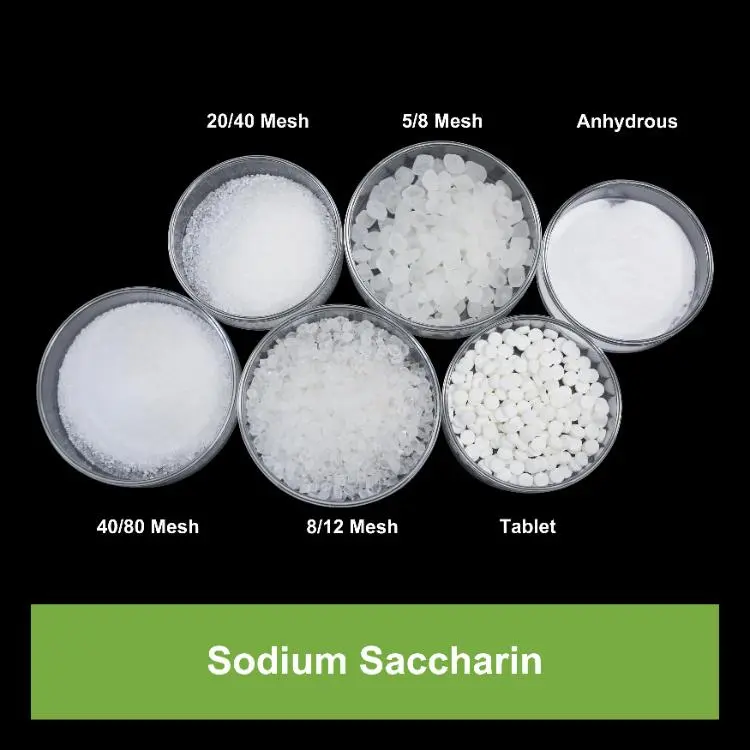
Comparative Analysis: Sodium Saccharin Granular vs Other Sweeteners
Sweetness Intensity and Taste Profile Comparison
Sodium Saccharin Granular has different performance qualities that affect formulation choices when compared to other high-intensity sweeteners. The cost of getting sucralose is a lot higher than getting sugar, even though it tastes better and is about 600 times sweeter. Aspartame is about 200 times sweeter than sugar, but it breaks down in hot and acidic environments, which limits how it can be used. Even though sodium cyclamate has similar cost benefits, it is limited by regulations in some markets, such as the US.
Since the granular form stays stable down to pH 2, it is especially useful for making acidic drinks where other sweeteners might break down. When used in large amounts, some users say it leaves a bitter aftertaste. This can be lessened by mixing it with acesulfame-K or other sweeteners that work well with it. This strategy for masking tastes improves the overall sensory experience while keeping costs low.
Granular versus Powder Form Selection
The choice between granular and powder forms is largely based on the needs of the application. Granular versions work great for dry mixing tasks that need to control dust, keeping workers safe and reducing material loss during handling. The 40–80 mesh grain size makes it easier to spread solid ingredients evenly without the dusting problems that come with 100+ mesh fine powders. On the other hand, ultra-fine powders are better when you need something to dissolve quickly in cold water, like in drinks where the sweetness needs to be spread out right away.
Both types have the benefit of being stable at high temperatures; neither type loses its ability to sweeten at temperatures above 200°C. Because it doesn't change when heated, Sodium Saccharin Granular is one of the few sweeteners that can be used in high-heat baking where aspartame doesn't work.
Cost-Effectiveness in Bulk Procurement
Because of how prices work, Sodium Saccharin Granular is a good choice for manufacturers who want to cut costs by making their own ingredients. Because the material is 300–500 times sweeter than sugar, very small amounts are needed to achieve the appropriate sweetness levels. This makes the cost per sweetness unit much lower than with natural sugar or even some synthetic options. Buying in bulk makes this economic benefit even bigger, and price breaks are usually available for orders of 500 kilograms or more.
When buying, managers do total cost studies; they should look at more than just unit prices. They should also look at how long the goods will last in storage, how much it will cost to follow regulations, and how stable the formulation is. Sodium Saccharin Granular has a long shelf life and doesn't need much storage space, so it's cheaper to keep on hand. It's also accepted by regulators around the world, so you don't have to pay extra to make changes to it for each market.
Bulk Procurement of Sodium Saccharin Granular: Best Practices and Supplier Selection
Evaluating Supplier Credentials and Manufacturing Capabilities
Thoroughly checking out suppliers is the first step to successful bulk purchasing. Manufacturing scale should be one of the most important criteria for evaluation. Producers whose annual outputs are more than 1,000 tonnes usually have the stable infrastructure needed for a steady large-scale supply. International certifications like ISO systems, BRC, and industry-specific credentials like Halal and Kosher can be checked to make sure that the manufacturing process is following the rules and the quality system is mature.
Asking for facility audit records or doing checks on-site shows what the supplier is really saying about how things work. Some important things to look for are protocols for getting raw materials, quality checkpoints during the process, analytical lab capabilities, and batch traceability systems. Suppliers who use advanced analysis tools like HPLC systems and keep quality control teams on hand usually deliver products that meet standards more consistently.
Quality Assurance Documentation Requirements
When a large package arrives, it should come with a lot of paperwork that proves the quality. The most important document is the Certificate of Analysis (CoA), which lists the purity test results, heavy metal screening, impurity profiles (OTS/PTS levels), moisture content, and particle size distribution. The COA data should include the exact batch numbers that are linked to the shipment. This will make it possible to precisely track the goods.
In addition to the CoA, you should also ask for third-party testing reports from accredited laboratories, especially when you are first getting to know a new supplier. Material Safety Data Sheets (MSDS), certifications that are important to your target markets, and allergen warnings should also be included in the paperwork. Suppliers who show transparency by sharing documentation proactively tend to have better quality systems than those who need to be asked over and over for basic verification materials.
Logistics and Minimum Order Considerations
Understanding the technical factors stops problems with buying. Sodium Saccharin Granular usually comes in minimum order quantities (MOQs) of 500 kilograms to one metric tonne, but if you buy from a reputable supplier, they may be able to handle smaller initial orders for qualification reasons. Packaging often includes 25-kilogram bags, which are a good mix between how easy they are to handle and how likely they are to get dirty while being stored.
Shipping wait times from China, which makes most of the world's goods, are usually 15 to 30 days for sea freight to reach North American ports. Air freight can cut this time to 5 to 7 days, but it costs more. Keeping a backup stock takes into account changes in transport and protects against problems in the supply chain. Framework deals with quarterly or yearly volume promises are often the best way to get better prices while still keeping your supply options open.
Pricing Negotiation Strategies
Cost reduction and supply security must be balanced in order for price negotiations to work well. Sodium Saccharin Granular costs between $4 and $7 per kilogram on the market right now. The exact price depends on the amount ordered, the certification standards, and the shipping terms. Volume-tiered pricing systems reward bigger promises, but buyers should make sure that suppliers can meet agreed-upon amounts before signing long-term contracts.
The terms of payment have a big effect on the total cost of purchase. While standard terms usually call for a 30% deposit and the rest against the bill of lading, long-term relationships can help you get net-30 or net-60 payment windows that make managing your cash flow easier. Letter of credit agreements protect both parties in international transactions, but they come with banking fees that should be added to the total landed cost.
Application-Specific Uses of Sodium Saccharin Granular in B2B Industries
Beverage Sector Applications
The biggest market for Sodium Saccharin Granular is the beverage business, which uses it in soft drinks, sports drinks, flavoured water, and dietary drinks. It doesn't break down in acidic environments and stays sweet even at pH 2. This makes it very useful for carbonated drinks and citrus-flavored foods where acidic sweeteners break down. Standard mixing tools can be used to easily mix the ingredients into liquid formulas because they dissolve quickly.
Usage levels usually fall between 80 and 120ppm, but this depends on how sweet the product needs to be and whether it uses blended sweetener systems. To get the best sweetness boost with the least amount of aftertaste, formulators often mix Sodium Saccharin Granular and acesulfame-K in 3:1 or 2:1 ratios. This method of mixing lowers the total cost of sweeteners while improving their taste and smell.
Pharmaceutical and Oral Care Industries
Pharmaceutical companies use Sodium Saccharin Granular because it hides the bitter taste of active pharmaceutical ingredients (APIs). This is especially useful in paediatric formulations where patients' willingness to take the medicine depends on how well it tastes. The material works well in places with a lot of moisture and salt, which can be hard for natural sugar. It stays stable throughout the shelf life of the product. Liquid syrups, chewable tablets, and orally disintegrating formulations are all common uses.
Another important type of medicinal application is oral care items, such as toothpaste, mouthwash, and dental treatment gels. The element works well with fluoride compounds and antibacterials, and its sweetness stays the same while the product is being made, which gives formulators more options. Sodium Saccharin Granular specs need tighter purity standards and more in-depth impurity profiling than food-grade variations. They also need more paperwork to be sent to regulators.
Food Production and Confectionery Uses
Foods that are baked, sweetened, or processed use Sodium Saccharin Granular because it stays stable at high temperatures during industrial processes. Aspartame breaks down at temperatures above 120°C, but Sodium Saccharin Granular stays sweet even after baking, cooking, and pasteurisation. Because it doesn't melt at high temperatures, it can be used in cookies, cakes, jams, and canned goods where higher temps would destroy heat-sensitive options.
It is easy to mix the granular form into dry mixes and powder blends using standard industrial mixing tools. It is suggested that the sweetener be mixed with some of the dry ingredients in the recipe first, to make sure that it is evenly distributed, before adding the liquids. Dosage rates are usually between 0.01 and 0.05% of the weight of the finished product. The exact amounts are changed depending on how sweet you want the product to be and whether there are other sweeteners present.
Animal Feed Additives
Sodium Saccharin Granular is used in the animal nutrition industry to make feed taste better, especially for weaned piglets and other young animals that are switching to solid diets. When food tastes better, people eat more of it during important growth stages, which helps them gain weight and stay healthy. Usage rates are usually between 50 and 150ppm of finished feed. Starter rations use higher amounts than grower or finishing feeds.
Different areas have different rules about what can be used in feed, and each area sets its own maximum levels of inclusion. The standards for buying feed-grade material may be different from those for buying food-grade material. However, trustworthy sellers follow the same quality rules for all grade designations so that their sites can support future feed-to-food manufacturing operations.
Ensuring Consistent Quality Assurance in Sodium Saccharin Granular Supply
Raw Material Verification and Incoming Quality Control
Before any products are made, quality control starts with carefully checking the raw materials that come in. Before materials go into production areas, the best suppliers use multi-point checking methods that check the purity of precursor chemicals, check the certifications of the suppliers, and do name confirmation testing. This upstream check keeps things clean and makes sure that the synthesis process only gets inputs that meet the requirements.
Physical testing is followed by a review of the documentation. Suppliers keep an approved seller list and do regular checks of their raw material sources. This openness in the supply chain makes it possible to track chemicals from the immediate producer all the way up to upstream sources. This lets quality problems be quickly found and fixed.
In-Process Monitoring and Batch Consistency
Consistency in manufacturing rests on tracking going on all the time during production cycles. Reaction temperatures, pH levels, crystallisation rates, and drying conditions are some of the most important process parameters that are tracked in real time. If these parameters stray from the control ranges that have been set, automated alerts are sent out. Statistical process control methods find changes in trends before they show up as batches that don't meet specifications.
Using batch sampling in the middle stages of the process adds more quality checks. Samples are quickly tested for important factors, and the results are looked over before the production moves on to the next steps. By finding problems early in the manufacturing process, this stage-gate method keeps quality problems from building up and cuts down on material waste.
Particle Size Analysis and Physical Specification Control
Pay close attention to the particle size distribution of granular goods because this physical property has a direct effect on how well they handle, dissolve, and form. By using sieve analysis on representative group samples, it can be shown that the material is within certain mesh ranges. For example, for coarse granular material, the mesh range is usually 5–8 mesh, and for normal industrial grades, it's 40–80 mesh. Suppliers should keep particle size distribution charts that show how consistent they are across different batches.
In addition to size distribution, physical specifications check the moisture content through Loss on Drying tests, measure the bulk density to help with shipping and packing, and look at the flow characteristics to guess how the product will behave when handled in a customer's production setting. Consistent physical qualities make it possible to predict how the mixture will work during processing.
Supplier Audit Programs and Long-Term Partnership Development
Setting up strong relationships with suppliers requires regular audits on top of the initial qualification activities. Once a year or every other year, on-site audits check to see if quality systems are still being followed. They also look at how well corrective actions from earlier results are working and see if capacity expansion or process changes could affect product consistency. When a relationship with a seller gets older, it turns into a partnership where both sides work together to make things better and share market information.
Structured performance review meetings that look at quality metrics, delivery reliability, and how quickly technical questions are answered are good for long-term supply agreements. Suppliers who consistently perform well in these areas are given preferred standing and may be notified ahead of time about capacity planning needs or chances to work together on developing special product grades.
Future Trends in Quality Standards and Sustainability
Quality standards are always getting higher because of changing regulations and customer expectations. Along with traditional quality metrics, sustainability credentials like disclosing carbon footprints, using renewable energy in manufacturing, and reducing waste are becoming more important in supplier selection. Environmentally conscious sellers buy environmental management systems and get certifications like ISO 14001 to show they care about the environment.
The ability to analyse things is always getting better, and the newest testing methods are much better at finding very small amounts of contaminants. As quality leaders, suppliers who invest in advanced instruments and keep their technical knowledge up to date so they can understand complex analytical data sets themselves apart. This investment in technology helps with proactive quality control instead of fixing problems after they happen.
Conclusion
To get steady quantities of Sodium Saccharin Granular in bulk, you need to carefully evaluate suppliers, follow strict quality control procedures, and plan your purchases strategically. The material is very sweet, doesn't change much at room temperature, and is very cheap, so it is essential in many fields, from drinks and drugs to animal feeding. A good procurement process combines technical requirements with suppliers' abilities, making sure that quality control methods offer consistency from batch to batch. Procurement managers can build reliable supply chains that support consistent product quality and legal compliance across global markets by following the best practices listed, such as carefully screening suppliers, requiring thorough paperwork, and building long-term partnerships.
FAQ
1. What distinguishes pharmaceutical-grade from food-grade Sodium Saccharin Granular?
For pharmaceutical-grade specs, purity standards must be stricter and impurity limits must be lower. This is especially true for heavy metals and organic contaminants like OTS and PTS. To support regulatory submissions for drug applications, the material goes through more thorough analytical testing with detailed impurity profiling. Food-grade versions meet FCC standards and are safe for eating, but they might not meet the stricter paperwork needs of pharmaceutical manufacturing. Both grades have about the same amount of sweetening power and thermal stability. The difference is mostly due to regulatory requirements rather than changes in how well they work.
2. How should procurement managers verify supplier quality systems before committing to bulk orders?
Ask for copies of the most recent ISO, HACCP, FSSC22000, HALAL, or KOSHER certifications and check with the organisations that issued them to make sure they are real. Look at sample Certificates of Analysis from recent production runs to see how well they meet specifications and how well they can analyse samples. Do on-site audits of the lab equipment, the storage of raw materials, the flow of production, and the quality documentation systems. You can get customer examples from well-known companies in your field. Before committing to large-volume contracts, you might want to start with smaller qualification orders to make sure the product works as expected.
3. Can Sodium Saccharin Granular be used in high-temperature baking applications?
The substance stays structurally stable and sweetening effective at temperatures above 200°C, which means it can be used in almost all baking situations. Aspartame and other options that are sensitive to heat break down during thermal processing, but Sodium Saccharin Granular stays stable through rounds of baking, pasteurisation, and sterilisation. Because it doesn't lose its sweetness or form degradation products at high temperatures, it can be used in cookies, cakes, and processed foods that need to be made at high temperatures.
Partner with Avans for Reliable Sodium Saccharin Granular Supply
Avans NutriHealth Co., Ltd. is a reliable company that makes high-purity Sodium Saccharin Granular for sourcing managers around the world who work in the food, beverage, cosmetics, nutraceuticals, and animal feed industries. Our factories in China are ISO-certified, BRC-compliant, HALAL-certified, and KOSHER-certified. They produce more than 1,000 tonnes of goods every year, so we can always meet your bulk needs. We always have white crystalline grainy material on hand that meets international standards. It comes with full Certificates of Analysis that prove it is ≥99% pure, has the right heavy metal profiles, and has controlled impurity levels. Our technical team has a lot of knowledge and can help you with formulation and application issues that are unique to your business. You can talk to Lillian at Lillian@avansnutri.com about your needs for a bulk Sodium Saccharin Granular supplier, ask for product samples, or set up an audit of your facility.
References
1. Nabors, L.O. (2016). Alternative Sweeteners: Fourth Edition. CRC Press, Boca Raton, Florida.
2. Mitchell, H. (2006). Sweeteners and Sugar Alternatives in Food Technology. Blackwell Publishing, Oxford, United Kingdom.
3. O'Brien-Nabors, L. & Gelardi, R.C. (2001). Alternative Sweeteners: Third Edition, Revised and Expanded. Marcel Dekker, New York.
4. Kroger, M., Meister, K. & Kava, R. (2006). Low-calorie Sweeteners and Other Sugar Substitutes: A Review of the Safety Issues. Comprehensive Reviews in Food Science and Food Safety, 5(2), 35-47.
5. Grembecka, M. (2015). Sugar Alcohols—Their Role in the Modern World of Sweeteners: A Review. European Food Research and Technology, 241(1), 1-14.
6. Chattopadhyay, S., Raychaudhuri, U. & Chakraborty, R. (2014). Artificial Sweeteners – A Review. Journal of Food Science and Technology, 51(4), 611-621.