




Is microcellulose powder the Future of Sustainable Manufacturing?
Microcellulose powder is rapidly positioning itself as a cornerstone material in sustainable manufacturing. Derived from renewable plant-based alpha-cellulose through controlled acid hydrolysis, this white, odorless powder (CAS 9004-34-6) delivers exceptional compressibility, moisture management, and biodegradability. As industries from pharmaceuticals to food processing face mounting pressure to reduce synthetic inputs and environmental footprints, plant-derived cellulose excipients offer a credible, high-performance alternative. With global demand for clean-label and eco-certified raw materials accelerating, the question is no longer whether this material fits modern production—it's how quickly your supply chain can integrate it.
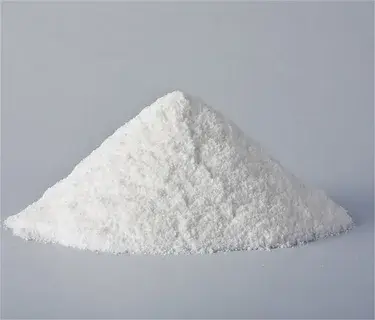
Understanding Microcellulose Powder and Its Role in Sustainable Manufacturing
What Makes It Inherently Sustainable
Microcrystalline cellulose (MCC) comes from very pure plant fibers, which puts it right in the category of bio-based materials that regulators and brands that care about the environment are putting more emphasis on. Acid hydrolysis is used in the manufacturing process to selectively remove amorphous cellulose regions while keeping crystalline structures. This makes a material that is very easy to compress, doesn't hold on to water well, and flows easily. These are all useful properties that lower the amount of waste and energy used when making tablets or texturizing food.
A life cycle assessment reported in the Journal of Cleaner Production (2019) shows that bio-derived excipients typically have lower cumulative energy demand than their petroleum-derived peers across all functional groups.
Technical Specifications That Support Green Manufacturing
Avans NutriHealth Co., Ltd. sells MCC series powder that is suitable for businesses and has clear technical specs:
- Particle size distribution: 50–200 μm, enabling precise control over tablet hardness and microcellulose powder flow
- Degree of polymerization (DP): 180–375, balancing binding capacity with disintegration speed
- Moisture content: Below 5%, protecting moisture-sensitive active pharmaceutical ingredients (APIs)
- Bulk density: 0.26–0.31 g/cm³, standardized for consistent volumetric dosing
- pH range: 5.0–7.5, compatible with a broad spectrum of formulations
Manufacturers can cut down on batch failures and material waste by controlling these factors. This directly leads to leaner, more sustainable production processes. The product meets the requirements of the USP, EP, and BP pharmacopeial standards, which means it can be sold in controlled markets in North America and Europe.
Comparing Traditional Materials with Microcellulose Powder: A Paradigm Evolution Approach
Methylcellulose needs to be chemically modified with methyl groups, which adds new processing steps that make biodegradability profiles more complicated. Nanocellulose has many useful properties, but it requires a lot of energy to be mechanically or chemically fibrillated, and it raises unanswered regulatory questions in a number of places. Standard powdered cellulose, on the other hand, is not easily compressed and does not bind well enough for making straight compression tablets.
These holes are filled with microcrystalline cellulose powder. As an ingredient, it doesn't change much chemically from its natural state. It also stays clean under FDA 21 CFR and EU food additive frameworks and makes tablets work better. A study published in the International Journal of Pharmaceutics in 2021 showed that direct compression formulas based on MCC had 15–20% higher tablet tensile strength than standard cellulose fillers while keeping the same disintegration times.
This difference in performance is very important for procurement teams that have to deal with large-scale calculations of cost-per-unit, reject rates, and yield rates.
How to Choose the Best Microcellulose Powder for Your Manufacturing Needs
When buying cellulose excipients, there are more factors to consider than just particle size. The right provider should be able to meet all of these needs at the same time: legal, logistical, and application-specific.
Here are the most important things that buying workers should look at:
- Pharmacopeial compliance: Confirm USP/EP/BP alignment and request a current Certificate of Analysis (COA) with each shipment to verify batch consistency.
- Certification stack: Seek suppliers holding HACCP, FSSC22000, ISO, and HALAL certifications as a baseline. These credentials reflect systemic quality control, not just one-time testing.
- Particle size flexibility: Different applications—direct compression tablets versus encapsulation versus food emulsification—require distinct particle size ranges. Verify that your supplier offers MCC grades tailored to your process.
- Sampling availability: Reliable suppliers offer pre-shipment samples without prohibitive conditions. This allows your R&D team to validate the material before committing to commercial volumes.
- Inventory status: Immediate stock availability eliminates production delays. Avans maintains a ready inventory of its MCC series, reducing lead times for international B2B clients.
Together, these criteria protect the integrity of your formulation, your standing with regulators, and the resilience of your supply chain. The most important thing about responsible procurement is choosing a supplier who can back up every claim with proof, not just marketing claims.
The Future Impact of Microcellulose Powder on Sustainable Manufacturing
Together, the EU's Farm-to-Fork Strategy, the U.S. FDA's ongoing push for excipient openness, and company ESG reporting requirements are changing how formulators look at where to get their raw materials. All three pressure axes are aligned at the same time by cellulose-based excipients that come from known, non-GMO plant sources.
According to Grand View Research (2023), the global market for microcrystalline cellulose was worth about USD 1.2 billion in 2022 and will be worth more than USD 1.8 billion by 2030. This trend isn't just speculative desire; it shows real formulation adoption across medicines, nutraceuticals, and functional foods.
Manufacturers who use approved plant-derived excipients are now ahead of the game because regulations are going to get stricter on manufactured binders and non-biodegradable fillers soon. Early users in the cosmetics and nutraceutical industries are already using clean-label cellulose products to set their brands apart from others in retail channel talks and brand marketing.
Ensuring Safety, Storage, and Optimal Usage of Microcellulose Powder
Handling and Workplace Safety
There is a lot of information about how safe MCC microcellulose powder is. Under normal commercial working conditions, it doesn't hurt living things, isn't toxic, and doesn't irritate the skin. Controls on dust exposure, which are standard in any powder processing area, are enough to keep people safe. Based on how OSHA classifies this substance, there are no special rules for handling it as a hazardous material.
Storage Conditions for Preserved Efficacy
Correct keeping has a direct effect on how well the product functions. Conditions that are suggested are:
- Store in a cool, dry environment below 25°C
- Maintain relative humidity below 65% to prevent moisture uptake beyond the 5% threshold
- Keep in sealed, food-grade packaging away from direct light and strong-smelling substances
Application Guidelines
How accurate is dosing based on the situation? MCC usually makes up 20–90% of the total weight of tablets, but this depends on how much active ingredient is in them. In food applications, amounts between 1% and 3% work well to keep emulsions stable. In fat replacement uses, up to 30% substitution by weight can be used. To keep the purity of the particles and avoid compaction marks, mixing should be done with low shear. These operating factors are in line with what was written in Pharmaceutical Technology (2020).
Conclusion
Microcellulose powder is not a hypothetical material for the future; it is a proven plant-based ingredient that is already used in food, medicine, and supplements around the world. Its environmental qualifications come from being able to track where the plants come from, using few chemicals, and fully biodegrading. Because it can be used for many different tasks, like binding tablets, stabilizing emulsions, and filling encapsulations, it is one of the most stable and reliable tools that sustainable makers can use right now. It should be at the center of your raw material plan if you want your procurement teams and formulators to put both efficiency and compliance first.
FAQ
1. What is the difference between microcellulose powder and microcrystalline cellulose?
In this field, these terms are often used to refer to the same thing. Microcrystalline cellulose (MCC) is a type of cellulose that has been cleaned up and partly depolymerized. It has a clear crystalline structure and is made by hydrolyzing alpha-cellulose with acid. "Microcellulose powder" is a general term for cellulose materials that have been finely ground into microparticle-sized pieces. For uses in medicine and food, MCC (CAS 9004-34-6) is the accepted pharmacopeial standard.
2. How do I verify a supplier's sustainability and quality claims?
Ask for proof, like a COA, an ISO certificate, HACCP records, and FSSC22000 audit reports. HALAL and USDA approvals from third parties add to the proof. Every order from Avans NutriHealth comes with full paperwork.
3. What are typical lead times and minimum order quantities?
Avans keeps its MCC line in stock so that it can be sent out quickly when pressing production needs arise. Minimum order quantities and pricing are based on the needs of the application and the volume of orders. Get in touch with the team immediately to get a personalized quote and set up a sample time.
4. Is MCC compliant with U.S. and European regulatory standards?
Yes. The Avans MCC series is compliant with USP, EP, and BP standards, as well as FDA and EU rules for pharmaceutical excipients and food additives.
Partner With Avans — Your Trusted Microcellulose Powder Supplier
Enterprise-grade MCC series microcellulose powder from Avans NutriHealth Co., Ltd. that is approved by ISO, HACCP, FSSC22000, and HALAL. Whether you need excipients for pharmaceutical use or cellulose for food applications, our team can help you with technical issues, offer competitive prices, and have stock available right away. Get in touch to talk about sample orders or choices for buying in bulk. To start talking about buying right away, email us at Lillian@avansnutri.com.
References
1. Journal of Cleaner Production — Life Cycle Assessment of Bio-derived Pharmaceutical Excipients, 2019.
2. International Journal of Pharmaceutics — Comparative Tableting Performance of Cellulose-Based Excipients in Direct Compression, 2021.
3. Grand View Research — Microcrystalline Cellulose Market Size, Share & Trends Analysis Report, 2023.
4. Pharmaceutical Technology — Practical Guidelines for MCC Dosing in Solid Oral Dosage Forms, 2020.
5. United States Pharmacopeia (USP) — Microcrystalline Cellulose Monograph, USP–NF Current Edition.
6. Food Hydrocolloids — Functional Properties of Cellulose Derivatives as Fat Replacers in Food Systems, 2022.