




How Is aluminium stearate powder Quality Tested?
Aluminium stearate powder (CAS 637-12-7) is rigorously evaluated through a layered testing framework that covers chemical purity, physical characteristics, and functional performance. Reliable quality assessment confirms that the white fine powder meets the hydrophobicity, particle uniformity, and moisture thresholds required across cosmetic, food packaging, and industrial applications. Procurement managers and formulators rely on these standardized methods — from FTIR spectroscopy to thermal analysis — to verify that each incoming batch performs consistently and complies with international regulatory expectations before it enters their production workflow.
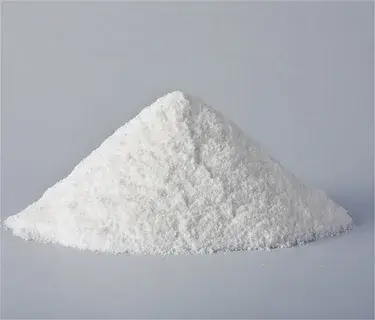
Understanding Aluminium Stearate Powder and Its Quality Challenges
Aluminum stearate powder is a salt of aluminum and stearic acid. The structure is dictated by the carboxylate groups it forms with aluminum ions. The chemical also imparts strong hydrophobic qualities and the capacity to thicken, which makes it helpful in paints, cosmetics, plastics, and waterproofing systems.
This stuff is valuable, but acquiring it without a decent lens structure is quite hazardous. The stability may be compromised by changes in the quantity of aluminum in the formulation, and by the presence of particles of diverse sizes and high moisture levels, factors which are difficult to trace after manufacturing. The issue is compounded by impurities introduced during manufacture, such as residues of heavy metals or residual fatty acids. This is particularly true in regulated businesses where safety documentation is legally enforceable.
Understanding these elements in advance allows purchasing experts and R&D teams to establish explicit acceptance criteria instead of relying upon a generic spec sheet. Quality issues are not theoretical; they have genuine consequences on the strength of coating gels, the feel of pressed cosmetics on the skin, and the barrier integrity of food packaging films.
Core Quality Testing Methods for Aluminium Stearate Powder
Three types of testing are needed to get a full picture of quality: testing for chemical composition, testing for physical properties, and testing for functional behavior. In each domain, a different question about how the material will work in real production settings is answered.
The first step is chemical verification. FTIR spectroscopy proves the presence of carboxylate and aluminium coordination signatures. X-ray fluorescence (XRF) and inductively coupled plasma (ICP) methods measure the makeup of elements and look for heavy metal contaminants. These tests prove that the batch meets the stated requirements and doesn't contain any process-related impurities.
Then, physical testing shows how the aluminium stearate powder will act when it is being handled and mixed:
- Particle size distribution (PSD): Laser diffraction or scanning electron microscopy (SEM) maps the D10, D50, and D90 values. Consistent PSD is directly related to how well coatings and cosmetic bases disperse and cover the surface. Any changes here will cause the material to be uneven or the sealing to work less well.
- Moisture content (Karl Fischer titration): Moisture levels above what is considered acceptable can cause caking, make it hard to flow, and lower performance in hydrophobic applications. Karl Fischer titration gives a precise, quantitative reading of the moisture level instead of an estimate of the weight loss.
- Bulk density and flow index: The way the powder acts in hoppers, blending machines, and automated filling systems is controlled by these parameters. Dosing errors and production stops are directly caused by poor flowability.
Functional testing completes the cycle by proving how well the system works in the real world. Measurements of the hydrophobicity contact angle show that the material doesn't absorb water, and studies of its suitability show how it reacts with other ingredients in target formulas. These tests are very important for companies that make cosmetics and coatings because the visual and barrier qualities must be met.
These three testing points work together to make a scientifically sound buying filter that no smart buyer should skip.
Advanced and Industry-Standard Testing Protocols
Baseline testing is vital, but it does not always pick up tiny alterations and polymorphism discrepancies that might impair a formulation’s stability over time. This gap can be more accurately filled by new analytical techniques for aluminum stearate powder.
Differential scanning calorimetry (DSC) and thermogravimetric analysis (TGA) provide information on how materials change temperature, how they break down,, and whether hydrate forms are present. These data points are significant if the material is going to be processed at high temperatures, for example, when it is extruded or covered with hot lava.
High-performance liquid chromatography (HPLC) provides a complete view of the fatty acid profile, validating the stearic to palmitic acid ratio and detecting minor impurity peaks that other techniques overlook. The use of this level of purity profiling is in accordance with impurity restrictions in regulated applications for ICH Q3A.
Third-party lab validation offers a significant level of objectivity. “Sending batches out to outside, accredited labs and then making the results available to everyone shows a real commitment to quality, not just self-proclaimed assurance.” Some certifications like ISO, HACCP, FSSC 22000, and HALAL give the institutional foundation, which is then augmented at the batch level by third-party data.
Comparing Aluminium Stearate Powder Quality Across Suppliers
It's not true that all providers have the same standards; you have to know what to look for to see the difference. Here are the main things that make reliable industrial-grade aluminium stearate powder sources different from less reliable options:
- Purity grade transparency: A reliable seller doesn't just put an "industrial grade" mark on their products; they also list the amounts of aluminium, fatty acids, and heavy metals that are allowed.
- Batch-to-batch CoA consistency: Certificates of Analysis should show stable parameter ranges across multiple lots. When PSD or moisture values change a lot from one CoA to the next, it means that the process is not stable.
- Regulatory certification portfolio: ISO system certification, HACCP, FSSC 22000, and HALAL certification show that the company follows quality management standards that are known around the world. Following REACH rules is especially important for supply chains in Europe.
- Application-specific validation: Suppliers who give you technical data sheets that are specific to use cases like cosmetics, food packaging, or industrial coatings show that they know their products better and make it easier for you to qualify them.
All of these requirements narrow down the list of possible suppliers to those who can really work with controlled industrial settings. If buyers don't do this comparison step, they may find quality problems that are hard to fix after production has started and cost a lot of money.
Practical Guide to Procuring High-Quality Aluminium Stearate Powder
Specification alignment is the key to successful procurement. If you want a material to work well in an industrial coating, it might need different levels of PSD and aluminium than a material that is used in food packing film or makeup pressed powder. By clearly stating your application needs before contacting suppliers, you can avoid problems early on.
It is common for experienced procurement teams to ask for a trial sample of aluminium stearate powder to be tested in-house before committing to large numbers. Running the sample through your own testing procedures and production conditions gives you application-specific confirmation that you can't get from a supplier's data sheet alone.
Reliability in logistics is just as important as quality in technology. Before choosing a seller, make sure you know how much stock is available right now, the minimum order quantity, and the wait time. Supply problems have real costs for output, even when the resource is good. That risk is greatly reduced by suppliers who have integrated logistics coordination and documented export experience.
Cost vs. quality standards is a judgment call that can be helped by data. A lower unit price that causes group differences or needs more work to be done in-house usually costs more overall than a top-tier provider that has been proven to be consistent.
Conclusion
To make sure that aluminium stearate powder is of good quality, it is tested for chemical identification, physical characterization, and functional validity. More advanced thermal and chromatographic methods are used when basic tests aren't accurate enough. Understanding this testing environment is important for procurement workers and formulators because it helps them evaluate suppliers better, avoid mistakes during production, and prepare regulatory paperwork that can be defended. The most reliable way to get consistent formulation results in industrial, food packaging, and cosmetics is to find a manufacturer that follows these protocols as part of their normal operations and can prove it with certified documentation.
FAQ
1. How do I verify the authenticity of an aluminium stearate sample before bulk ordering?
Ask the provider for a full Certificate of Analysis and compare it to the results of FTIR and ICP analyses done in-house. Real stuff has a specific range of carboxylates and an aluminium content that is within the range that was specified.
2. Which quality parameter most directly affects performance in waterproofing applications?
The best way to tell is to measure the hydrophobicity by the water contact angle. A constant contact angle above 90° shows that the material is effectively blocking water. Coverage uniformity on treated surfaces is also affected by how the particles are sized.
3. Is HALAL certification relevant for aluminium stearate used in food packaging?
Yes. Ingredient traceability, including processing tools, is looked at closely when food-contact packaging materials are checked to make sure they are compliant in HALAL-sensitive markets. HALAL certification gives these supply chains written proof of safety.
4. What heavy metal limits are standard for cosmetic-grade material?
Cadmium is limited to less than 1 ppm and lead to less than 5 ppm, which is in line with EU Cosmetics Regulation and USP guidelines. The sensitivity of ICP-MS tests makes it possible to properly check these trace-level limits.
5. How does moisture content affect aluminium stearate performance during production?
High moisture encourages particle bonding, which leads to caking that messes up powder flow and dosing accuracy. Karl Fischer titration shows that keeping the moisture level below the standard limit keeps the free-flowing properties needed in automatic production systems.
Source Aluminium Stearate Powder Directly from Avans NutriHealth
Avans NutriHealth Co., Ltd. sells industrial-grade aluminium stearate powder (CAS 637-12-7) that comes from factories in China that have been audited and are certified by ISO, HACCP, FSSC 22000, HALAL, and FSC. Each batch comes with a full Certificate of Analysis, and there is a technical team of experts available to help with composition and application problems. Stock is available right away for people who qualify. Get in touch with our team at Lillian@avansnutri.com to get a sample or bulk quote today, whether you are a manufacturer partner, distributor, or brand formulator looking for aluminium stearate powder.
References
1. Journal of the American Oil Chemists' Society — Analysis of Metal Soaps and Their Industrial Applications, 2019.
2. International Journal of Cosmetic Science — Functional Characterization of Metallic Stearates in Pressed Powder Formulations, 2020.
3. Analytical Chemistry — FTIR and XRF Methods for Identification of Fatty Acid Salts in Industrial Materials, 2018.
4. Thermochimica Acta — DSC and TGA Profiles of Aluminium-Based Metallic Soaps, 2021.
5. Journal of Coatings Technology and Research — Role of Metallic Stearates in Hydrophobic Coating Systems, 2017.
6. Food Packaging and Shelf Life — Regulatory and Functional Considerations for Additives in Food-Contact Materials, 2022.