




How Does Freeze Dried Okra Compare with Dehydrated Okra?
You need to know the difference between Freeze Dried Okra and frozen okra if you need to buy it for your business. Lyophilisation is the process that freeze-dries okra. It removes the water under pressure while leaving the cell structure and about 97% of the nutrients. On the other hand, thermal air-drying is used to get rid of the water in dehydrated okra. This makes the food denser while keeping some of the nutrients. When procurement workers look at these versions, they need to think about technical specs, prices, and how well they work with the end uses. This makes the supply chain work better, and the product work better.
Understanding the Basics of Freeze Dried Okra and Dehydrated Okra
There is a big difference in how well okra sells in the food, drug, and supplement industries, depending on how it is stored. When buying, teams know about these changes in technology, they can match the features of a product with the needs of the recipe. In this way, they can make sure that the production methods and the quality of the ingredients are in sync.
The Freeze Drying Process Explained
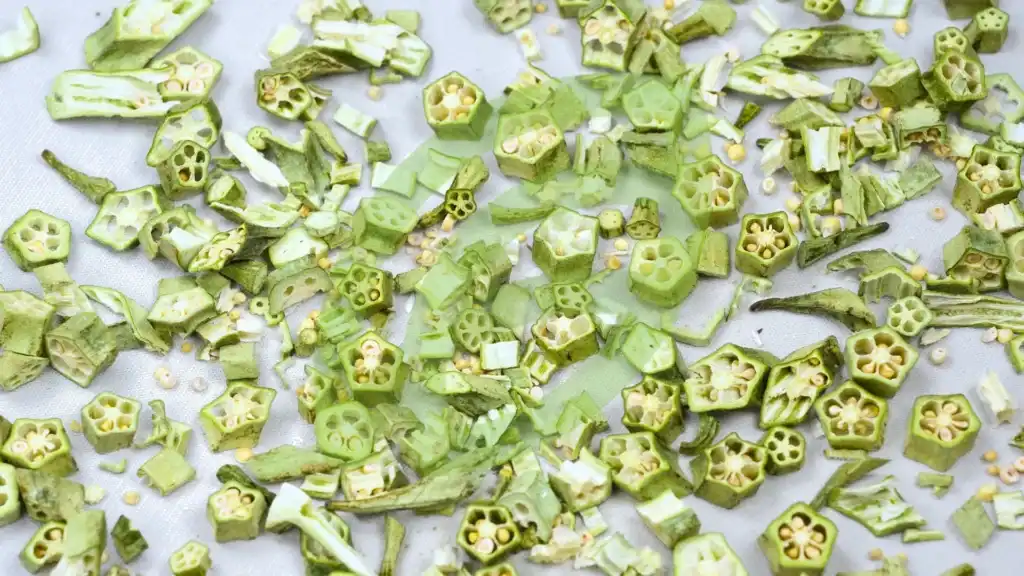
First, the okra pods are frozen to -40°C so that they can be freeze-dried. Then, they are dried by sublimation at 0.1 mbar of pressure. Finally, they are dried again until the moisture level drops below 3%. The honeycomb-shaped cells of the veggie stay together during this process. This makes a structure that is flimsy but very porous and very good at absorbing water again. Low temperatures protect molecules that are sensitive to heat, such as Vitamin C, folate, and chlorophyll. This gives the food a bright green colour without adding any chemicals. Avans NutriHealth's Freeze Dried Okra dices are a good example of this technology because they have a water activity (Aw) below 0.2, which means they stay microbiologically stable for a longer time.
How Dehydration Differs in Methodology
So far, the only way to dry okra is to heat it to a steady level (usually 55 to 65°C) in convection ovens or tunnel dryers for 6 to 12 hours. When you use this method, the moisture level drops to 8–12%. This makes the structure tough and rubbery and the cells weaker. Although it is still a cheap way to make a lot of something, heat breaks down nutrients that are easily damaged by heat. Through Maillard processes, this turns the food dark and takes away 40–60% of its vitamins compared to when it was fresh. The finished product returns more slowly and has different organoleptic qualities, so it can be used in situations where structural accuracy is not as important.
Key Processing Technology Differences
When it comes to capital investment, energy use, and result quality, these methods are not as up-to-date as each other. Freeze drying costs more but makes better ingredients because it needs high-tech pressure tanks and precise temperature control. When cost is the most important factor, dehydration is a good choice because it requires less complicated tools and costs less to run. Before buying, procurement managers have to compare these factors to the product's specs. Most ready-to-eat meals and health goods are made with freeze-dried okra. Dehydrated okra is better for making bulk foods and animal feed.
Comparing Nutritional Value and Quality Between Freeze Dried and Dehydrated Okra
There is a direct link between the nutritional quality of ingredients and their value in pharmaceutical excipients, cosmetic products, and nutraceutical supplements. Procurement professionals can use the specific criteria in this comparative analysis to judge quality and evaluate suppliers.
Nutrient Retention Across Processing Methods
Freeze Dried Okra is the best way to keep the beneficial chemicals safe. When okra is freeze-dried, it keeps 95–98% of its vitamin K. This vitamin is important for clinical nutrition because it makes blood clotting cofactors work right. The amount of folate stays between 92 and 96%, which supports its use in vitamins for women's health. The galacturonic acid and rhamnose that make up the mucilage polysaccharides keep their shape, which means they keep their prebiotic and rheological qualities. About 35–45% of the antioxidants and 50–70% of the water-soluble vitamins in okra are lost when it is dried out. Calcium, magnesium, and potassium levels stay the same in both ways, but absorption may change because the structure is different.
Sensory Characteristics and Texture Analysis
Texture profile research shows that the material has a number of different qualities. Freeze-dried okra is easy to break up and becomes crisp right away, so it doesn't have that sticky texture that makes people not want to eat it. Rehydrating it gives it a quality that is almost as good as new in 3 to 5 minutes, with rehydration ratios of 1:10. Fresh examples are used to match lab measures of colour, and chlorophyll stability makes sure that the product will sell well. Okra that has been dried out is hard and thick, and it takes 15 to 20 minutes to partly revive at a ratio of about 1:4. The colour changes to olive-brown as the sugars caramelise and the chlorophyll breaks down. Because of these changes in taste, freeze-dried forms work best in high-end snacks, while dehydrated forms work better as background ingredients.
Shelf Life and Storage Requirements
You can only keep fresh okra in the fridge for three to five days. Both ways of preserving food make it last a lot longer. If you pack freeze-dried types of okra in high-barrier aluminised laminates, they will stay stable at room temperature for 18 to 24 months, as long as the moisture content stays below 5%. The very low water activity stops the growth of microbes and enzyme reactions without using stabilisers, passing the requirements for a clean label. You can keep dehydrated okra for 12 to 18 months in the same way, but you have to keep a close eye on it so that it doesn't lose its fibre from taking in water. Inventory management likes freeze-dried goods because they can be sent to more markets in North America, Europe, and the Middle East.
Procurement Considerations: Sourcing Freeze Dried vs Dehydrated Okra
Strategic sourcing decisions balance cost efficiency, quality assurance, and supply chain reliability. If procurement managers are evaluating ways to preserve okra, this section addresses the practical concerns they face.
Price Dynamics and Cost-Efficiency Analysis
Freeze-dried okra usually costs three to five times more per kilogram than frozen versions because the process uses a lot of energy and the equipment wears out quickly. When you buy 500 kg or more in bulk, you can get savings of 15 to 25 percent, which helps big producers save money. But effective price takes concentration factors into account. For example, freeze-dried okra is 90% lighter than fresh okra, which means it takes up less room and costs less to ship. Dehydrated okra is cheaper right away for uses that need to stick to a budget, especially when size and fibre content are more important than nutrition density. When figuring out the total cost of ownership, you should include things like reducing waste, how well the product rehydrates, and how much of it you need to use.
Packaging Solutions and Logistics Management
During global marketing, the quality of the product is directly affected by how well the package is kept together. Avans NutriHealth sells freeze-dried okra in three-layer aluminium bags that are flushed with nitrogen. This keeps the oxygen transfer rate below 0.5 cc/100in³/day. This barrier technology keeps wetness out while moving through areas with different levels of humidity, keeping the crispness and avoiding sticking. 10 kg foil-lined boxes and 25 kg fibre drums with vacuum-sealed bags are two bulk choices that make palletisation more efficient. Because they can handle more wetness, dehydrated varieties are shipped in normal plastic bags inside cardboard cases. In China, fresh okra is picked from May to October, and it is processed within 48 hours. Strategic placement of stockpiles and supply deals make sure that goods are always available.
Supplier Credentials and Certification Standards
Verification of the seller is the first step in quality assurance. Avans NutriHealth has many certificates, such as ISO 22000, HACCP, BRC, HALAL, KOSHER, USDA Organic, and FSSC22000, which show that they follow international rules for food safety. These qualifications make it easier to get regulatory clearance in big markets, which speeds up customs processes and meets the needs of retailers. Teams in charge of buying things should check sources to make sure they have tracking systems, test for pesticide residues (making sure they follow EU and FDA maximum residue limits) and handle allergens. Clean-label claims are backed up by proof of non-GMO status and proof of local origin. Private labelling and particle sizes that can be changed (whole pods, dices, pieces, and powder) can meet a variety of manufacturing needs.
Practical Applications and Use Cases for Freeze Dried and Dehydrated Okra in B2B Markets
Industrial versatility determines ingredient adoption across different sectors. Procurement professionals can better match product specifications with manufacturing requirements when they understand the performance profiles unique to each application.
Food Manufacturing and Ready-to-Eat Meal Integration
Freeze Dried Okra works great in instant soup cups because it can be quickly rehydrated in 3 minutes under hot water, which brings back its soft texture without cooking it too much. The crisp structure can be used to add crunch to salads or yoghurt, making it more appealing to look at and healthier. Companies that make snacks use seasoned freeze-dried dices in trail mixes and vegetable chip mixes to save 90% of their weight so they can package their snacks more easily. Dehydrated okra works well in stews, soups, and gumbo mixes that are cooked slowly, as the longer cooking times help the okra rehydrate. The thickening effects, caused by stored mucilage, naturally make soup thicker. Dehydrated okra is used in pet food as a source of fibre and to make stools firmer, which is in line with the move toward natural ingredients.
Nutraceutical Supplement Development
Ground freeze-dried okra powder has a lot of fibre (30–35g/100g), which helps gut health and aids weight loss plans. The carbohydrate structure that is still whole has prebiotic effects that encourage good gut bacteria. Encapsulated forms try to change blood sugar by using the soluble fibre's ability to lower blood sugar. Okra mucilage extract is used in hair products and serums that moisturise hair because it forms a film that helps keep the moisture in. Pharmaceutical excipients use freeze-dried okra powder as a natural binder in pill formulas, which can be used instead of manmade options that don't have a bad reputation. To make sure that each batch is the same, OEM partners need exact bacterial specs and particle size distribution (usually 80–120 mesh).
Rehydration Protocols and Technical Guidelines
The best way to rehydrate depends on the situation. Immersion in cold water for 15 to 20 minutes is good for salads because it keeps the vegetables crisp while giving them back their shape. For soups, the right thickness is soft, cooked rice that has been in hot water (85–95°C) for 3–5 minutes. The rehydration ratio is 1:10, so 100g of freeze-dried okra makes about 1kg of recovered product. This makes scaling recipes easier. Dehydrated okra needs to be soaked in water for longer—at least 20 to 30 minutes—with mechanical stirring helping the water get deeper. Formulators need to take into account that mucilage releases when something is rehydrated, which makes liquids thicker. Pilot testing is used to find the exact water factors that will produce the desired end result, avoiding textures that are too hard or too soft.
Making the Right Choice for Your Business: Freeze Dried or Dehydrated Okra
Strategic alignment between ingredient properties and business objectives optimises procurement outcomes. This decision framework guides selection based on operational priorities and market positioning.
Aligning Product Features with Business Priorities
Companies that care about premium branding and clean label claims tend to choose freeze-dried okra, even if it means paying more for the ingredients. This is because it offers better nutritional profiles and taste experiences. This approach works well for nutritional supplement brands and speciality food lines aimed at health-conscious people. On the other hand, companies that focus on being cost-effective find that dried okra fits their budgets and meets basic performance standards. The decision depends on the brand's character and whether the message is about value and history or about high nutritional value and new ideas. It's also important to think about how long the product will last. Stability in freeze-dried products is better for long-distance distribution networks, while dehydrated products can be handled well by area suppliers with faster turnover.
Supply Chain Stability and Supplier Partnership
Having long-term ties with suppliers of Freeze Dried Okra lowers the risks of buying things. Since 2005, Avans NutriHealth has been in business and has a production capacity of over 1,000 tonnes per year, which allows for scalable order fulfilment. To meet specific recipe needs, our combined research and development team comes up with custom specs. For example, they might change the powder sizes, make their own mixes, or change the drying parameters. As part of quality control, each batch is tested for its moisture content, water activity, bacteria load, and chemical residues. To make cost structures and inventory planning more reliable, purchasing managers should set up outline deals that spell out how prices will work, the minimum order amounts (which are usually 100–500 kg), and when goods will be delivered.
Emerging Technologies and Future Trends
New ideas keep changing how okra is stored. Combining hoover drying with infrared radiation can shorten working times and make energy use more efficient, which could help close the cost gap between approaches. Microencapsulation technologies keep bioactives safe while they are being stored, which makes useful ingredients more stable for longer. Blockchain tracking systems make the supply chain more open, which meets the needs of regulators and consumers who want to buy things that are made fairly. Professionals in charge of buying things should keep an eye on these changes and work with providers like Avans, who invest in ongoing growth and new technology to stay competitive as the market changes.
Conclusion
The comparison between freeze-dried and dehydrated okra reveals distinct value propositions suited to different procurement contexts. Freeze Dried Okra delivers exceptional nutrient retention, superior texture profiles, and extended shelf stability, justifying premium pricing for applications demanding high-quality ingredients. Dehydrated alternatives provide cost-effective functionality where nutritional intensity and rapid rehydration are secondary considerations. Procurement professionals must evaluate these options against specific formulation requirements, budget constraints, and brand positioning strategies. Partnering with certified suppliers like Avans NutriHealth ensures access to both preservation technologies, backed by comprehensive quality systems and responsive customer service supporting operational success.
FAQ
What nutritional advantages does freeze dried okra offer over dehydrated versions?
Freeze-dried okra retains 92–98% of heat-sensitive vitamins including Vitamin C, folate, and Vitamin K, compared to 50–70% retention in thermally dehydrated products. The gentle sublimation process preserves chlorophyll, antioxidants, and bioactive polysaccharides without degradation, delivering superior nutritional density per serving.
How quickly does freeze-dried okra rehydrate in various applications?
Rehydration occurs within 3–5 minutes in hot water (85–95°C) at a 1:10 ratio, restoring near-fresh texture. Cold water immersion requires 15–20 minutes. Dehydrated okra needs 20–30 minutes under similar conditions, achieving partial rehydration with a denser consistency.
What are typical minimum order quantities for B2B procurement?
Standard MOQs range from 100kg for speciality Freeze Dried Okra products to 500kg for dehydrated variants. Bulk orders exceeding 1,000kg qualify for volume pricing discounts and customised packaging solutions, accommodating large-scale manufacturing requirements.
Partner with Avans for Premium Freeze Dried Okra Supply
Avans NutriHealth stands ready to support your ingredient sourcing needs with certified, high-quality Freeze Dried Okra manufactured under ISO 22000, HACCP, BRC, and organic standards. As an experienced supplier since 2005, we deliver consistent product quality backed by comprehensive testing and documentation. Our China-based production facilities maintain substantial inventory of freeze-dried okra dices and whole pods, ensuring prompt delivery for bulk orders across North America, Europe, and the Middle East. Whether you require clean-label ingredients for nutraceutical supplements, functional food components, or OEM custom formulations, our technical team provides personalised solutions matching your specifications. Contact Lillian@avansnutri.com today to request product samples, discuss pricing for Freeze Dried Okra for sale, and explore how our manufacturing expertise supports your business objectives with reliable supply and exceptional service.
References
1. Akanbi, C.T., Adeyemi, R.S., and Ojo, A. (2006). "Drying Characteristics and Sorption Isotherm of Tomato Slices," Journal of Food Engineering, 73(2), pp. 157-163.
2. Ratti, C. (2001). "Hot Air and Freeze-Drying of High-Value Foods: A Review," Journal of Food Engineering, 49(4), pp. 311-319.
3. Shofian, N.M., Hamid, A.A., Osman, A., et al. (2011). "Effect of Freeze-Drying on the Antioxidant Compounds and Antioxidant Activity of Selected Tropical 4. Fruits," International Journal of Molecular Sciences, 12(7), pp. 4678-4692.
5. Marques, L.G., Silveira, A.M., and Freire, J.T. (2006). "Freeze-Drying Characteristics of Tropical Fruits," Drying Technology, 24(4), pp. 457-463.
6. Krokida, M.K. and Maroulis, Z.B. (1997). "Effect of Drying Method on Shrinkage and Porosity," Drying Technology, 15(10), pp. 2441-2458.
7. Oikonomopoulou, V.P. and Krokida, M.K. (2013). "Novel Aspects of Formation of Food Structure During Freeze Drying," Drying Technology, 31(9), pp. 1048-1054.