




Freeze-Dried Okra OEM: Packaging and Private Label Guide
If you’re looking to source freeze dried okra for your next product line, this article is for you. Whether you’re a procurement manager for a nutraceutical brand, a formulator making functional snacks, or a distributor looking to enter new markets, it’s critical to know the ins and outs of OEM packaging and private label. Lyophilized okra, freeze dried, preserves up to 97% of the natural nutrients, including Vitamin C, folate, and dietary fiber, without the notorious slimy texture. Whether it’s package forms or supplier selection, this guide will take you through it all to help you make confident, educated B2B choices.
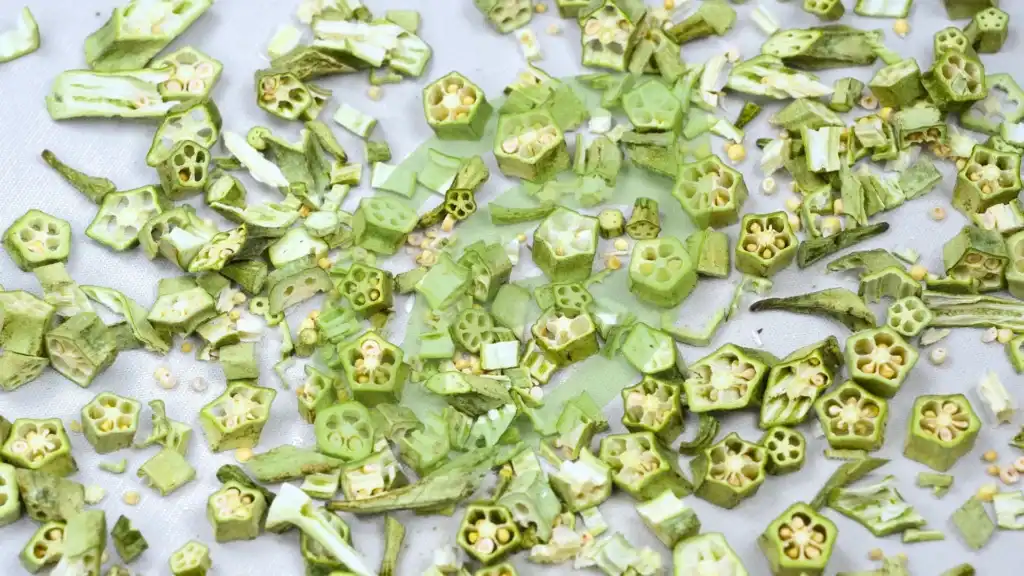
Understanding Freeze-Dried Okra and Its Market Potential
Lyophilization, or freeze-drying, is the process where fresh okra is frozen below -40°C, and then the water is removed by sublimation under high vacuum conditions. This results in a product with < 5% moisture and < 0.2 water activity (Aw), which inhibits all microbial development without the need for any preservatives. Unlike air dehydration or vacuum cooking, this approach maintains the cellular structure meaning heat sensitive vitamins, antioxidants and chlorophyll are not damaged.
The worldwide freeze dried food market size was valued at over USD 2.7 billion in 2023. It is anticipated to have a compound annual growth rate (CAGR) of around 7.5% to 2030, due to increasing demand for long-lasting and environment-friendly chemicals. Okra is increasingly popular in functional food preparation because of its mucilage carbs, which improve digestion and blood sugar regulation. This vegetable is a high-value, premium input with obvious consumer appeal for enterprises that create food, supplements, and industrial additives.
Avans NutriHealth Co., Ltd. sells freeze-dried okra dices from China in whole and chopped versions. The firm has enough of goods on hand to ship. The product is HALAL, ISO, USDA, HACCP and FSSC22000 certified and hence may be marketed in regulated markets in North America, Europe and the Middle East.
OEM Packaging Solutions for Freeze-Dried Okra: Core Considerations
Barrier Materials and Format Selection
It only takes 15 to 30 minutes of being in a humid environment for freeze dried okra to start absorbing water and losing its natural crispness. That means the integrity of the packaging can't be compromised. High-barrier aluminum foil pouches that are flushed with nitrogen are still the standard for both retail and export formats. Stand-up boxes look good on shelves and can be closed again, and big poly-lined kraft bags work well for industrial and wholesale buyers.
For business-to-business purchases, these are the main types of packaging that matter:
- Nitrogen-flushed aluminum foil stand-up pouches are preferred for retail-facing private label products. They maintain internal oxygen levels below 0.1%, which is critical for preserving the bright green chlorophyll and preventing lipid oxidation over an 18–24 month shelf life.
- Glass jars with desiccant inserts suit premium or specialty health brands that prioritize visual transparency and unboxing experience, though they add weight and fragility cost to logistics.
- Bulk woven or poly-lined bags (5 kg to 25 kg) serve industrial ingredient buyers and distributors who repackage downstream. These are cost-efficient for high-volume OEM orders.
Which style to use relies on your target market, minimum order quantity (MOQ), and the way you plan to distribute your product. Avans offers a range of flexible packaging options to meet the needs of a wide range of buyers. These include custom label printing that is in line with FDA and EU labeling rules.
Customization and Sustainability
OEM clients are asking for more than just format. They want branded label design, QR code integration for tracking, and environmentally friendly packaging options. Brands that care about the environment can now use recyclable single-material bags and compostable kraft substitutes. These choices do come with a small price boost, but they are very popular with health-conscious shoppers in the US and Europe.
How to Choose the Right OEM Freeze-Dried Okra Supplier
The easiest method to verify whether a provider is dependable is to look at their list of certificates. ISO 22000, HACCP, FSSC 22000. Procurement teams should ask for at least for food safety. If you wish to sell your goods in retailers in the Middle East or North America, then getting USDA Organic, HALAL or KOSHER certifications would assist you to reach many more people.
Look beyond paper certifications and see the real infrastructure. Annual production capacity . 2. Cold chain control throughout processing . 3. Ability to monitor a product from source to sale . These are indicators of supply chain maturity . Avans has more than 100 workshop personnel and can produce more than 1,000 tons of goods every year. There is always a consistent supply of bulk commodities with no danger of wait time.
Compare costs too. Freeze-dried vegetables cost more per kilogram than those traditionally dried since the lyophilization method takes 20 to 40 hours each batch and uses a lot of energy. This kind requires buyers to budget accordingly and consider the overall landed cost, as opposed to just the ex-works price.
Private Label Strategies for Freeze-Dried Okra Products
You can't just slap a logo on a pouch and launch a private label brand with lyophilized freeze dried okra. The most successful OEM clients we’ve encountered all have three things in common: unambiguous health claims, transparency about where the product originates from, and texture stories.
Health claims need to be founded on facts that can be proven. Okra contains soluble fiber such as pectin and beta-glucan analogs, which aid the digestive system function. The amounts of vitamin K and folate are also maintained at a desirable level following lyophilization. These are assertions that are accepted by purchasers of functional foods and end users. Origin disclosure, particularly for non-GMO claims, is a confidence builder in the US natural products industry. Texture storytelling with the oil-free, crispy bite vs. vacuum-fried choices helps the food seem like a premium, guilt-free snack.
Regulatory requirements must be in the label design from the beginning. The US FDA Nutrition Facts panels, EU Regulation 1169/2011 allergy declarations and HALAL/KOSHER marks are labels of varied sizes. The right OEM partner that understands these demands in a wide range of countries shortens testing cycles and helps accelerate market entrance.
Logistics, Shelf Life, and Supply Chain Optimization
Freeze-dried okra will survive for 18-24 months at room temperature if kept away from direct sunshine and moisture. It does not require refrigeration, making it much simpler for distributors in warm regions to stock the product.
Temperature controlled containers are not essential for international bulk shipments, although they are a good idea for lengthy sea freight routes to tropical markets. Packaging integrity should be verified before shipping. This may be done by checking the strength of the seal and determining how much oxygen is still present. The use of desiccant sachets in each box adds an additional barrier against moisture that prevents minor holes in the packing from opening during delivery.
Freeze-dried vegetables have the same customs treatment as regular veggies, depending on destination. In the US, HS number 0712.90 is often used for lyophilized okra, although the EU could use a different number depending on the extent of processing. It is recommended that purchasers confirm tariff codes with their customs broker ahead of time to minimize delays in clearing.
Conclusion
Freeze dried okra is an excellent product for food companies, supplement manufacturers, and private label manufacturers looking to develop goods with an extended shelf life and clean label. There’s a significant commercial effect to every stage of the OEM process, from picking the barrier packaging, to ensuring sure the supplier is licensed, and the private label laws are adhered to. With approximately 20 years of experience in production, Avans NutriHealth Co., Ltd. has strong certifications and flexible OEM capabilities to assist you in achieving your product development objectives, from concept to a ready-to-sell SKU.
FAQ
1. What is the typical shelf life of freeze-dried okra in OEM packaging?
When sealed in nitrogen-flushed aluminum foil packaging, freeze-dried okra maintains quality for 18 to 24 months at ambient temperature, provided the package remains unopened and is stored away from direct sunlight and humidity.
2. Can Avans supply organically certified freeze-dried okra for private label?
Avans holds multiple certifications, including USDA and HALAL. Buyers requiring USDA Organic designation should confirm this specification during the inquiry process, as organic-grade batches involve dedicated raw material sourcing.
3. What is the minimum order quantity for OEM freeze-dried okra dices?
MOQ varies by packaging format and customization level. Bulk ingredient orders and custom retail packaging runs carry different MOQ thresholds. Contact our team directly to receive a tailored quote based on your volume and specification requirements.
4. Is the mucilage in okra retained after freeze-drying?
Yes. The polysaccharide structure of okra's mucilage remains chemically intact through lyophilization. While imperceptible in the dry state, it reactivates upon rehydration or consumption, preserving its digestive and glycemic-support benefits.
5. Why is freeze-dried okra priced higher than other dried vegetables?
The lyophilization process runs 20 to 40 hours per batch and requires sustained vacuum energy. Whole okra pods also have a low mass-to-volume ratio, reducing batch yield per cycle compared to denser produce like carrots or corn.
Partner with Avans for Your Freeze-Dried Okra Supply Needs
Avans NutriHealth Co., Ltd. is a reliable company that makes and sells freeze-dried okra. They have approved facilities, yearly production capacity that exceeds 1,000 tons, and freeze dried okra Dice that are in stock and ready to ship right away. We offer flexible OEM packaging, help with private labels, and compliance with multiple certifications for markets around the world. To start the buying process, email our team at Lillian@avansnutri.com and ask for a sample or bulk quote right away.
References
1. Petropoulos, S. A., et al. "Nutritional Value and Bioactive Compounds of Okra." Foods, 2018.
2. Ratti, C. "Hot Air and Freeze-Drying of High-Value Foods: A Review." Journal of Food Engineering, 2001.
3. Marques, L. G., et al. "Freeze-Drying of Tropical Fruits." Drying Technology, 2006.
4. Grand View Research. "Freeze-Dried Food Market Size, Share & Trends Analysis Report." Grand View Research, 2023.
5. Arapitsas, P., et al. "Effect of Processing on Polyphenol Content of Abelmoschus esculentus." Food Chemistry, 2011.
6. Fellows, P. J. Food Processing Technology: Principles and Practice, 4th ed. Woodhead Publishing, 2017.