




Can Inulin Powder Improve Digestion and Daily Wellness?
Yes — and the science backs it up convincingly. Inulin powder, a soluble prebiotic fiber derived primarily from chicory root (Cichorium intybus), passes through the small intestine undigested and reaches the colon, where beneficial bacteria ferment it into short-chain fatty acids (SCFAs). This fermentation process actively supports gut microbiota balance, bowel regularity, and broader metabolic health. For manufacturers and formulators in the nutraceutical, pharmaceutical, and functional food sectors, understanding how this ingredient performs — from the gut to the label — is essential before making a sourcing decision.
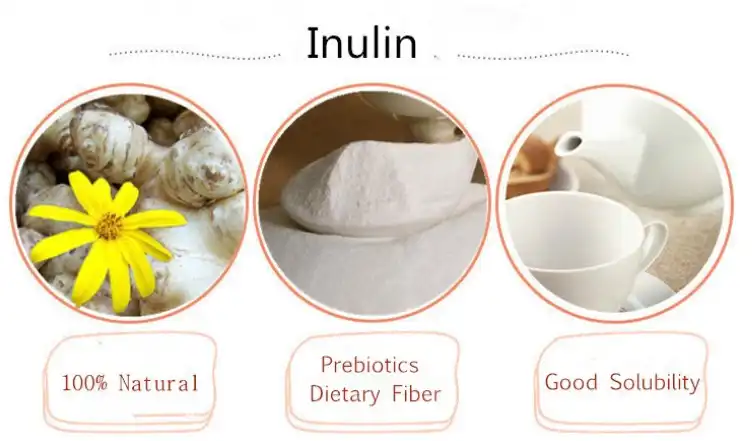
Understanding Inulin Powder and Its Role in Digestion
How It Works in the Gut
The roots of chicory contain a fructan, known as inulin. Fructans are chains of fructose molecules linked by β(2→1) glycosidic linkages. Humans lack the enzyme to break down these connections; thus, the fiber enters intact in the large intestine. There it is broken down by strains of Bifidobacterium and Lactobacillus, which produce short-chain fatty acids (SCFAs) such as butyrate and propionate. These compounds make the pH of the stomach lower and prevent nasty germs from multiplying. In a 2015 research in the British Journal of Nutrition, healthy persons who took inulin powder tablets daily for two weeks had a big increase in their Bifidobacterium levels.
Supporting Bowel Regularity
Inulin has also been shown in clinical trials to help with how often and how solid your stools are. Seniors who took part in the study had less serious diarrhea and a better quality of life after getting 15 grams of supplements every day. Now that we know exactly how inulin works, it can be used with confidence by B2B clients who are making digestive health supplements or functional fiber blends.
Comprehensive Benefits and Considerations of Inulin Powder
This prebiotic fiber does wonders for your health. These are the major advantages that make it helpful for a broad variety of products:
- Blood sugar control: Inulin slows down stomach emptying, which delays the blood sugar spike after eating. Animal studies indicate it may delay the onset of insulin resistance by enhancing the intestinal barrier and reducing systemic inflammation.
- Weight and appetite control: Inulin powder is a carbohydrate without calories that is not digested. It slows the movement of food from your stomach, helping you feel full longer without adding calories.
- Cholesterol support: Inulin's fermentation byproducts promote the liver activities that generate cholesterol. This may reduce LDL over time.
- Mineral absorption: It decreases the pH in the lumen region of the gut, which allows the increased absorption of calcium and magnesium. This is a huge advantage for bone health products since it makes minerals stronger.
- Therefore, inulin is a substance with several uses. This is precisely the kind of thing that both consumers and manufacturers want to see in an ingredient.
Planning teams should consider what is and what is not appropriate. Those with a sensitive system may experience some gas or bloating temporarily if they consume more than 10–15 grams a day. Start with 3–5 grams per day and work your way up carefully. The discomfort will go away and the drug will still function. The gel forming ability increases with a Degree of Polymerization (DP) higher than 23 (high performance inulin). That means it may be used to replace fat in dairy products, but has to be applied in a different method if the temperature is below 60C.
Comparing Inulin Powder with Other Dietary Fibers and Prebiotics
Inulin vs. Psyllium Husk and Resistant Starch
Psyllium husk is mostly a thick fiber that gels up. It works by making you go to the bathroom more often. Plus, it does more than just help Bifidobacteria. There are more microbes that ferment resistant starch, and it makes more butyrate. However, it is not as clean as inulin powder when it comes to prebiotics. One good thing about inulin is that it has been shown to be specific: it feeds types that are linked to health benefits. This makes it a better choice for controlled label claims about gut health.
Organic vs. Conventional Sourcing
There are strict checks on where the raw materials come from, what chemicals are used, and how the product is made for inulin that is organically approved. In North America and Europe, brands that want to sell clean labels must first get organic certification. Buying teams should start by making sure that sources are certified by the USDA Organic, HALAL, KOSHER, or FSSC22000. Also, it's important to know how clean something is. Prebiotics that contain at least 90% inulin are always useful.
Procurement Insights: Sourcing and Buying Inulin Powder in Bulk
You need more than just a price quote to buy a lot of inulin. A seller can either be a long-term partner or a problem that needs to be fixed over and over again. This is based on how well the supply chain works, how well rules are followed, and how consistent the batches are.
Here are the most important things that procurement teams with a lot of experience look at when they shop for bulk inulin powder:
- Certification portfolio: If you want to buy something in a controlled market, look for certifications like HALAL, ISO, USDA Organic, HACCP, and FSSC22000.
- Purity and specification transparency: Suppliers should provide COA documents for each lot that confirm the DP range, moisture content, and safety against microbes.
- Scalability and stock availability: If lead times stay the same and goods are always in stock, production doesn't stop. This is especially important for companies that make a lot of nutraceuticals.
- Customization capacity: OEM blending, private labeling, and custom particle size all show how skilled a maker is in their field and how dedicated they are to keeping customers for a long time.
People who buy things can do more with these standards than just compare prices. They help them protect the quality of the goods they buy.
The world's inulin market is still growing, thanks to more people wanting gut-healthy products and a move toward making products with clean labels. Brands that can get a steady supply of approved materials are now ahead of competitors who still have to deal with sources that aren't reliable.
Maximizing the Value of Inulin Powder for Your Business
Formulation Strategies Across Categories
High-performance inulin powder (DP >23) makes a microcrystalline gel in low-fat dairy products that tastes and feels like milk fat. So, frozen treats don't get ice crystals without having to use chemical stabilizers. It gives gluten-free baked goods better structure and helps them hold on to liquid better. Its low water activity means that probiotics stay alive while being stored, which makes it a good way to transport live cultures in synbiotic powder mixes.
Regulatory and Labeling Clarity
A decision made by the FDA in 2018 says that inulin is dietary fiber in the US. This means that food labels can say that a product has fiber in it. In EU markets, it is known as a functional food ingredient that helps with prebiotics. Brands that sell in two markets can save time and money by buying from sellers who keep paperwork that is valid in both markets. One less thing for the government to look over, and the product can be on the market faster.
Conclusion
Due to the quantifiable digestive benefits it offers, which are backed up by clinical studies, inulin powder is one of the most strategically useful ingredients on the market right now. Inulin from chicory root, especially when it is 90% pure, is a solid, evidence-based base for formulas that want to improve gut health, use clean-label fat replacement, or create prebiotic synergy. The most important thing is to buy it from a company whose supply chain is dependable and whose products are of good quality.
FAQ
1. Is inulin powder safe for daily use?
It is thought to be safe by the Food and Drug Administration (FDA). Five to fifteen grams a day shouldn't be too much for most healthy people. For people who aren't used to eating a lot of fiber, higher amounts may cause gas or bloating for a short time. It is recommended that the dose be raised slowly.
2. How does inulin differ from psyllium husk?
Its main job is to soak up water and make you go to the bathroom more often. Inulin is a certain type of prebiotic that helps make SCFAs and feeds good bacteria in the gut called Bifidobacteria. They are used in health in a lot of different ways.
3. Should I choose organic or conventional inulin for my formulation?
Organic inulin is better for clean-label goods that are sold in North America and Europe. It is important to check that the food is USDA Organic and FSSC22000 approved. ISO and HACCP papers are more important than purity standards when it comes to medicinal uses.
4. What is the minimum purity level acceptable for prebiotic claims?
A prebiotic is said to work if it has at least 90% inulin. Not having as much could change the way fermentation works, which could make it harder to support the claim.
Partner with Avans for Certified Inulin Powder Supply
It is safe to say that Avans NutriHealth Co., Ltd. has been making inulin powder for more than 15 years and has given approved ingredients to food and supplement brands all over the world. Chicory Root Extract, 90% Inulin Powder (CAS 9005-80-5) is available. It has been approved by HALAL, ISO, USDA, HACCP, and FSSC22000, and you can pick between OEM and private label. Mail our staff an email at Lillian@avansnutri.com right away to get prices and forms.
References
1. Kelly, G. (2009). Inulin-type prebiotics: A review. Alternative Medicine Review, 14(1), 36–55.
2. Roberfroid, M. (2005). Inulin-type fructans: Functional food ingredients. Journal of Nutrition, 135(7), 1520S–1525S.
3. Niness, K. R. (1999). Inulin and oligofructose: What are they? Journal of Nutrition, 129(7 Suppl), 1402S–1406S.
4. Dahl, W. J., & Stewart, M. L. (2015). Position of the Academy of Nutrition and Dietetics: Health implications of dietary fiber. Journal of the Academy of Nutrition and Dietetics, 115(11), 1861–1870.
5. Shoaib, M., et al. (2016). Inulin: Properties, health benefits and food applications. Carbohydrate Polymers, 147, 444–454.
6. Nau, F., et al. (2015). Effect of long-chain inulin on gut microbiota and metabolic markers in adults with constipation. British Journal of Nutrition, 113(6), 968–977.