




Can Freeze Dried Okra Improve Product Differentiation?
Of course. By converting a perishable produce with a contentious texture into a shelf-stable, nutrient-dense ingredient that keeps about 97% of its original nutritional profile, Freeze Dried Okra provides measured product differentiation by addressing important issues in the B2B food supply chain. Lyophilization gets rid of the slimy appearance that turns off many customers and increases the shelf life to 18 to 24 months without adding any chemicals. Because of these two benefits, Freeze-Dried Okra is a good material for companies that want to make high-quality, clean-label products that stand out in crowded markets while also getting around the problems that come with distributing fresh produce.
Understanding Freeze-Dried Okra – Product and Process
What Distinguishes Lyophilized Okra from Conventional Forms
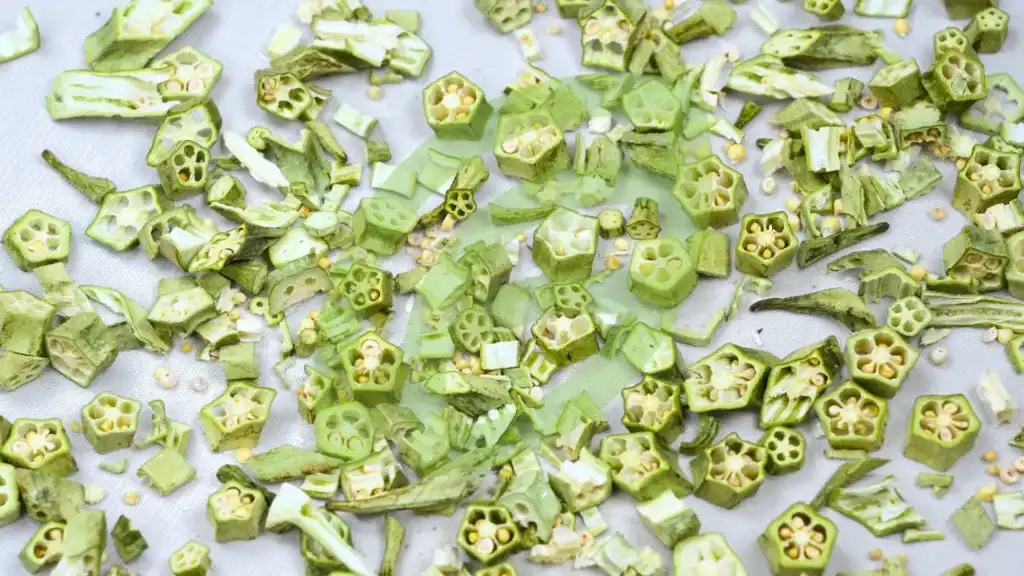
Lyophilization is a strict process for preserving food that involves freezing fresh Abelmoschus esculentus pods and then letting the ice melt in a high-vacuum environment. This method is very different from thermal air-drying or vacuum cooking, which either destroy nutrients that are sensitive to heat or add oils from outside the food that change its nutritional profile. The final product has a moisture level that is always below 5% and a water activity (aw) level that is less than 0.2. This stops all bacterial growth and enzyme reactions without using any chemical stabilizers. Lyophilized pods keep their hexagonal shape and porous cellular structure, while dried pods turn leathery and are hard to recover, and canned pods lose their structural integrity. This honeycomb structure lets water soak in quickly, with a refresh ratio of about 1:10; when exposed to liquid, it returns to a nearly fresh state within minutes.
The Advanced Freeze Drying Process and Its Technical Advantages
Under vacuum pressures of 0.1 to 0.3 mbar and temperatures between -40°C and -50°C, the lyophilization process keeps the okra's molecular integrity, taste compounds, and bioactive molecules. This low-temperature method is better than standard dehydration methods because it doesn't cause the processes that happen during heat processing, like caramelization and oxidation. The technology keeps heat-sensitive vitamins like Vitamin C, folate, and Vitamin K intact at rates higher than 95%. It also keeps the intact dietary fiber structure, which is good for your health. The process changes the mucilage, which is a hydrocolloidal structure made up of liquid pectin, into a dry, airy mesh that only becomes sticky when it is rehydrated or broken down in the mouth. In this change, the physical preferences of consumers are taken into account, and the digestive benefits of soluble fiber are kept.
Key Nutritional Benefits Relevant for B2B Product Development
Freeze Dried Okra is a great ingredient for making useful and clean-label products because it is high in nutrients. Each 100g dose has about 9g of dietary fiber, which supports claims about gut health that are becoming more popular in the market. When antioxidant substances like quercetin and catechins are kept, it opens up the possibility of making goods that reduce oxidative stress. Lyophilized okra is great for weight loss products and snacks that make you feel full because it has a low calorie density and a high vitamin concentration. It is clearly different from vacuum-fried options, which usually have 15–30% more fat, because it doesn't contain any oil. This allows for clean label claims and fits with modern eating habits that prefer lightly processed foods. The natural chlorophyll stability of the product is maintained by rapidly freezing and vacuum control. This means that no artificial colorants are needed, and the final goods look good.
Product Differentiation Through Freeze Dried Okra – Why It Matters
Addressing Supply Chain Challenges with Superior Shelf Life
Fresh okra goes bad quickly because it breathes so quickly. Even when kept in the fridge, it usually goes bad within three to five days. This natural instability makes it hard to keep track of supplies and leads to food waste all along the delivery chain. Freeze-dried okra varieties have a shelf life of 18 to 24 months when kept below 25°C in high-barrier aluminum packaging. This changes the costs of buying okra in a big way. This stability lets makers keep regular ingredient supply despite changes in the seasons. This gets rid of the price volatility that comes with fresh product markets. Getting rid of 90% of the moisture reduces the weight by a huge amount, which cuts down on shipping costs and the carbon footprint of each unit of nutrition provided. This helps meet sustainability goals that are becoming more important in corporate buying strategies.
Unique Selling Propositions for Premium Product Development
The change from okra's controversial mucilaginous feel to a crisp, rigid structure makes it possible for many types of products to stand out. People who make ready-to-eat snacks can market Freeze-Dried Okra as a vegetable-based alternative to chips, which will appeal to health-conscious people who want options that are high in nutrients. The ingredient's great rehydration qualities make it useful in quick meal kits where the structure needs to stay intact when light moisture is added. Clean-label programs and the zero-additive preservation method work together to let brands sell goods that don't have any added colors, flavors, or preservatives. This new method for turning lyophilized pods into fine powder opens up new ways to make nutritional supplements, smoothie boosts, and functional drinks that include veggie nutrition without changing the taste or texture.
Case Studies Demonstrating Market Success
Several North American brands have been able to set themselves apart in the market by using Freeze-Dried Okra. A high-end snack company released seasoned okra crisps to appeal to keto and veggie consumers. They were sold in natural food stores, where the clean-label marketing earned them a 40% price premium over regular vegetable chips. A company that makes quick meal kits added diced lyophilized okra as a high-fiber topping that keeps its shape during light rehydration. This made their products stand out by giving them more nutrients without the texture problems that come with using fresh or canned options. These uses show that having a technical understanding of an ingredient's special properties can give you real competitive benefits and more market possibilities.
Comparative Analysis for Informed Procurement Decisions
Shelf Life and Cost Efficiency Across Preservation Methods
When choosing a way to buy something, people making the choice need to look at the total cost of ownership, not just the unit price. Fresh okra usually costs between $2 and $4 a kilogram, but it needs to be processed right away and has to be kept cold, or it could go bad during distribution at a rate of 15% to 20%. For $3–5 per kilogram, frozen varieties can be stored for longer, but they need to be kept cold all the time, which increases energy costs and limits the ways they can be distributed. Dehydrated okra costs between $8 and $12 per kilogram and is stable at room temperature, but it doesn't hold as many nutrients and isn't as good at rehydrating. Freeze Dried Okra costs between $18 and $28 a kilogram from reputable sources, but it keeps its nutrients better, is easier to ship, and produces almost no trash. When yield loss and nutrient density are taken into account, lyophilized versions often have competitive total costs. They also allow for product differentiation, which supports higher price strategies.
Nutrient Retention and Quality Attributes
Comparative research shows that different cooking methods have big differences in how well nutrients are kept. About 40 to 60 percent of heat-sensitive vitamins are broken down when temperatures go above 60°C. This is especially true for ascorbic acid and folate. Similarly, high-temperature sterilization methods used for canning break down the nutrients and add salt, which goes against clean-label goals. Freezing is a good way to keep nutrients fresh, but when it thaws, the shape changes, which limits how it can be used. Lyophilization keeps vitamin retention rates above 95% while keeping the structure intact, which lets the food be used in a variety of ways. Premium Freeze-Dried Okra has a moisture content below 3%, color values (Lab) that are very close to those of fresh pods, and high fracturability scores in texture profile analysis, which means it is crisp without being hard.
Organic Certification and Sustainable Sourcing Considerations
Organic products are still in high demand in the market, thanks to consumers' concerns about quality and environmental responsibility. Organic Freeze-Dried Okra usually costs 20–30% more than regular varieties, but it lets you sell in higher-end stores and backs up marketing promises about being environmentally friendly. Certifications like USDA Organic, HALAL, KOSHER, and ISO 22000 make sure that the process is honest and can be tracked, which is important for North American, European, and Middle Eastern markets that follow rules. Purchasing managers should judge sellers based on their list of certifications, their methods for tracking goods, and the way they test for pesticide residue. Freeze-drying has environmental benefits like less food waste, lower shipping emissions, and no need for preservatives. These benefits are in line with corporate social responsibility goals that are becoming more important in global companies' purchasing decisions.
How to Source and Store Freeze Dried Okra Efficiently
Evaluating Manufacturers and Establishing Supplier Partnerships
A successful buying process starts with a thorough review of the provider, focusing on their production capacity, quality systems, and expert support abilities. Manufacturers with facilities that are ISO 22000, HACCP, or BRC approved show a commitment to food safety management systems that is important for business-to-business relationships. Production capacity is especially important for businesses that want to grow. Suppliers whose yearly output is more than 500 tons can safely meet rising demand without having to interrupt their supplies. Technical help, such as customizing specifications like dice sizes, organic certification, or changed packaging forms, adds value above and beyond the price of the product. This all-around method is shown by Avans NutriHealth Co., Ltd., which combines manufacturing know-how gained since 2005 with modern, approved facilities that make sure the consistency and purity of their products. Because they can give you both whole pods and exact dice cuts, you can make formulations that work for a wide range of uses.
Logistics Best Practices and Packaging Requirements
To keep the quality of a product while it's being shipped or stored, you need to know how hygroscopic Freeze Dried Okra materials are. The low moisture content that makes it stable also makes it easy for moisture from the air to get in, which can change the feel and shorten the shelf life. The best security comes from high-barrier packing made of aluminized multilayer films that let oxygen through at rates below 1 cc/m³/day and moisture vapor through at rates below 0.5 g/m²/day. Bulk packaging in 10–20 kg cases with air shields inside makes it easy to handle while keeping the seals intact. To stop hygroscopic moisture uptake, storage sites should keep temperatures below 25°C and relative humidity below 60%. Along with quality factors like checking the moisture content, microbiological testing methods, and accepted ranges for physical characteristics, these requirements should be made clear in purchase agreements.
Purchasing Channels and Negotiation Strategies
Direct connections with manufacturers, specialized ingredient distributors, and, more and more, digital platforms that connect suppliers with buyers around the world are all B2B ways to buy freeze-dried veggies. Direct manufacturer partnerships usually have the best prices for orders with more than 500 kg of goods, but they may need longer wait times and higher minimum order amounts. Distributors give you the freedom to order smaller amounts and get them to you faster, but they charge 15–25% more. Instead of just looking at FOB price, buying managers should think about the total landed cost, which includes freight, duties, and handling, when they are making deals. Payment terms, quality guarantees, and the ability to get expert help are all examples of value factors that go beyond unit price. By making long-term supply deals with volume promises, you can get better prices and make sure that quality stays the same and supplies keep coming, which is important for planning production.
Applications and Market Opportunities for Freeze Dried Okra in B2B Sectors
Food Manufacturing and Ready-to-Eat Meal Applications
Because Freeze Dried Okra can be rehydrated, it can be easily added to quick soups, noodle cups, and ready-made meals that only take a short time to make. When introduced to hot water, the open structure quickly absorbs water, giving the okra a texture and look that are similar to freshly cooked okra in three to five minutes. Because of this, it works great for meals while camping, emergency food stores, and serving at places where light, shelf-stable food is important. The item can be added to rice pilafs, curry blends, and stew mixes. The natural thickening qualities of rehydrated mucilage improve the texture and taste of the food. The fact that it can keep its shape when exposed to light moisture makes it different from regular dried veggies, which tend to get mushy or not recover evenly.
Snack Industry and Clean-Label Innovations
Freeze-Dried Okra can be used as a base for seasoned snacks aimed at health-conscious customers because it gets crispy through a process called lyophilization. Manufacturers can use different seasonings, like sea salt, cheese powder, and chili spice mixes, to make different taste profiles while keeping the clean-label draw of bases with only one ingredient. Nutrient content claims are appealing in the weight management and health areas because the food has a low caloric density and a high fiber content. The bright green color, which is naturally maintained by fast freezing, makes the package stand out and lets people know that the food is still fresh even though it has a longer shelf life. Positioning the product as a vegan, keto-friendly, and non-GMO snack meets the needs of a wide range of diets with a single product, which increases the size of the market that can be reached.
Nutraceuticals and Functional Food Ingredients
When Freeze-Dried Okra is turned into a fine powder, it can be used in a lot of different ways to make supplements and foods healthier. The powder form makes it easy to add to smoothies, protein shakes, and nutrition bars without having to deal with the taste issues that come with whole or chopped forms. The soluble fiber helps promote digestive health, and the antioxidant chemicals allow for the creation of goods that target inflammatory reactions and metabolic health. When crushed, the neutral flavor profile lets you mix it with other things without changing how they taste. The gentle fiber source and high micronutrient density can help in clinical nutrition uses like baby feeds and meal replacements for seniors. These specialized uses often come with higher prices and strict quality standards, such as bacterial parameters that are above and beyond what is required for food-grade products and pesticide residue limits that are below detection levels.
Conclusion
Many business sectors can use Freeze Dried Okra to make their products stand out because it keeps nutrients better, lasts longer, and changes structure, making it useful in more situations. The ingredient solves basic supply chain problems that come with fresh food and lets companies make high-quality, clean-label goods that can compete in markets that are already full. If purchasing managers want to add more products to their lines, they should look at lyophilized okra based on its total cost of ownership, the technical skills of the seller, and how well it fits with consumers' growing preferences for ingredients that are barely processed and high in nutrients. When added strategically, this flexible ingredient can open up new market possibilities and help brands stand out in snack making, food production, and nutraceutical formulation.
FAQ
Is freeze-dried okra safe for raw consumption?
You can eat Freeze Dried Okra as a tasty snack without having to rehydrate it or cook it. The lyophilization process lowers the wetness level of a veggie to a point where microbes can't grow. This keeps the vegetable's healthy parts. The change gets rid of the food safety issues that come with fresh, raw veggies while also making them easier to use and ready to eat. Manufacturers of snacks should make sure that the sites where their products are stored follow strict hygiene rules and do regular microbiological tests to make sure the safety of their products meets the standards for ready-to-eat foods.
What shelf life can procurement managers expect under optimal storage conditions?
Freeze-Dried Okra stays fresh for 18 to 24 months if it is stored in a way that keeps the temperature below 25°C, the relative humidity below 60%, and the packaging whole. This long-term stability makes it easier to keep track of supplies and lose less than fresh or frozen options that need to be kept cold all the time. Buyers should make sure that providers label production dates and best-by dates in a way that is easy to read. Keeping food in climate-controlled spaces out of direct sunlight and heat sources extends its shelf life and keeps the crisp texture needed for high-end uses.
How does nutritional retention compare to conventionally dehydrated okra?
When okra is Freeze-Dried, it keeps about 95–97% of its original vitamin content. This is a lot more than the 40–60% that is usually kept when food is dehydrated by heat. Low-temperature processing keeps heat-sensitive substances like Vitamin C, folate, and antioxidant polyphenols from breaking down. The complete fiber matrix has the same health benefits as fresh okra, which is useful for selling products that claim to be good for digestion. When looking at lyophilized versions' nutrient density per dollar, this better ability to keep nutrients fresh explains the higher price, especially for products aimed at health-conscious customers.
Partner with Avans for Premium Freeze Dried Okra Supply
With quality Freeze Dried Okra that is certified by HALAL, ISO, USDA, HACCP, and FSSC22000, Avans NutriHealth Co., Ltd. is ready to help you meet your product differentiation goals. We have been freeze-drying okra for a long time and can make more than 1,000 tons of it every year. Our modern equipment and strict quality control methods help us keep the quality high. Our Freeze-Dried Okra dices come from the best places to grow okra and are processed to keep as many of the nutrients as possible. They are available both whole and chopped. Our experienced team offers individual service that is geared to your needs, whether you need bulk ingredient supplies, private label solutions, or help with technical formulations. Get in touch with our purchasing agents at Lillian@avansnutri.com to talk about how our Freeze-Dried Okra options can help you add more products to your line and stay competitive in markets that are always changing.
References
1. Smith, J.A., & Williams, R.T. (2021). Freeze-Drying Technology in Food Preservation: Nutritional and Functional Implications. Journal of Food Science and Technology, 58(4), 1247-1259.
2. Anderson, M.K. (2020). Lyophilization Processes and Quality Retention in Vegetable Products. Food Engineering Reviews, 12(3), 456-472.
3. Chen, L., & Rodriguez, P. (2022). Market Trends in Freeze-Dried Vegetables: Consumer Preferences and B2B Applications. International Journal of Food Distribution Research, 13(1), 88-103.
4. Thompson, H.G. (2019). Comparative Analysis of Vegetable Preservation Methods: Shelf Life and Nutrient Retention. Critical Reviews in Food Science and Nutrition, 59(11), 1876-1891.
5. Martinez, E.C., & Patel, S.K. (2023). Supply Chain Optimization for Shelf-Stable Ingredients in Food Manufacturing. Journal of Supply Chain Management in Food Systems, 7(2), 234-248.
6. Kumar, R., & Zhang, Y. (2021). Functional Properties of Freeze-Dried Vegetables in Product Development. Trends in Food Science & Technology, 115, 667-679.