




Can aluminium stearate powder Improve Grease Performance?
Aluminium stearate powder genuinely improves grease performance. As an aluminum salt of stearic acid (CAS 637-12-7), this white fine powder functions as a highly effective thickener and water-repellent agent in lubricating grease formulations. It forms a stable gel network within base oils, enhancing mechanical consistency, load-bearing capacity, and resistance to moisture ingress. Industrial evidence confirms that greases incorporating this metallic soap thickener demonstrate superior film strength and thermal endurance compared to many conventional alternatives, making it a preferred choice for demanding automotive and heavy machinery lubrication systems.
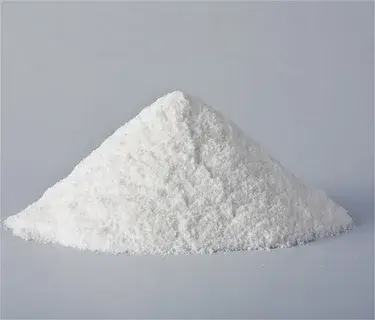
Understanding Aluminium Stearate Powder and Its Properties
Aluminium stearate powder (CAS 637-12-7) is the Aluminium salt of octadecanoic acid. It usually looks like a fine white powder that feels like wax. Its molecular structure has a trivalent Aluminium center and stearate ligands. This gives it strong hydrophobicity and excellent thermal stability, which directly improve the performance of grease.
The powder can melt at temperatures ranging from about 115°C to 145°C, depending on the grade and the way it was made. Because it doesn't dissolve in water but does partially dissolve in mineral oils and fragrant hydrocarbons at high temperatures, it works very well in oil-based lube systems. The quality of the dispersion is greatly affected by the size distribution of the particles. Finer particles (D50 usually between 5 and 30 microns) make grease matrices that are more uniform and behave consistently in terms of rheology. When experienced procurement managers look at a seller's batch, they pay close attention to the level of purity and the amount of Aluminium in it (usually between 7.2% and 8.5%).
Quality scores are different depending on how they were made. Using high-purity stearic acid as a material and exact saponification conditions in a well-controlled production process makes a product with better particle size distribution and lower impurity profiles, which are both necessary for making industrial grease that can be made over and over again.
How Aluminium Stearate Powder Enhances Grease Performance
The usefulness of Aluminium stearate powder in grease mixtures goes far beyond just making them thicker. It changes the grease's structure and how it works with other things in ways that affect how well it works in the end.
The powder forms a fibrous or platelet-like gel network when heated and mixed with mineral or synthetic base oils. This is the thickener matrix that gives grease its semi-solid consistency. If you put a lot of mechanical stress on this matrix, it won't break down. This means that greased parts will keep their oil film integrity even after being stressed over and over again. The Aluminium soap structure's natural hydrophobicity makes a moisture barrier that stops water washout, which is a key performance requirement in marine, outdoor, and high-humidity industrial settings.
Aluminium stearate powder-based greases usually have a smoother, stickier feel and are better at resisting water than calcium stearate greases. However, compared to zinc stearate, the Aluminium version works better with thick base oils and is more resistant to heat oxidation at normal to high temperatures (up to about 120°C to 130°C). When Aluminium-based metallic soap thickeners were used instead of calcium alternatives in automotive chassis grease and open-gear lubricant formulas in manufacturing facilities, relubrication times were shortened. This saved plant engineers money on running costs.
Procurement Insights – Choosing the Right Grade for Your Grease
A structured evaluation framework is needed to choose the right grade of this metallic soap thickener. Here are the most important things that R&D teams and formulators always look for in a supplier:
- Aluminum content and fatty acid purity: Verified Aluminium level within the range (usually 7.2% to 8.5%) proves consistent saponification and suggests gel formation that will work. The fiber shape of the thickener matrix is directly affected by the fatty acid makeup (C18 stearic acid ratio).
- Particle size distribution: PSD grades that are finer and narrower (D50 less than 15 microns) spread out more evenly in base oil. This cuts down on processing time and makes grease consistency better. Broader PSD grades might work well for heavy-duty industrial uses.
- Certifications and documentation: Reliable providers offer full Certificates of Analysis (CoA), Safety Data Sheets (MSDS/SDS), and quality certifications that are known around the world. At the very least, look for ISO, HACCP, FSSC22000, and HALAL certifications to get into global markets.
These factors together tell you if a supplier can deliver consistent results from batch to batch on an industrial scale. Before placing large orders with Chinese manufacturers—where the world's supply of metallic soap thickeners is becoming more concentrated—procurement managers should make sure of the factories' production capacity, lead times, and ability to provide export documentation.
Avans NutriHealth Co., Ltd. sells Aluminium stearate powder made in China. They have it in stock and have certifications for ISO, HACCP, FSSC22000, and HALAL. The business allows OEM customization and flexible order quantities, so it can meet the needs of both trial-stage and full-scale procurement.
Best Practices for Incorporating Aluminium Stearate Powder in Grease Formulations
The best performance relies on both the working method and the quality of the raw materials. A tried-and-true method is to mix the powder into the base oil while it's being stirred continuously at temperatures between 100°C and 130°C. This lets the Aluminium soap dissolve completely and a uniform network form when it cools.
Depending on the target NLGI grade and the viscosity of the base oil, the amount of thickener that works in finished grease is usually between 8% and 15% by weight. If you go beyond this range without making any changes, the grease can become too stiff and less easy to pump at low temperatures. High-shear mixing equipment makes uniform dispersion possible; not enough shear causes agglomerates that make texture uniformity and lubrication reliability less reliable.
Regarding safety, Aluminium stearate powder is thought to have a low acute toxicity level, but handling it should be done with the right PPE, such as respirators and safety goggles, to avoid breathing in fine dust. All business packages should have paperwork showing that they follow OSHA and REACH rules. Lumping during storage is a common problem with formulations. It can be avoided by storing the product in cool, dry places and sealing the containers so that they don't let water in.
Future Trends and Innovations in Aluminium Stearate Use in Lubrication
These days, the lubricating business is changing, and so are Aluminium soap thickeners. Researchers are looking into nanoparticle-sized Aluminium stearate powder dispersions to see if they can be used to make very thin, load-bearing lube films that can't be made with regular micron-sized powders. Early research from universities suggests that nano-structured Aluminium soap matrices have lower friction coefficients when used in border lubrication circumstances.
Concerns about sustainability are changing how raw materials are sourced. More and more buyers want stearic acid that comes from non-palm or mass-balance certified palm sources. This makes lubricant supply chains more in line with larger ESG commitments. The market for specialty grease thickeners is expected to grow, thanks to more uses in electric car drivetrains and precision industrial automation. These two areas need greases with tighter performance tolerances and longer service intervals.
Conclusion
Aluminium stearate powder improves grease's thickness, water resistance, mechanical stability, and temperature endurance in quantifiable ways. Finding a verified, certified grade from a dependable manufacturer is the first step for procurement professionals and formulators in regulated markets in the US and around the world to consistently produce better grease. This functional ingredient can be turned from a commodity into a competitive edge with the right supplier relationship based on clear documents, expert support, and a reliable supply chain.
FAQ
1. Is aluminium stearate safe for use in food-grade greases?
In and of itself, Aluminium stearate powder is not allowed to be added to food. But it is used a lot in food packaging and industrial grease systems, where the risks of accidental food contact are handled according to rules set by the government. Before using their product, formulators who want to get USDA H1 food-grade grease status should make sure it meets NSF International requirements.
2. How does particle size affect grease thickening performance?
Smaller particles make the thickener networks in the base oil denser and more uniform. This makes the grease texture smoother and the NLGI grade achievement more predictable. Coarser grades may need longer working times and can make the texture of the final grease less consistent.
3. Can aluminium stearate be combined with other thickeners?
It can be mixed with some thickeners that work well with it, but compatibility testing is necessary. For instance, mixing with lithium-based thickeners could make the grease matrix less stable and change the dropping point properties in a way that is hard to predict. Before full production, you should always do bench-scale compatibility tests.
4. What is the typical dropping point of aluminium stearate grease?
There are dropping points for Aluminium stearate powder greases that are usually between 90°C and 110°C. This means that they can be used in moderately hot places instead of very hot ones.
Partner With Avans for Reliable Aluminium Stearate Powder Supply
Avans NutriHealth Co., Ltd. is a reliable company that makes Aluminium stearate powder. They have certified products in stock that are ISO, HACCP, FSSC22000, and HALAL, and they offer full technical paperwork and open OEM options. From pre-sales advice to post-delivery integration, our specialized team is here to help you with the formulation process. You can reach our team at Lillian@avansnutri.com to ask for a sample or talk about your grease application needs.
References
1. Boner, C. J. Manufacture and Application of Lubricating Greases. Reinhold Publishing Corporation, 1954.
2. Lansdown, A. R. Lubrication and Lubricant Selection: A Practical Guide. 3rd ed. Professional Engineering Publishing, 2004.
3. Mortier, R. M., Fox, M. F., & Orszulik, S. T. Chemistry and Technology of Lubricants. 3rd ed. Springer, 2010.
4. Rudnick, L. R. (Ed.). Lubricant Additives: Chemistry and Applications. 3rd ed. CRC Press, 2017.
5. NLGI (National Lubricating Grease Institute). The NLGI Grease Production Survey Report. NLGI, 2022.
6. Sharma, S. K., & Snyder, C. E. "Metallic Soap-Based Grease Thickeners: Structural and Rheological Behavior." Tribology Transactions, Vol. 48, No. 3, 2005.