




Freeze-Dried Okra Benefits for Snacks, Soups, and Meal Kits
Freeze dried okra delivers a compelling combination of nutritional integrity, textural appeal, and supply chain efficiency that few other preserved vegetables can match. Produced through lyophilization — a low-temperature vacuum process that removes moisture via sublimation — it retains approximately 97% of its original bioactive compounds, including Vitamin C, folate, dietary fiber, and antioxidants. The result is a shelf-stable, allergen-free ingredient that performs reliably across snack formulations, soup blends, and ready-to-eat meal kits. For food manufacturers and procurement teams sourcing at scale, it represents a strategically sound, nutrition-forward ingredient choice.
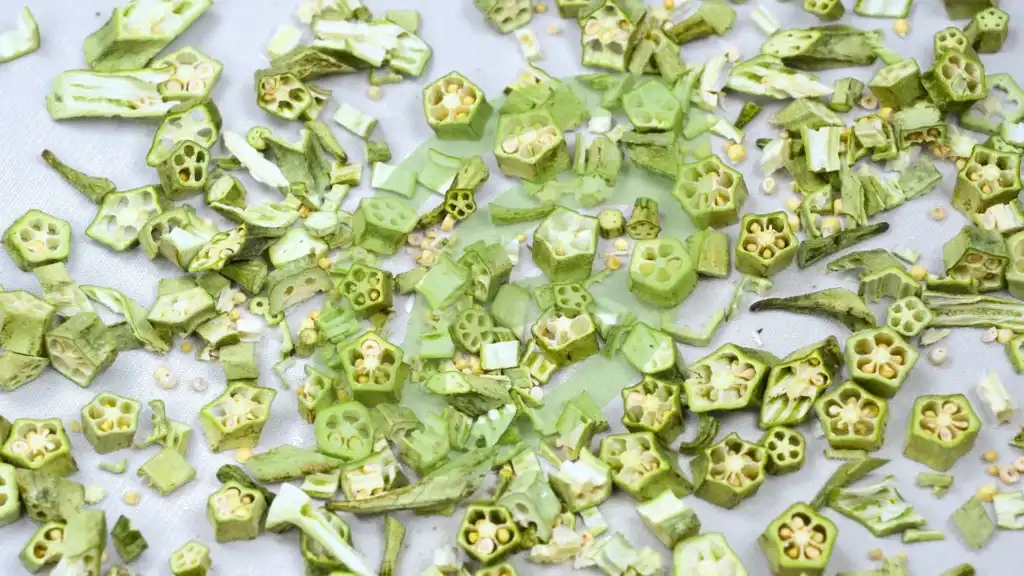
Understanding Freeze-Dried Okra: What It Is and How It's Made
The Science Behind Lyophilization
Lyophilization is a way to freeze fresh okra pods below -40°C. The ice skips the liquid phase and goes right into gas at a high vacuum setting. Sublimation is what makes freeze-dried vegetables different from those that are dried in the air or kept for a long time. Nutrients that are hurt by heat are not hurt because no heat is used to remove the water. The cells in the okra pod are not damaged. This creates a porous, stiff tissue that is crisp and very good at soaking up water again.
What Makes the Output Unique
The final product has less than 5% moisture and less than 0.2 water activity (Aw). You may purchase it round or sliced up. This prevents bacteria and enzymes from breaking down food without the need for stabilizers. That it is still vivid green at low temperature indicates that the chlorophyll is stable. It is nevertheless chemically active due to the presence of fiber structure and additional mucilage polysaccharides. This implies that the gastrointestinal and glycemic benefits kick back in after the meal is rehydrated.
This degree of structural and nutritional safety implies the items will have clearer labels, shorter lists of components, and be better positioned for the consumer and for the individuals in R&D who verify the quality of the ingredients.
Why Freeze-Dried Okra Is Ideal for Snacks, Soups, and Meal Kits
“Lyophilized vegetables are becoming very popular as the food industry is trending toward clean-label, minimally processed products. Freeze dried okra is in keeping with the trend for that reason, as well as being valuable in manufacturing.
These make it function exceptionally well for three types of products: The open cellular structure obtains a high fracturability score in texture profile research for snacking, which implies it is simple to break apart when chewed. This eliminates the sticky flavor that caused people not to want to eat okra.” Add salt, pepper blends, or healthy sauces, and it goes head to head with premium veggie chips. It has far more nutrients than vacuum-fried options, which often include 15-25% oil remaining.
- Snack applications: High fracturability score in texture profile analysis due to the porous cellular structure, i.e., it snaps cleanly when bitten. This reduces the mucilaginous texture that has previously restricted okra’s market appeal. Spiced, salted, or coated with nutritious coatings, it matches high-end vegetable chips, but packs a far better nutrient density than vacuum-fried products, which tend to have 15-25% residual oil.
- Soup and stew formulas: With rehydration ratios ranging from 1:10 to 1:12, a little weight of dry ingredients may go a long way in hot liquid. This enables makers of quick soup sachets or retort pouch goods to get accurate portioning easily. Okra rehydrates in minutes to a near-fresh texture, adding body and soluble fiber to the broth without synthetic thickeners.
- Meal kit components include: When packed in nitrogen-flushed, high-barrier aluminum foil, there is no cold chain dependence at all, with a shelf stability of 18-24 months at ambient temperature. This lowers shipping costs, expands distribution range, and lowers spoilage losses endemic to fresh or frozen vegetable components for meal kit businesses.
In recipes for soup and stew, rehydration ratios of 1:10 to 1:12 show that a small amount of dry ingredient expands a lot when it meets boiling liquid. This makes it simple for the companies who produce retort-pouched or quick-soup sachets to decide just how much food to put in each box. If it never dried out, the okra softened up extremely rapidly again. It adds body and soluble fiber to the soup without adding any extra thickeners. Meal kit pieces are packed in nitrogen-flushed, high-barrier aluminum foil and stay fresh at room temperature for 18-24 months. And you don’t even need to keep them cool. That reduces transportation costs for the meal-kit companies and allows them to sell in more locations, plus it prevents fresh or frozen vegetables from rotting.
Comparing Freeze-Dried Okra to Other Preservation Methods for Procurement Decisions
Freeze-Dried vs. Dehydrated vs. Frozen
Merchandise buyers typically make comparisons between lyophilized okra and frozen and freeze dried okra. Hot-air drying causes a loss of several heat-sensitive vitamins in dried okra, and it also becomes harder and less flavorful. Frozen okra is still nutrient-rich, but it has to remain frozen all the way through the supply chain. This makes transportation costlier and more complicated, particularly for markets outside India.
Freeze-dried okra is hard to get, and there’s nothing else like it. It has the same amount of nutrients as frozen okra. And it’s no harder to store. That’s what it costs to process. Lyophilization of each batch takes 20 to 40 hours. Whole pods are more expensive (per kilogram) than crops with a high bulk density, and they do not have a high bulk density. Higher pricing is OK, however, if the product is targeted to health-conscious consumers, or if it is used in regulated nutraceutical ways.
Organic vs. Conventional Sourcing
It's getting more and more popular in North America and Europe to buy freeze-dried vegetables that are certified organic. There is a 20–35% price difference between organic and regular types, but they can be sold in natural and specialty shops, where the profit margins are higher. To reach as many people as possible, buying teams should make sure that all of their sources have at least one USDA Organic certification. Plus, they should make sure that all of their suppliers follow HALAL, KOSHER, and HACCP food safety rules.
How to Use Freeze-Dried Okra in Your Product Lines: Practical Tips for B2B Clients
Many formulators are unaware of how easy it is to include frozen okra in existing products. The diced structure is particularly suited for automated portioning lines, since each piece is the same size and contains the same quantity of moisture. The transparent pods are fantastic from a branding perspective in that they reveal the full pod, where the ingredients originated from, and how they were prepared.
The porous surface is good for snacking, since it holds the spices nicely. In test runs, typical tumbler-coating tools often get the taste to be the same. Think about the refreshment ratio when you create a soup dish or meal package. For example, adding 8-10% of the dry mix’s weight in chopped okra adds texture without affecting the flavor.
Some wholesalers desire unique SKUs but don’t want to develop their own lyophilization facilities. Private label and OEM arrangements might be of benefit. The better-recognized providers often supply the bulk packaging of 5 kg, 10 kg, or 25 kg with bespoke labels. It makes it easy to brand in multiple areas.”
Procurement Guide: Buying Freeze-Dried Okra for Business Needs
Key Quality Benchmarks to Verify
It is important to make sure that all providers meet the science standards below: moisture content at or below 5%, water activity below 0.2, no chemical residues that can be found, and non-GMO sources. When you buy something, make sure the supplier's quality control system meets the rules set by ISO 22000, HACCP, and FSSC22000 for each box. This is a good way to tell how well the process was done and what kind of raw materials were used.
Supplier Engagement and Lead Times
When you deal directly with a maker, you usually have more say over price and design than when you deal with a company that sells things. Lead times for big orders depend on how busy the business is and how many orders come in. They can be anywhere from 15 to 30 days. When supply plans are built on contracts, prices stay the same for a few months. This is very helpful when the okra crop cycles cause changes in the raw materials that come with the seasons. Large buyers should set up a strategy with two suppliers to protect themselves from problems with their supply.
Conclusion
Freeze dried okra that has been freeze-dried used to only be found in certain health foods, but now it's often used in snacks, soups, and meal kits. Because it doesn't change nutritional value, stays stable on shelves, and comes in many formats, it's a good choice for product makers who need to deal with both clean labels and a complicated supply chain. You can make more meal kits, add lyophilized okra to a new line of snacks, or change the recipe for quick soup. It has been measured for how useful and profitable it is. It is known to work well in controlled global markets, and the fact that it comes with reliable licenses makes it even safer to buy.
FAQ
1. Is freeze-dried okra safe for allergen-sensitive consumers?
Yes. It's not true that okra has gluten or any of the other major allergens that the FDA says foods must list on their labels. People who are sensitive to allergens can buy it without worry because it is handled in a different building where there is no chance of cross-contamination. If you want to know how the service works, you should always ask the source.
2. Does the mucilage survive the freeze-drying process?
The polysaccharide structure of okra mucilage stays the same after becoming lyophilized. When it's dry, you can't feel it. It comes back to life when it is eaten or rehydrated, giving it its well-known effects on the stomach and blood sugar.
3. How should freeze-dried okra be stored after opening?
It takes in a lot of water. Things lose their shape and soak up water after being in a room with a lot of humidity for 15 to 30 minutes. Put back in closed containers with drying agents right away. It's cool, dry, and dark enough; it doesn't need to be kept cold.
4. What certifications should I require from a supplier?
At the very least, they need to follow the rules set by HALAL, HACCP, ISO 22000, FSSC22000, and the USDA. You can sell more things in North America and Europe with BRC and organic licenses.
Partner with Avans — Your Trusted Freeze-Dried Okra Supplier
From 2005 to now, Avans NutriHealth Co., Ltd. has been making recognized, traceable ingredients on a large scale for food producers all over the world. It is freeze dried okra that is certified HALAL, ISO, USDA, HACCP, and FSSC22000. You can get it whole or cut up. Our in-stock store ships it out with all the paperwork it needs. Contact our staff to find out how much it costs to order in bulk, for private label, or for other special requests. We can be reached at Lillian@avansnutri.com.
References
1. Gemede, H. F. et al. — Food Science & Nutrition, 2015
2. Arrett, D. M. et al. — Journal of the Science of Food and Agriculture, 2010
3. Ratti, C. — Journal of Food Engineering, 2001
4. Chaves, A. C. S. D. et al. — LWT — Food Science and Technology, 2020
5. Sinha, N. K. (Ed.) — Handbook of Vegetables and Vegetable Processing, Wiley-Blackwell, 2011
6. Torreggiani, D. — Food Research International, 1993