




Why Choose microcellulose powder for Advanced Formulations?
Microcellulose powder (CAS 9004-34-6) is one of the most trusted pharmaceutical excipients and food-grade functional ingredients available today. Derived from high-purity plant-based alpha-cellulose through controlled acid hydrolysis, this white, odorless powder delivers exceptional compressibility, binding capacity, and moisture management across demanding formulation environments. Whether you are developing solid-dose tablets, clean-label supplements, or texture-optimized food products, this cellulose-derived excipient provides the physicochemical consistency that modern B2B formulation teams require. Its broad regulatory acceptance and multifunctional profile make it a cornerstone ingredient in advanced product development.
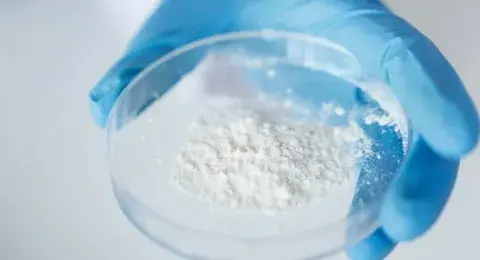
Understanding Microcellulose Powder and Its Unique Properties
As the formula gets more complicated, not all cellulose-based excipients behave in the same way. A good MCC series powder is different from cheaper ones because it is made with more care and has a different physical structure.
What Sets It Apart Chemically and Physically
As for the MCC series powder from Avans NutriHealth, it has particles that are 50–200 μm in size and a DP level between 180 and 375. The amount of water in the bulk stays below 5%, the pH stays stable between 5.0 and 7.5, and the bulk density stays between 0.26 and 0.31 g/cm³. The USP, EP, and BP all say that these managed factors meet their needs. This lets the R&D teams do the same work over and over again for different output runs.
How the Manufacturing Process Builds Quality In
The acid hydrolysis process only gets rid of the cellulose that is not crystallized. This exact structure makes a substance that is simple to squeeze and doesn't soak up water quickly. These two things directly protect active pharmaceutical ingredients (APIs) that are easily damaged by water when tablets are compressed and stored for a long time.
Why Microcellulose Powder Excels in Advanced Formulations
Food formulators, drug formulators, and dietary supplement formulators always return to MCC-grade cellulose microcellulose powder because it solves real production problems, not just on paper but on a large scale too.
This is what it does for you that makes it impossible to live without: How well medicine pills work: Since it's a dry glue, it makes pills harder and breaks down faster without the need for a wet granulation step. It breaks down quickly, which speeds up active release and improves solubility measures that are needed for making a product legal.
- Pharmaceutical tablet performance: As a dry binder in direct compression, it delivers enhanced tablet hardness and fast-dissolving profiles without requiring a wet granulation step. Its disintegration qualities accelerate active release, improving bioavailability metrics critical to product approval.
- Food texture and fat reduction: In baked goods and dairy alternatives, it can replace up to 30% of fat content while preserving mouthfeel and sensory consistency. It also stabilizes emulsions in sauces and inhibits syneresis across temperature fluctuations — extending shelf life without synthetic additives.
- Dietary supplement encapsulation: As an inert filler in capsule manufacturing, it ensures consistent powder flow and dosing accuracy during high-speed encapsulation runs. It also serves as a natural bulking agent compatible with vegetarian and clean-label product positioning.
In the process of making capsules for dietary supplements, it acts as a neutral filler and ensures that the powder moves easily and correctly during high-speed sealing runs. Also, it can be used as a natural filler in veggie and clean-label goods.
Because of these benefits, there is a lower chance of having to change the recipe, fewer production mistakes, and the end product works better. Every one of these things is very important to procurement managers, whose job it is to meet high standards while also cutting costs.
Making the Right Procurement Decision: Selecting the Best MCC Powder
It's not enough to just look at price when picking a cellulose excipient seller. B2B buying teams need to think about a lot of things before they choose a big source.
Certifications and Regulatory Alignment
The COA, ISO, USDA, HACCP, FSSC22000, and HALAL have all approved Avans NutriHealth's MCC series powder. These qualifications make it easier for companies to sell their goods in North America, Europe, and the Middle East, where they are regulated. They also make the paperwork needed to register a product faster. More and more health-conscious people in the Middle East and Southeast Asia can buy the product now that it has been approved by HALAL.
Particle Size Consistency and Batch Reproducibility
When someone is buying something, they should ask for technical data sheets that show the DP range, particle size distribution, and moisture content of each lot. Any change in any of these things from one batch to the next can cause changes in the hardness of the tablets, the flow rate, or the stability of the emulsion. It is expensive to fix these problems after the fact.
A reliable microcellulose powder supplier not only provides certificates but also full technical support, such as tips on how to make the powder and ideas for how to use it. This is what makes a real manufacturing partner different from a provider who only does business with you.
Application Guidelines and Best Practices for Optimal Results
Storage and Handling to Protect Excipient Integrity
The MCC microcellulose powder should be kept in a cool, dry place where the humidity level stays below 65%. Things change how they flow and shrink when they are exposed to too much water. Cover items when they're not in use, and make sure cross-contamination controls are always up to date to follow the rules for working with drugs and food.
How well this ingredient works in making tablets depends on how long it is mixed and what order the parts are added. It is important to keep the right amount of tension before adding lubricants like magnesium stearate. A short pre-blend with the API can help with this. How viscosity changes in food depends on how long it is mixed and how strong the mixing is. During pilot-scale tests before full production runs, these factors should be made as good as they can be.
Future Trends and Innovation in Microcellulose Powder Usage
The use of cellulose-based excipients changes as personalized nutrition, focused drug delivery, and sustainable ingredient sources do too.
In the field of drug discovery, different types of modified MCC are being considered as matrix parts in controlled-release oral dosage forms. It could be used in next-generation drug delivery systems where the exact time of API release is important because it can change how porous the tablet is and how quickly it dissolves.
As more people look for healthy foods with clear labels and fiber, formulators are moving toward plant-based ingredients that haven't been changed much. This change makes sense for MCC-grade cellulose, which gives a measured amount of fiber to food while still being able to be processed in factories.
People also buy things in different ways because of sustainability. For sellers, buyers now look at more than just how well they do technical tasks. They also look at how well they use plant-based raw materials, how energy-efficient their factories are, and how much waste they make. When there are a lot of bids, sellers who can show proof of responsible sourcing and verified certifications have a big edge.
Conclusion
In the food, medicine, and nutrition industries, microcellulose powder is becoming an increasingly important ingredient. It is a good long-term investment in buying because it has been tested and found to work well. Most officials also agree with it, and it can be adapted to work with new formulation trends. When B2B teams are in charge of difficult recipes and tightly controlled supply chains, they choose an MCC series powder that is certified, technically supported, and backed by clear quality data. This lowers risk at every stage of production.
FAQ
1. Is microcellulose powder safe for use in pharmaceutical and food formulations?
Yes. FDA rules say it is GRAS, which stands for "Generally Recognized as Safe." It is in the USP, EP, and BP pharmacopeias. Because it is bland and doesn't mix with anything, it is safe for a wide range of recipes and customers, such as veggie and HALAL-compliant product lines.
2. What is the difference between microcellulose powder and microcrystalline cellulose in tablet manufacturing?
Both are made from cellulose, but microcrystalline cellulose (MCC) is a type of partly depolymerized cellulose that still has its crystallinity, which is what makes it easy to compress. The words "microcellulose powder" and "MCC" are often used to talk about the same thing in business. The main differences are the DP range and particle size. They determine how particles stick together and how they separate in different pill forms.
3. What should I evaluate when placing a bulk order?
More weight should be given to buyers who offer full technical papers like a COA, particle size distribution data, DP range, and certifications such as HACCP, FSSC22000, and HALAL. Know the minimum order size, the lead time, and how to get technical help if you're having trouble. The amount of stock and the ability to get samples before making a promise are also important things to think about.
Partner with Avans — Your Trusted Microcellulose Powder Manufacturer
Avans NutriHealth Co., Ltd. sells microcellulose powder that is made for businesses. They have it in stock right now and offer full licenses and help with formulating. Our MCC series powder is shipped to North America, Europe, and other places. It is approved by USP, EP, and BP. You can receive a trial or talk about a price for a large order that fits your needs. You can start your question right away by going to emailing Lillian@avansnutri.com.
References
1. Rowe, R. C., Sheskey, P. J., & Quinn, M. E. (Eds.). Handbook of Pharmaceutical Excipients (7th ed.). Pharmaceutical Press, 2012.
2. United States Pharmacopeia. USP–NF: Microcrystalline Cellulose Monograph. United States Pharmacopeial Convention, 2023.
3. Doelker, E. "Cellulose Derivatives." Advanced Drug Delivery Reviews, 1993.
4. Thoorens, G., Krier, F., Leclercq, B., Carlin, B., & Evrard, B. "Microcrystalline Cellulose, a Direct Compression Binder in a Quality by Design Environment." International Journal of Pharmaceutics, 2014.
5. Huang, W., Doig, S., & Schlegel, K. "Functional Properties of Cellulose-Based Excipients in Solid Oral Dosage Forms." Drug Development and Industrial Pharmacy, 2018.
6. European Food Safety Authority (EFSA). "Re-evaluation of Cellulose (E 460i) as a Food Additive." EFSA Journal, 2018.