




Why Choose Inulin Powder for Better Fiber Intake?
Inulin powder is one of the most strategically valuable prebiotic fibers available to B2B formulators today. Extracted primarily from chicory root, this soluble dietary fiber selectively nourishes beneficial gut bacteria, supports digestive regularity, and integrates cleanly into a wide range of product formats—from functional beverages to nutraceutical capsules. For procurement professionals and R&D teams evaluating fiber ingredient sourcing, inulin powder offers a rare combination of science-backed efficacy, formulation versatility, and strong regulatory credentials that few alternatives can match.
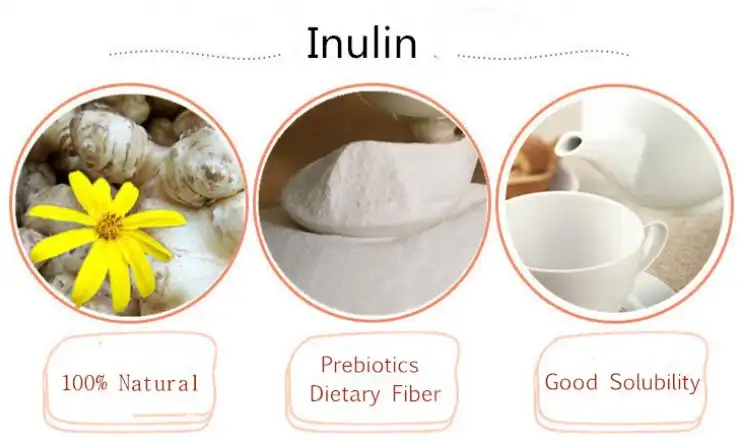
Comparing Inulin Powder with Other Fiber Supplements
If you want to make choices about product growth, these factors are important. It doesn't taste bad, has a low caloric value (about 1.5 kcal/g), and can act as both a fat-mimicking agent and a prebiotic fiber at the same time. Since it's different from other ingredients, it can't be used in the same method.
- Through its ability to absorb water, psyllium husk mostly acts as a thickening and digestive agent. It doesn't ferment, only to help Bifidobacteria grow, and when mixed with water, it has a very sticky texture that makes it less useful in beverage formats.
- Fructo-oligosaccharides (FOS) are prebiotics like inulin, but they have a shorter degree of polymerization (DP 2–8). This means they are broken down more quickly and are more likely to cause short-term digestive discomfort at higher doses. Long-chain inulin powder (DP 10–12 on average, or HP grades with DP >23) ferments more slowly and for a longer time.
- Resistant starch helps the gut digest, but it's not as clean-label neutral as inulin. It also makes formulations more complicated when it comes to texture and processing stability, which inulin doesn't do.
These differences are important for making choices about product growth. Inulin has a bland taste, a low caloric value (~1.5 kcal/g), and can work as both a fat-mimicking agent and a prebiotic fiber at the same time. This makes it a unique ingredient that can't be replaced by any other in the same recipe.
How to Effectively Incorporate Inulin Powder into Your Product Line
Three technical things must be considered when chicory root fiber is added to products: how well it dissolves, how stable the pH is, and how much can be used.
It's easy for inulin to dissolve in hot water (above 60°C), but when it's cold, it needs to be cut up or mixed. When the pH is above 4.0, it stays the same. It can break down into fructose monomers if the temperature goes up and the pH drops below 3.5. This makes it less of a prebiotic. When making sour drinks, people should carefully check the cooking conditions.
In all kinds of situations, our clients use this ingredient in these ways:
- In dairy and frozen treats, when inulin amounts are above 15%, it forms a microcrystalline gel network that feels like fat. This lets yogurt and ice cream make clean-label low-fat claims without using manmade hydrocolloids.
- It works as a humectant, a moisture-retention agent, and a partial flour substitute in bakery goods and cereal bars. It improves the structure of the crumb in gluten-free versions and helps support claims that the product is higher in fiber.
- Dietary supplements and synbiotic mixes: Because it has low water activity (aw), it works well as a carrier matrix for probiotic bacteria in powder blends, keeping the bacteria alive during storage.
It works well as a carrier matrix for probiotic bacteria in powder blends because it has low water activity (aw). This keeps the bacteria alive while the powder is stored.
Procurement Insights: Buying Inulin Powder for Business Needs
It's not enough to just look at prices when picking a reliable inulin powder provider. It is important for buying teams that care about quality to look at sources from different points of view before making big orders.
If there are restrictions governing a market, the level of certification is highly significant. Suppliers that are HALAL, KOSHER, USDA Organic, HACCP, or FSSC22000 certified have invested money in safety processes to keep your company safe. Avans tracks all of these credentials. They use state-of-the-art manufacturers and have a quality control staff inspect each batch to make sure it’s pure and works.
Equally vital is ensuring the delivery line is functioning properly. Avans works with 338 wholesalers in over 280 locations throughout the globe to offer their goods. It ensures fast deliveries, assisting customers in meeting tight production lead times. The firm has an annual production capacity of over 1,000 metric tons of products and is open to quantity-based contracts.
Brands in the medium-to-large size range need to be able to customize more and more to stand out. We can assist you with private labels, special packaging, and recommendations on how to create the product. All these services change the buyer-seller connection from merely buying and selling stuff into a true technological collaboration.
Maximizing ROI and Staying Ahead in the Fiber Supplement Market
The global dietary fiber market is increasing at a steady pace. As awareness of gut health has increased, sugar intake has declined, and clean-label products are being made. Inulin powder may meet all three of these tendencies. It may be used in substitution for sugar when blended with stevia or other high-sugar treats. “Scientific evidence supports that it’s good for your digestive system, and the fact that it’s sourced from chicory root speaks to the ingredient-savvy consumer of today.”
Experts in the area peer-reviewed this research. Inulin can assist with constipation ( 15 grams a day of supplements demonstrated considerable impact in senior groups ) , managing blood sugar, absorbing calcium better, and making you feel full ( slows stomach emptying ) . These confirmed assertions are strong grounds for corporations selling items to use alternative terminology on rival channels.
Conclusion
The prebiotic fiber that comes from chicory is one of the most useful and scientifically proven fibers that B2B formulators can use in nutraceuticals, food making, and pharmaceuticals, including inulin powder. It can help with gut health, replace fat, lower blood sugar, and be compatible with clean labels, which makes it a great long-term addition to any product line. Finding a recognized, high-capacity source for this ingredient turns it into a strategic advantage instead of a job that needs to be done.
FAQ
1. Does inulin powder cause digestive side effects?
Some people temporarily feel bloated or gassy when they first take high amounts because their gut bacteria are getting used to more fermentation activity. To lessen this effect, formulators can start with smaller amounts of inclusion (2–5g per serving) and slowly increase them. It takes longer for long-chain inulin to ferment than short-chain FOS, so it usually causes fewer severe stomach problems.
2. How does inulin differ from FOS in practical formulation terms?
Because inulin has a higher average degree of polymerization than FOS, it can form gels better and ferment more slowly in the colon. FOS dissolves more easily in water and mixes better in cold conditions, but it doesn't have as much structural functionality. A lot of synbiotic formulas use a mix of the two to get the right combination of bacteria release and texture goals.
3. What certifications should I require from an inulin supplier?
When buying things for controlled markets, procurement teams should ask for at least HALAL, ISO, HACCP, and FSSC22000 approvals. When it comes to natural channel distribution in North America, USDA Organic certification adds a lot of shelf positioning value. All of these credentials are held by Avans, and they can provide full proof upon request.
Partner with Avans — Your Trusted Inulin Powder Manufacturer
Avans NutriHealth Co., Ltd. sells high-quality inulin powder made from chicory roots that meets the standards for compliance, consistency, and customization that your formulations need. We can be your long-term supplier of inulin powder because we have been making it for more than 15 years, can make 1,000 tons of it every year, and have a worldwide delivery network. You can email our team at Lillian@avansnutri.com to get samples, bulk pricing, and specification sheets.
References
1. Kelly, G. (2009). Inulin-type prebiotics: A review. Alternative Medicine Review.
2. Niness, K. R. (1999). Inulin and oligofructose: What are they? Journal of Nutrition.
3. Roberfroid, M. (2005). Inulin-type fructans: Functional food ingredients. Journal of Nutrition.
4. Shoaib, M., et al. (2016). Inulin: Properties, health benefits, and food applications. Carbohydrate Polymers.
5. Holscher, H. D. (2017). Dietary fiber and prebiotics: Mechanisms and health benefits. Gut Microbes.
6. Dahl, W. J., & Stewart, M. L. (2015). Position of the Academy of Nutrition and Dietetics: Health implications of dietary fiber. Journal of the Academy of Nutrition and Dietetics.