




Palmitoylethanolamide Bulk Powder Benefits for Product Formulas
This is a naturally occurring fatty acid amide called palmitoylethanolamide bulk powder. It has become a valuable ingredient in many medicinal, pharmaceutical, and skincare products. When animals' tissues are stressed, they make PEA, which changes inflammation signals by activating PPAR-α and stabilizing mast cells. Its clean-label profile, non-addictive pain-relieving mechanism, and ability to work with a wide range of excipient systems make it a very appealing raw material for B2B formulators who want both effectiveness and regulatory clarity. Knowing its benefits can directly improve how well a product works and where it stands in the market.
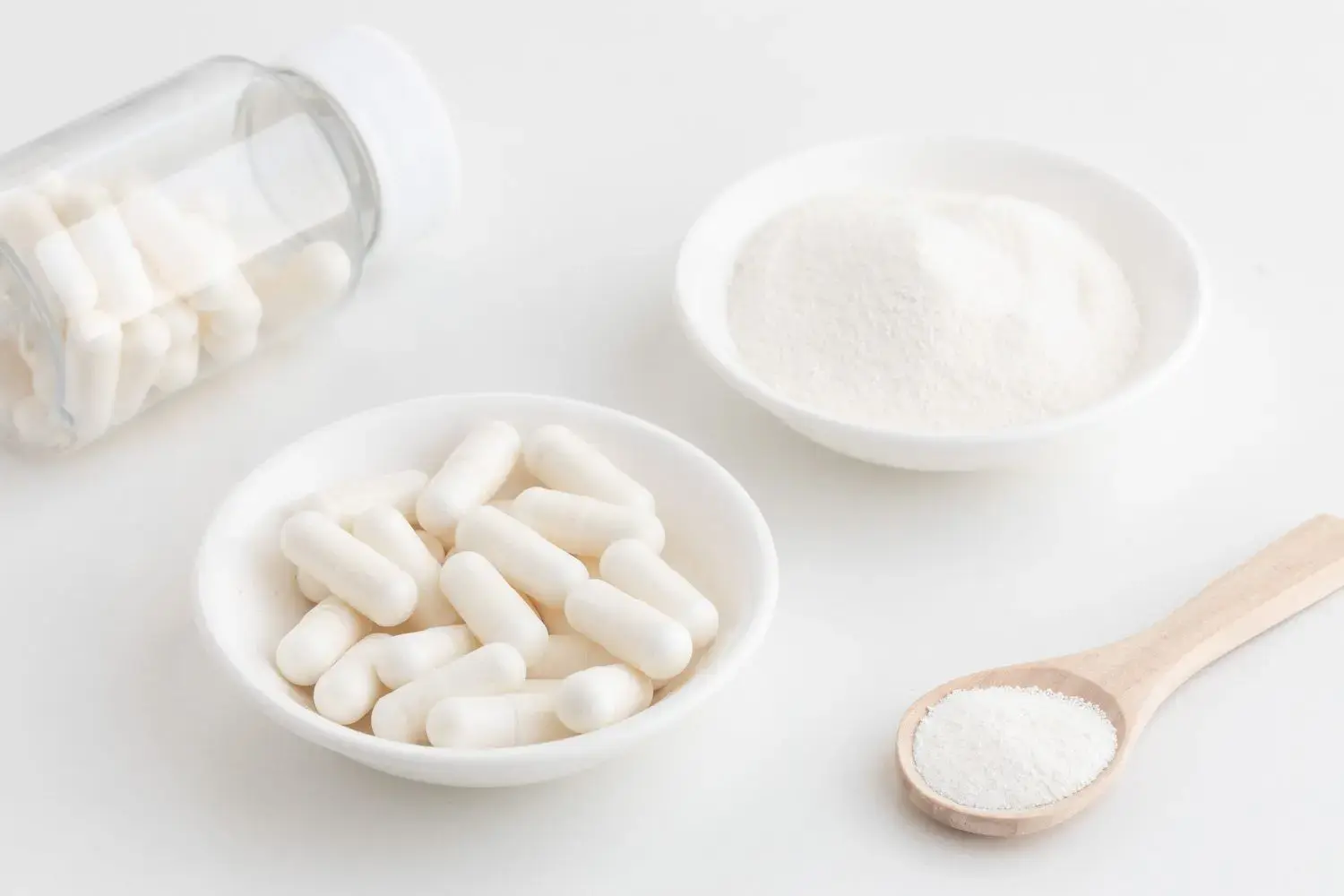
What Is Palmitoylethanolamide Bulk Powder and How Does It Benefit Product Formulas?
The Science Behind PEA's Bioactivity
PEA is a lipid signaling molecule from the N-acylethanolamine (NAE) family. It works on PPAR-α and changes the body's endocannabinoid system without connecting directly to CB1 or CB2 receptors. There are about 299.5 g of it per mole, and its chemical formula is C18H37NO2. Autacoid Local Inflammation Antagonism (ALIA) is the name of the process that lets PEA lower neuroinflammation and pain signals in the body without the bad effects that come with opioids or NSAIDs.
Why Purity and Particle Size Matter to Formulators
It's hard to work with standard crystalline PEA because it sticks to fat and has big particles that are tough for the body to absorb. Reliable providers handle this by providing micronized forms (d90 < 10μm) that are much better at dissolving and being absorbed by the body. We sell ≥98% pure PEA powder at Avans NutriHealth. It comes in the form of a fine, white, crystalline palmitoylethanolamide bulk powder that stays the same quality from batch to batch. Experts who make medicines need to know that the product will always work the same way. This amount of standardization helps them do that.
Key Applications of PEA Across Industries
One of the best things about this item for business is how versatile it is. Formulators are adding it to various regulated businesses' product lines because more and more customers want natural, non-drug options.
Here are the main areas of use where PEA provides measurable formulation value:
- Nutraceuticals and Dietary Supplements: PEA is widely incorporated into capsules and tablets targeting chronic pain, joint health, and neuroinflammation. Clinical studies have shown its synergistic efficacy when combined with luteolin, a flavonoid that extends PEA's half-life in neuronal tissue. This combination is now standard in premium wellness supplement lines across the U.S. market.
- Pharmaceutical Preparations: In pharmaceutical-grade products, PEA serves as an active ingredient in neuropathic pain formulations. Its non-addictive profile gives it a regulatory and ethical edge over opioid-based analgesics, particularly in markets with tightening controlled substance policies.
- Cosmetics and Skin Care: PEA's mast cell-stabilizing properties make it effective in topical anti-inflammatory formulations. Cosmetic formulators use it in soothing creams, anti-aging serums, and sensitive-skin products where reducing redness and irritation is a priority.
- Veterinary and Animal Health: Premium pet supplement brands have adopted PEA extensively for managing atopic dermatitis and chronic pain in geriatric dogs and cats. Its safety profile across species supports wide application in this growing category.
Veterinary care and animal health: A lot of high-end pet vitamin brands use PEA to help older dogs and cats with atopic dermatitis and ongoing pain. Because it is safe for all species, it can be used in a lot of different situations in this growing category.
Choosing the Right PEA Powder for Your Formula
Evaluating Quality Benchmarks
Every PEA source is different. When procurement teams are looking for this ingredient, they should pay attention to records of purity, specifications for particle size, and records of third-party batch testing. There must be a certificate of analysis (CoA) that says the product is at least 98% pure by HPLC. For systems that are taken by mouth, micronized formats work best. When dissolution speed is not as important, like when the particles are put on the skin or inside a capsule, standard particle sizes may still work.
Comparing PEA to Competing Actives
In a different group from CBD, turmeric extract, and omega-3 fatty acids is PEA. However, PEA does not get you high like CBD does, and it is easier to sell in foreign markets because of its fewer legal issues. PEA doesn't need cofactors like piperine that make it more bioavailable, as curcumin-based ingredients do. Omega-3s help lower inflammation all over the body, but PEA has the unique ability to act as an antioxidant and change the way mast cells work. PEA works better than general anti-inflammatory ingredients for people who are making products to treat chronic pain, neuroinflammation, or sensitive skin.
Procurement Insights: How to Source PEA Efficiently
It's not enough to just find a good price to get a lot of PEA palmitoylethanolamide bulk powder. The total cost of buying depends on a strong supply chain, having the right paperwork for the rules, and being able to handle transportation.
As the growth stage changes, Avans NutriHealth keeps a lot of products in stock and has flexible minimum order amounts so that the products can be bought in small or large amounts. Our ISO, HACCP, FSSC22000, HALAL, USDA Organic, and FSC licenses all follow the rules of controlled markets in North America, Europe, and the Middle East. There is proof that these skills are real; they were checked by a third party and are up to date.
As soon as you get in touch with a seller, make sure you ask for a current COA with HPLC purity data, safety data sheets (SDS), and any certifications that are important to your market. For formulas that are going to the U.S., make sure they follow FDA rules. For markets in the EU, make sure that the rules set by Novel Food or the EFSA are being followed.
Safety, Compliance, and Storage Best Practices
PEA has a good track record for safety, as shown by decades of peer-reviewed research. People in clinical trials were able to handle daily doses ranging from 300 mg to 1200 mg, and healthy people said they didn't have any major side effects. The fact that it comes from nature is more proof that it is a safe chemical.
The methods we use to make our PEA powder have been checked and found to meet world standards for food safety and medicinal chemicals. Things should be stored in a way that keeps them dry and away from temperatures above 30°C. If the packaging is sealed in inert containers, it will stay the same over time. For internal quality checks and regulatory reports for finished goods, having records that show how each batch was made is helpful.
Conclusion
PEA is an ingredient that is ready to go to market and has been shown to work in nutraceuticals, pharmaceuticals, cosmetics, and animals. It has a clean regulatory profile because it is not addictive and can be used with different preparation methods. Because of these things, it's a key ingredient for brands that want to compete in markets that value effectiveness. Formulation risk goes down straight when you buy palmitoylethanolamide bulk powder from a licensed company with clear paperwork and a solid supply chain. Business-to-business teams that need ingredients that work well and follow the rules should give PEA some serious thought.
FAQ
1. Is PEA safe for use across different product categories?
A lot of human clinical studies have been done on PEA, and it has a good safety record at normal doses. It is different from synthetic actives with a wider range of side effects because it comes from the body and works through PPAR-α. It can be used for cosmetics, nutraceuticals, pharmaceutical topicals, and veterinary products.
2. What dosage range is appropriate for nutraceutical formulations?
Oral nutraceutical doses of 300 mg to 1200 mg per day are supported by clinical research. Dosing is different for each goal indication, product shape, and particle size of the PEA used. Because it is better absorbed, micronized PEA usually lets lower effective doses be used.
3. How do I verify the purity of a PEA ingredient before purchasing?
Ask the supplier for an HPLC-based certificate of analysis that says the product is at least 98% of the time. Compare the batch number on the goods you received with the number on the COA. Reliable suppliers, like Avans, let you track every batch and are happy to help a third party do an inspection.
4. Does PEA interact with common formulation excipients?
PEA doesn't change chemically when processed normally, and it works well with many different ingredients that are used in tableting and packaging. It keeps its shape even when it's under a lot of mechanical stress during high-speed manufacturing.
Partner with Avans for Premium Palmitoylethanolamide Bulk Powder
Avans NutriHealth Co., Ltd. is a reliable company that makes palmitoylethanolamide bulk powder and works with B2B clients around the world in regulated markets. We have ≥98% pure PEA powder in stock, and it is certified by ISO, HACCP, FSSC22000, HALAL, and the USDA. We let you choose the amount you want to buy, provide full technical documentation, and provide quick procurement help. You can email our team directly at Lillian@avansnutri.com to ask for a sample or talk about your recipe needs.
References
1. Skaper, S. D., & Facci, L. (2012). Mast cell-glia axis in neuroinflammation and therapeutic effects of palmitoylethanolamide. Philosophical Transactions of the Royal Society B: Biological Sciences.
2. Petrosino, S., & Di Marzo, V. (2017). The pharmacology of palmitoylethanolamide and first data on the therapeutic efficacy of some of its new formulations. British Journal of Pharmacology.
3. Gabrielsson, L., Mattsson, S., & Fowler, C. J. (2016). Palmitoylethanolamide for the treatment of pain: pharmacokinetics, safety, and efficacy. British Journal of Clinical Pharmacology.
4. Hesselink, J. M. K., & Hekker, T. A. M. (2012). Therapeutic utility of palmitoylethanolamide in the treatment of neuropathic pain associated with various pathological conditions. Journal of Pain Research.
5. Keppel Hesselink, J. M. (2013). New targets in pain, non-neuronal cells, and the role of palmitoylethanolamide. Open Pain Journal.
6. Re, G., Barbero, R., Miolo, A., & Di Marzo, V. (2007). Palmitoylethanolamide, endocannabinoids and related cannabimimetic compounds in protection against tissue inflammation and pain. Current Drug Targets.