




How Does microcellulose powder Support Better Material Strength?
Microcellulose powder enhances material strength by forming dense, interlocking fiber networks within composite matrices. Derived from high-purity alpha-cellulose through controlled acid hydrolysis, this refined excipient preserves crystalline cellulose structures that deliver superior compressibility, binding capacity, and mechanical resilience. When incorporated into pharmaceutical tablets, food systems, or industrial composites, it distributes stress evenly across the matrix, reducing fracture risk and increasing durability. Its consistent particle size distribution and low moisture content further stabilize formulations, making it a trusted reinforcement agent across nutraceutical, pharmaceutical, and food manufacturing applications.
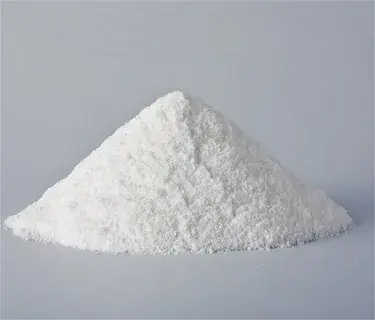
The Science Behind Microcellulose Powder's Reinforcement Mechanism
Fiber Network Formation and Binding Dynamics
The microcellulose powder (MCC forms a coherent fiber network under compression force is what makes it strong. When MCC particles are mixed into tablet mixtures, they change shape and become more flexible. This creates large contact areas that stick together without the need for liquid binders. According to a study in the International Journal of Pharmaceutics, MCC makes tablets much harder and stronger when they are compressed directly. This is especially helpful for manufacturing lines that move quickly.
MCC is used in food systems as a structural scaffold in emulsions and gels. It literally holds water molecules in place and stops syneresis from happening. This keeps the viscosity the same even when the temperature changes, which makes the product last longer on the shelf.
Safety, Compliance, and Dosage Confidence
Data on safety and the number of certifications held are just as important to B2B buying managers as success measures. The Avans MCC line is approved by HACCP, FSSC22000, ISO, HALAL, and the USDA. It also meets the needs of the USP, EP, and BP drug registries. The bulk density is kept between 0.26 and 0.31 g/cm³, and the pH is kept steady between 5.0 and 7.5. The amount of water is kept below 5%. When formulators use these factors, they have full control over how materials act and can use them with confidence in North America, Europe, and the Middle East, where production is controlled.
Selecting the Right Microcellulose Powder for Superior Material Strength
To pick the right grade of cellulose excipient, you need to match its technical specs to the needs of the application. The needs of a pharmaceutical research and development team that is compressing high-dose pills are different from those of a food maker that is stabilizing a sauce with less fat. Before they source, B2B formulators should look at these main selection criteria.
- Particle size distribution: Finer grades (50–100 μm) favor tablet compaction and smooth cosmetic textures. Coarser grades (100–200 μm) support bulking in capsule fills and food systems. Avans' MCC series covers the full 50–200 μm range to accommodate diverse application profiles.
- Degree of polymerization (DP): A DP of 180–375 balances compressibility with structural integrity. Lower DP values increase plasticity, while higher DP grades enhance rigidity—a variable that directly controls final product hardness.
- Certification alignment: Sourcing from a supplier holding HALAL, KOSHER, BRC, and Organic certifications eliminates the compliance burden of multi-source qualification, especially for brands serving international markets simultaneously.
Most of the time, guar gum or xanthan gum is used to change the texture of drinks. These scientific differences make MCC stand out. They are not as good at supporting bones when they are dry as MCC is when used in solid-dose or hybrid ways. For those who care more about making the structure strong than managing the flow, MCC is the better choice.
A lot of good things happen when buying teams work with qualified makers who keep quality testing open and transportation easy to handle. With batch-level COAs, verifiable certifications, and consistent in-stock availability, you can keep the supply chain running smoothly. This is important for production runs that are medium to large.
Optimizing Application Techniques to Maximize Material Strength
Dosage Control and Particle Size Influence
It is very important to add MCC in the right quantity. Depending on the API load and goal hardness, MCC usually makes up 20 to 90% of the formulation by weight in direct compression pills. Smaller microcellulose powder particles have more surface area, which makes them stick together better. Larger particles, on the other hand, make high-speed tableting easier. By calibrating these variables, formulators can get the exact mechanical profile that a product needs.
Addressing Aggregation and Compatibility Challenges
The fact that small MCC grades stick together is a problem that can be fixed. It will flow better and not clump if you add a little dissolved silicon dioxide before you mix it. Controlling the humidity of the air around MCC while it is being processed helps protect its crystal structure and the wet areas it covers when mixed with hydrophilic APIs or hygroscopic excipients.
As cellulose composites improve, more and more are being made that use both MCC and nanocellulose to make them stronger. These technologies are meant to be used for biological materials and high-performance packaging. MCC is also good for the environment because it comes from plants and breaks down naturally. As the market for eco-friendly goods grows in the US and Europe, this trait is becoming more and more important.
Procurement and Partnership: Ensuring Quality and Value in Microcellulose Powder Supply
Also, the strategic choices they make about what to buy affect how reliable and cost-effective the whole supply chain is. It is easier to find a qualified seller of approved MCC when you buy a lot of it from them, and the cost per unit goes down. Prices change based on the level of approval, the purity grade, and the DP range. During the question part, Avans makes these points very clear.
There are a lot of things to think about when picking a supplier for microcellulose powders, such as how uniform the COA paperwork is, the number of third-party audits the supplier has, the minimum order quantity, and the technical support provided after the sale. Avans NutriHealth Co., Ltd. has all the international permissions it needs to make more than 1,000 tons of goods every year. In other words, they can handle both small orders and big contracts with ease.
Before you agree to buy a lot of something, it's common sense and a good idea to ask for a sample. Sample tests give your formulation team a chance to show you how the particles will work in the exact processing conditions you've chosen. This lowers the risk before scaling. You can sign a long-term supply deal with Avans if you're sure they'll do a good job. This guarantees stable rates and first choice when the market is tight.
Conclusion
Microcellulose powder makes things stronger by maintaining their crystalline structure, having better binding mechanics, and having consistent physical parameters. MCC provides solid mechanical support backed by quality standards that can be checked, whether it's for a medicine pill, a stabilized food emulsion, or a dietary supplement capsule. Avans NutriHealth Co., Ltd. makes the MCC series according to USP/EP/BP standards. It comes with full certification coverage, is always in stock, and comes with specialized technical support. This gives B2B clients in the U.S. and around the world a reliable base for high-performance preparation.
FAQ
1. What is the standard particle size range for MCC used in tablet manufacturing?
The MCC series from Avans has particles ranging in size from 50 to 200 μm. For tablet use, grades in the 50–150 μm range are usually best because they have the most compaction surface area and work better for binding in direct compression processes.
2. How does MCC differ from microcellulose powder in general terms?
Microcrystalline cellulose is a type of microcellulose that is described by pharmaceutical standards. "Microcellulose powder" is a general term for cellulose materials that are very small. However, MCC is different because it has a controlled DP, strict moisture limits, and follows USP/EP/BP guidelines.
3. Can MCC be used in vegetarian and clean-label supplement formulations?
In fact, MCC comes from plants and is HALAL-certified by Avans. This means that it can be used in veggie capsules and on clean labels. It works as a natural filler without any man-made ingredients.
4. What certifications should I verify when sourcing MCC for regulated markets?
Give more weight to sellers who have ISO, HACCP, FSSC22000, HALAL, and COA paperwork. USP compliance is a must for pharmacy clients in the U.S. All of these things are held by Avans, which makes it easier to get into markets in North America and the Middle East.
Partner with Avans for Certified Microcellulose Powder Supply
Avans NutriHealth Co., Ltd. is a reliable company that makes microcellulose powder for clients in the food, medicine, and supplement industries around the world. Our MCC series ships from stock and comes with full certification paperwork and quick technical support. Get in touch to talk about your formulation needs, ask for a sample, or look into prices for large orders. Get in touch with our team right away by emailing Lillian@avansnutri.com.
References
1. Doelker, E. (1993). Comparative compaction properties of various microcrystalline cellulose types and generic products. Drug Development and Industrial Pharmacy, 19(17), 2399–2471.
2. Rowe, R. C., Sheskey, P. J., & Quinn, M. E. (Eds.). (2009). Handbook of Pharmaceutical Excipients (6th ed.). Pharmaceutical Press.
3. Thoorens, G., Krier, F., Leclercq, B., Carlin, B., & Evrard, B. (2014). Microcrystalline cellulose, a direct compression binder in a quality by design environment. International Journal of Pharmaceutics, 473(1–2), 64–72.
4. Moon, R. J., Martini, A., Nairn, J., Simonsen, J., & Youngblood, J. (2011). Cellulose nanomaterials review: Structure, properties and nanocomposites. Chemical Society Reviews, 40(7), 3941–3994.
5. Plackett, D. (Ed.). (2011). Biopolymers: New Materials for Sustainable Films and Coatings. Wiley-Blackwell.
6. Ek, M., Gellerstedt, G., & Henriksson, G. (Eds.). (2009). Pulp and Paper Chemistry and Technology, Volume 1: Wood Chemistry and Wood Biotechnology. De Gruyter.