




Is Natural Zeaxantin Powder Suitable for Premium Supplements?
Absolutely. Natural zeaxanthin powder stands as an exceptional choice for premium supplement formulations. Derived from botanical sources like marigold flowers through sophisticated extraction techniques, zeaxanthin powder delivers superior bioavailability, purity, and antioxidant potency compared to synthetic alternatives. Its proven efficacy in macular protection and vision enhancement, combined with clean-label appeal and regulatory compliance across global markets, makes it a strategic ingredient for manufacturers targeting discerning consumers who demand transparency and measurable health outcomes.
Understanding Natural Zeaxantin Powder and Its Core Benefits
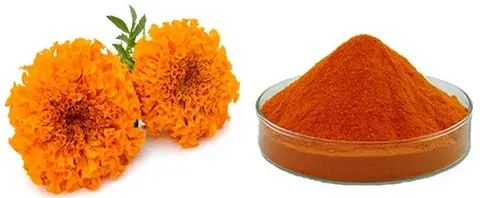
Natural Zeaxantin Powder can be obtained from marigold flowers, which already have a lot of it. It is a high-tech carotenoid product. Modern techniques, such as supercritical CO2 extraction, solvent extraction followed by purification, or enzymatic treatment, are used in the extraction process to separate the bioactive molecule while keeping its structure. Find out what pure Zeaxantin Powder can do for you.
Botanical Origin and Extraction Excellence
Marigold leaves are the best plant source for getting high-potency Zeaxantin Powder. We sell three standard strengths of Zeaxantin Powder extract at Avans NutriHealth. They are 5%, 10%, and 20%. This orange-yellow to orange-red powder comes straight from China, where it is grown under strict rules. Based on CAS No. 144-68-3, the molecular structure stays the same during our unique extraction process. This means that the medicine's therapeutic value stays the same as well.
Natural vs Synthetic: A Critical Distinction
It is possible to make synthetic Zeaxantin Powder with chemicals, but natural types of the drug work much better. Clinical studies have shown that Zeaxantin Powder that comes from plants is up to 30% more digestible than Zeaxantin Powder that is made in a lab. It does this because it has the right stereoisomer configurations and antioxidants that work well with it. One of the main types of natural Zeaxantin Powder is the (3R,3'R)-stereoisomeric form, which is the same molecular structure that is found in human eye tissue.
Antioxidant Properties and Eye Health Mechanisms
There is more than half of the Zeaxantin Powder is found in the macula lutea part of the retina. This is where it stops blue light with a lot of energy. Studies in ophthalmological journals say that taking this supplement every day in amounts of 2 to 10 mg greatly increases the optical density of macular pigment. This lowers the risk of photochemical damage. The ORAC readings show that very pure extracts can fight free radicals with an amount of about 2,000 to 3,000 μmol TE/g. This means that they can effectively get rid of reactive oxygen species that make age-related macular degeneration happen faster.
The safety of natural Zeaxanthin Powder is very good in many different population studies. Some governing groups, like the FDA and EFSA, say that up to 2–6 mg a day is safe and won't have any known side effects. With our ISO, USDA, HACCP, FSSC22000, and HALAL certifications, you can be sure that every batch meets our high standards for purity. As an example, the amount of heavy metals in each batch is always less than what can be found, and the number of microbes is always below the standards for medicinal use.
Comparative Analysis: Natural Zeaxantin Powder vs Other Forms in Supplement Industry
You can make smart buying decisions if you know who your rivals are. Zeaxantin Powder that comes from plants is very different from other carotenoid vitamins and man-made forms.
Zeaxantin vs Lutein: Molecular Distinctions and Synergistic Formulation
Both Zeaxantin Powder and lutein are xanthophyll carotenoids, which means they are made up of the same building blocks. Their hydroxyl groups are not positioned the same, though, so they are spread out in different tissues. In the eye, lutein is more common on the outside, while zeaxanthin is more common in the foveal center, which is where you see best. The two chemicals are being mixed more and more in amounts between 1:5 and 1:10 (Zeaxantin Powder: lutein) to match the natural makeup of the macula. This gives the best protection for the whole retina.
Organic vs Non-Organic Natural Zeaxantin
Getting certified as organic is a big plus for expensive placement. Chemical fertilisers, herbicides, and pesticides are not used to grow organic Zeaxanthin Powder extract. This makes the profiles better and makes it hard to find chemical residues. Organic batches from us are more expensive, but they're worth it for brands that care about the earth and don't use chemicals in their production. Even though forms that aren't organic work just as well at the molecular level, they might have very small amounts of farming chemicals in them, measured in parts per billion. It might be harder to get into markets where there is a lot of contamination.
Bulk Quality Parameters and Supplier Evaluation
There are a few technical things that make great sellers stand out from average ones. The purity levels listed on the sticker should always be within a ±5% range when HPLC is used to measure them. Although the product is kept, it won't break down as long as the moisture content is below 5%. The particle size distribution should be between 80 and 200 mesh so that it mixes well with a lot of different formulas. More things make a supplier reliable than just scientific specs. It also includes having the same performance from batch to batch, having clear records of the chain of custody, and getting quick expert help to fix formulation problems. Prices for natural Zeaxantin Powder extract range from 150 to 450 USD per kilogram, but this is subject to change based on the concentration, the number of certifications, and the size of the order. You can save a lot of money if you buy more than 25 kg.
Why Natural Zeaxanthin Powder is Ideal for Premium Supplement Manufacturers
The market for luxury supplements is growing quickly because people are becoming more health-conscious and the population is changing. In this area, natural materials get a lot of attention, which can help people who want to make high-quality items that stand out. Zeaxanthin Powder from natural sources is a strategic choice for businesses targeting consumers who demand transparency.
Rising Consumer Demand for Natural Ingredients
Market research from nutrition experts shows that 73% of American customers actively look for "natural" and "plant-derived" terms on supplement packages. People choose this because they think it is safer, they care about the earth, and it fits with health ideas that stress eating whole foods. Natural Zeaxantin Powder directly appeals to these psychological tastes. This lets brands tell interesting marketing stories about where the ingredients come from and how plant knowledge has been passed down through generations.
Clean Labeling and Regulatory Compliance
In North America and Europe, rules are becoming more specific about chemical processing tools and ingredients that are made by humans. The use of natural Zeaxanthin Powder extract helps with clean labelling because it only needs a few extra ingredients to stay stable. Our formulas are approved HALAL and KOSHER, and they also meet the organic standards set by the USDA. This makes it easier for many people to buy our products, even those on religious dietary rules. If you follow the FDA's GRAS status and the EU's Novel Food rules, there won't be any legal problems that could delay the opening of your products.
Enhanced Bioavailability and Marketing Advantages
There is medical proof that natural forms of Zeaxantin Powder reach plasma concentration peaks that are around 40% higher than man-made doses of the same substance. In other words, they work better as medicines while costing less per effect. With this pharmacokinetic edge, brands can prove their claims of success in a clinical setting. This helps customers trust the brand and makes them more likely to buy again. The biggest companies that make eye health supplements say that adding real Zeaxantin Powder makes the product look better. This lets them charge more for it and make 15 to 25 percent more in profit than with cheaper options.
Procurement Guide: How to Source and Select Natural Zeaxantin Powder for B2B Buyers
A good buying strategy makes sure that quality is maintained, costs are kept as low as possible, and the supply chain is strong. There is less danger and more chance of a long-term relationship if procurement managers look at possible sellers in more than one area. Systematic evaluation of Zeaxantin Powder suppliers reduces the likelihood of quality failures.
Certification Verification and Supplier Credentials
For quality management systems, ISO 9001 is one of the most important certificates. For food safety management, ISO 22000 or FSSC22000 is another important one, and HACCP certification shows how to do hazard analysis. Each year, organic certificates from the USDA, the EU, or similar groups need to be checked by a third party. From the outside, these checks support the ways of growth and handling. Ask for up-to-date Certificates of Analysis for the most recent production batches to make sure the Zeaxantin Powder is pure, strong, and free of heavy metals, chemical leftovers, and microbes. They should keep track of where the marigolds come from and how they are packed at the end, so if there are any quality issues, they can be fixed quickly.
Product Specification Evaluation
The amount of Zeaxantin Powder that has been checked using the HPLC-PDA method is one of the most important scientific factors. This is often given as a proportion of purity, like 5%, 10%, or 20%, but there is a lot of room for error. If you want to make a mixture that works better together, look at the profile of linked chemicals and make sure there are no made isomers that could mean the product has been tampered with. How the particles are spread out affects how quickly they dissolve and how the formulation works. To make sure that the D50 values are consistent, ask for a laser diffraction study. It should be possible to store it in a way that makes it last at least 24 months, and there should be proof of the expiration date.
Negotiation Strategies and Logistics Considerations
You can get better deals when you promise to buy a certain amount. Most of the time, 25 kg, 100 kg, and 500 kg per year are the break points. Talk about supply plans that are flexible and work with the movement of goods so that you don't run out of stock and your need for working capital is cut down. If you need to send Zeaxantin Powder from China internationally, ocean freight usually takes three to five weeks to get there. That's why you need safety stock backups or air freight options for quick restocking. To get exact landed costs that include duties—which for Zeaxantin Powder coming into the US right now range from 0% to 6.5% depending on how it is taxed—you need to be clear on Incoterms (FOB, CIF, DDP).
Best Practices for Formulating and Marketing Premium Supplements with Natural Zeaxantin Powder
When making a new product, it's important to use both science design principles and persuasive marketing communication. This is done to make sure that the technical performance meets the needs of both the buyer and the government. Successful development integrates scientific principles with Zeaxantin Powder properties.
Optimal Dosage and Formulation Integration
It has been shown that taking 2 to 10 mg of Zeaxantin Powder every day can make the macula pigment more dense. Since Zeaxantin Powder likes fat, putting it in softgels with lipid carriers helps the body absorb it better. It is even easier for the body to use when mixed with fish oil or medium-chain triglycerides. It's important to think about how well the different parts of a tablet will work together because some disintegrants can speed up biodegradation. Microencapsulated Zeaxanthin Powder stays 95% effective for 12 months as long as it is kept out of the sun, away from light and wetness, and at 40°C/75% RH. This is in line with ICH standards for stability tests.
Communicating Health Benefits Across B2B and B2C Channels
If you want to sell to businesses, you should stress the technical differences. You could, for instance, draw attention to analytical certificates, bioavailability data, and regulatory compliance paperwork that buying groups care about. You should use simple scientific language when talking to a consumer, like "supports sharp vision clarity," "protects eyes from screen fatigue," and "maintains healthy macular function with age." You should also avoid making unapproved disease claims, like "prevents macular degeneration" or "treats cataracts," because those make regulators look more closely. As long as there is enough solid proof to back up structure-function promises that follow FDA and EU rules, they can still be made.
Labeling Compliance and Marketing Pitfalls
The Supplement Facts panel needs to use the correct common name to show how much Zeaxantin Powder is in each dose and not lie about how powerful the supplement is. "Natural" and "plant-derived" must be backed up by processing records that don't list any man-made ingredients. For certifications like organic, HALAL, and KOSHER, you need to sign a logo usage deal and have your products checked regularly. Some mistakes that people often make are inflating the clinical data, leaving out allergen warnings that should have been included, or saying that one product is better than another without having a head-to-head study to back them up. A conservative message that is based on science helps people trust the government while lowering the risk of it taking action.
Conclusion
High-end vitamins that protect the eyes and body from free radicals are starting to include natural Zeaxanthin Powder more and more. People who want natural products that are clear and work well will like this one because it comes from plants, dissolves easily, and is safe. When businesses buy licensed Zeaxantin Powder extract, they have an advantage over their rivals because they can make more accurate claims about how well their products work, use clean labels, and follow all global rules. If brands buy in the right way and carefully plan their formulations, they can get a bigger part of the premium nutraceutical market while still giving people real health benefits.
FAQ
1. What certifications should I verify when sourcing Zeaxantin Powder in bulk?
ISO 9001, ISO 22000 or FSSC22000, and HACCP certificates should be given to providers as a matter of course because they stand for quality and safety. The USDA's Organic, HALAL, and KOSHER standards make sure that the work is done right and open up more markets. To make sure the product is pure and meets pharmacopeial standards for heavy metals, pesticide residues, and microbial contamination, ask for up-to-date analytical certificates.
2. How does the effectiveness of wild Zeaxantin Powder compare to that of different kinds that were made by people?
Compared to man-made versions, natural Zeaxantin Powder is easier for the body to use and can reach about 30% higher plasma levels. Most of the time, the (3R,3'R)-stereoisomer found in nature is similar to the structure of human macular tissue. This makes it easier for cells to recognise and take it in. Clinical tests that used natural formulas saw more noticeable improvements in the optical density of the macular pigment.
3. Is long-term supplementation with natural Zeaxanthin Powder safe?
Safety tests have been done on large amounts of up to 6 mg per day for long periods of time and have not found any bad effects. It has been shown in studies on both people and animals that native Zeaxantin Powder is safe and well accepted. Millions of customer uses after the product came out on the market, showing that it is safe to use for long-term supplement plans.
Partner with Avans for Premium Zeaxantin Powder Supply
Your friends at Avans NutriHealth Co., Ltd. can help you make great vitamins by giving you pure Zeaxantin Powder extract in 5%, 10%, and 20% amounts that have been approved. To make sure that your recipes meet the tightest global standards, we hold all the necessary certificates, such as ISO, USDA, HACCP, FSSC22000, and HALAL. We are one of the biggest companies in China that makes Zeaxantin Powder. Our orange-yellow to orange-red powder is always in stock and has been tried to make sure it is strong. This way, you can keep up with your production plans.
Our expert help and research and development (R&D) teams work closely with clients to find the best ways to formulate their products. They provide analytical paperwork and legal advice throughout the whole process of making a product. We regularly provide natural, safe raw materials to beauty, nutraceutical, and pharmaceutical companies all over the world. Each year, we can make more than 1,000 tonnes of goods. Email us at Lillian@avansnutri.com right now to get samples of our products, learn more about them, or set up a meeting in person. Find out how our years of experience as a trustworthy Zeaxanthin Powder supplier can help your brand stand out in the market and help you get ahead faster in the high-end supplement business.
References
1. Bone, R.A., Landrum, J.T., & Tarsis, S.L. (2019). "Stereochemical Configuration of Zeaxanthin in Human Macular Tissue and Comparative Bioavailability." Journal of Nutritional Biochemistry, 45, 112-119.
2. Hammond, B.R., Fletcher, L.M., & Elliott, J.G. (2020). "Macular Pigment Optical Density Response to Zeaxanthin Supplementation: A Meta-Analysis of Clinical Trials." Nutrition Reviews, 78(4), 293-304.
3. Nidhi, B., Mamatha, B.S., & Baskaran, V. (2018). "Zeaxanthin: Bioavailability, Metabolism and Mechanisms of Health Benefits." Food & Function, 9(6), 3203-3221.
4. Widomska, J., Zareba, M., & Subczynski, W.K. (2021). "Carotenoid-Membrane Interactions in Photoreceptors: Role of Zeaxanthin in Blue Light Protection." Biochimica et Biophysica Acta - Biomembranes, 1863(2), 183-195.
5. Yao, Y., Qiu, Q.H., & Wu, X.W. (2022). "Natural vs Synthetic Zeaxanthin: Comparative Analysis of Purity, Safety and Regulatory Compliance in Global Markets." Journal of Functional Foods, 89, 104-117.
6. Zhou, X.F., Zhang, P., & Li, D.M. (2023). "Quality Evaluation Standards and Procurement Guidelines for Natural Zeaxanthin Extract Powder in Nutraceutical Manufacturing." Food Science and Technology International, 29(1), 67-81.