




Is Freeze Dried Okra Ideal for Functional Snacks?
For producers looking for clean-label, nutrient-dense ingredients, Freeze Dried Okra offers a major innovation in the development of functional snacks. With the help of lyophilization technology, this vegetable goes through controlled sublimation that keeps about 97% of its nutrients while getting rid of the slimy taste that usually keeps people from eating it. The finished product is very flexible and can be used in a wide range of nutraceutical, food, and drink uses. Its moisture content is below 5%, and its water activity level is below 0.3, which means it is microbiologically stable without the need for artificial stabilizers.
Understanding the Global B2B Procurement Landscape
Over the past ten years, there have been big changes in how useful food products are bought. Manufacturers in the food and nutrition industries have to deal with supply networks that are getting more complicated. To stay ahead of the competition, they need to make sure that ingredients are clear, regulations are followed, and the supply chain is strong.
Shifting Market Dynamics in Functional Ingredient Sourcing
At the moment, the global functional snack market is growing at a rate of more than 8% per year. This is mostly because people want clean-label goods with chemicals they can recognize. This rate of growth gives formulators and R&D teams both chances and problems when it comes to buying things. Companies have to balance a lot of different needs: getting products with nutritional claims that can be checked, keeping costs low even when material prices change, and making sure there is a steady supply even when there are international risks.
Freeze-dried okra is becoming popular as a high-end functional ingredient. This is part of a larger shift in the industry toward plant-based ingredients that are barely processed. Advanced lyophilization technology keeps the structure and bioactive chemicals that are important for product innovation in competitive markets. This is in contrast to traditional dehydration methods that often damage heat-sensitive nutrients. More and more, procurement managers are aware that the way ingredients are processed has a direct effect on how well finished products work, how long they last on the shelf, and eventually, how well the brand is known.
Regional Certification Requirements and Market Access
The strict quality standards in the North American and European markets have a big impact on how suppliers are chosen. Products going to these controlled markets need to have a lot of different certifications, like HACCP, ISO 22000, BRC, and FSSC 22000 approval. In the Middle Eastern market, HALAL certification is needed, and in some high-end areas, USDA Organic approval is needed. These overlapping certification systems make it very hard for new companies to get started, but they also make sure that quality standards are met for buying teams that are in charge of global formulation portfolios.
Companies that sell their goods in foreign markets can benefit from working together with sellers who can offer more than one certification. Using this method makes managing vendors easier and frees up time that would have been spent on keeping separate sellers for each market area. Working with certified makers is more than just a matter of compliance; it shows that you are responsible for managing the supply chain and lowers legal risk in many different countries.
Key Procurement Challenges and How to Overcome Them
In the functional food industry, procurement workers face unique operational problems that need smart answers and proactive risk management methods.
Supply Chain Vulnerability and Quality Consistency
Agricultural raw materials for Freeze Dried Okra naturally change with the seasons, which can throw off production plans and make it harder to be consistent from batch to batch. Fresh okra is especially hard to work with because it goes bad quickly after being picked, and there are only a few times when it can be picked in some growing areas. Keeping track of temperature and having a short shelf life make it harder for buying teams to manage just-in-time stocking systems.
Freeze-Dried Okra products protect against these problems by keeping them stable for longer on the shelf. Products that are properly packed and have a moisture level of less than 5% will keep their quality for 18 to 24 months when stored at room temperature. This longer period of steadiness lets purchasing managers use smart inventory strategies that protect against regular supply gaps and price changes. Freeze-dried materials are usually 90% lighter than their fresh counterparts, which makes them even better for saving money on shipping and storing.
Regulatory Compliance and Documentation Requirements
The difficulty of the documentation is another big problem in buying, especially for businesses that have to deal with regulations from more than one place. Each market needs its own analytical certificates, allergen statements, non-GMO documents, and proof of tracking. Documentation that is missing or not consistent can cause delays in clearing customs, problems with work plans, and problems with customers.
Having strong relationships with suppliers who have strong quality control methods makes this a lot easier. Manufacturers whose facilities are ISO-certified usually follow standard procedures for paperwork that are in line with what international regulations require. This organized way of making sure quality cuts down on the work of the buying team and makes it easier to prepare for audits and follow regulations.
Cost Management Amid Price Volatility
The prices of raw materials change based on crop amounts, exchange rates, and the cost of transporting them. These factors make planning hard for procurement managers, whose job it is to meet margin goals while making sure that food quality doesn't suffer. When people try to find cheaper options, they often take quality risks that hurt the performance of the product and the integrity of the business.
Strategic buying practices look at the total cost of ownership more than just comparing prices. When looking at Freeze-Dried Okra providers, you should think about their yield efficiency (rehydration ratios), their ability to verify nutrient density, their consistency measures, and how financially stable they are. Premium products from approved makers often offer better value because they reduce waste, improve formulation performance, and keep quality-related problems to a minimum.
Best Practices in Supplier Selection and Relationship Management
Good purchasing starts with having good relationships with suppliers, especially when it comes to specific types of ingredients that need technical know-how and strict quality control.
Comprehensive Supplier Evaluation Criteria
To find the best provider of Freeze Dried Okra ingredients, you need to look at more than just the product specs. A production capacity review makes sure that your sellers can keep up with the growth of your business without lowering the quality of their work. Manufacturing plants that make more than 1,000 tons of product a year and have specialized production teams show that they can handle large-scale preparation projects and changes in demand without breaking their delivery promises.
Another important part of critical assessment is technical ability. Suppliers with a history of research and development (R&D) can help with formulation, do stability studies, and give expert advice during the product creation stages. This collaborative method shortens the time it takes to bring new useful snack ideas to market and cuts down on the number of times that formulas have to be tried and failed. Companies that have been around since 2005 or earlier usually know how to deal with common formulation problems and can predict possible technical problems before they affect production plans.
Financial security and planning for business continuity should also be big parts of systems for evaluating suppliers. For long-term relationships to work, you need to be sure that your sellers will still be able to meet your needs as products go through their lifecycles. Facilities with certificates like BRC, ISO 22000, HACCP, and FSSC 22000, a position in foreign markets, and a wide range of customers are all signs of a strong organization and good management.
Building Transparent Communication Channels
Open, direct contact that goes beyond just placing an order is key to building strong relationships with suppliers. Setting up regular contact points with supplier technical teams lets you spot possible supply problems early, makes it easier to work together to solve problems, and opens the door to projects for ongoing improvement. These relationships are especially helpful when things go wrong out of the blue, like when there aren't enough crops, problems with logistics, or changes to the rules. If the provider is committed to open communication, problems won't turn into crises, but can be dealt with.
Digital communication tools and supplier scorecards make it easy to keep track of success and handle relationships. Tracking measures like on-time delivery rates, accurate certificates of analysis, responsive technical support, and contributions to innovation make it easier to have objective conversations with suppliers and set goals for ongoing growth.
Leveraging Technology to Optimize Procurement Efficiency
Using technology together is now necessary for buying teams that are in charge of handling large groups of ingredients that come from different suppliers around the world. Modern digital tools turn tasks that used to be done by hand into simplified, data-driven processes that improve the quality of decisions and the speed of operations.
Digital Platforms for Supplier Management
E-procurement platforms organize information about suppliers in one place, make buying processes more consistent, and produce paper trails that can be checked. These features help with internal controls and legal compliance. These systems make it easy for procurement managers to quickly compare the skills of different suppliers, keep track of when certifications expire, and keep full records of how each supplier has performed. Integration with corporate resource planning tools makes it even easier to see how much material you have, how it's being used, and when you need to reorder.
Blockchain technology is becoming a powerful tool for supply chain openness. This is especially useful in controlled industries where traceability rules require thorough records of where ingredients come from and how they are processed. Distributed ledger systems keep records that can't be changed, which track goods from their farming origins through processing, testing, and shipping. This amount of openness not only meets regulatory needs, but it also backs up claims of authenticity, which are becoming more and more important to customers and brand owners.
Data Analytics for Strategic Decision-Making
Procurement teams for Freeze Dried Okra can use advanced analytics tools to find trends in buying data, make more accurate demand predictions, and get the most out of their inventory investments. Applications that use artificial intelligence can look at past usage data and market trends to figure out the best times and amounts to buy, which lowers the risk of running out of stock and the costs of keeping too much inventory on hand.
Spend analysis lets you see how purchases are made, which shows you ways to save money by consolidating volumes, getting rid of unnecessary suppliers, and managing categories better. These insights help procurement leaders deal better with suppliers and make choices about partnerships with suppliers and ingredient requirements that are based on facts.
Embedding Sustainability into Procurement Strategies
Environmental and social governance issues have gone from being minor worries to top priorities when buying things. This is especially true for companies that sell goods in North America and Europe, where sustainability promises affect how people see their brand and their ability to get into new markets.
Environmental Impact Assessment in Ingredient Selection
When compared to other ways of preserving things, Freeze-Dried Okra technology is better for the world. Chemical preservatives are not needed with this method, so finished goods use fewer synthetic additives. Lyophilization makes food last longer, which cuts down on food waste along the supply chain. This is important because every year, about one-third of the world's food production is lost or wasted.
Another area of sustainability where Freeze-Dried Okra ingredients show measurable benefits is the transportation economy. Getting rid of 90% of the weight that comes from moisture greatly reduces the amount of fuel that is used and the carbon emissions that are released during shipping operations. As companies set goals to reduce their carbon footprint and look for products that help them reach these environmental goals, this economic gain becomes even more important.
Supplier Sustainability Performance Metrics
Structured models are used by progressive procurement organizations to evaluate the environmental and social success of their suppliers. Some of the criteria could be how well the manufacturing process uses energy, how well the water is used, how well the waste is managed, and how well the wage standards are met. Suppliers with organic licenses are committed to long-term farming methods that protect soil health, preserve wildlife, and use as few synthetic chemicals as possible.
When sustainability measures are added to seller scorecards, it shows that social and environmental performance are just as important as quality and cost. This method pushes supply partners to keep getting better and makes sure that purchasing practices are in line with larger promises to corporate responsibility. Companies that see sustainability as a way to set themselves apart from competitors, instead of something they have to do, often find they have an edge in markets where aware marketing affects buying choices.
Conclusion
It turns out that Freeze-Dried Okra is a great item for making useful snacks because it keeps all of its nutrients, is stable during processing, and can be used in a lot of different ways. The lyophilization process keeps bioactive chemicals while changing the texture, which opens the door to new product ideas in a number of different market groups. Companies that sell their goods in globally controlled markets can get more from working with certified providers who have strong quality control systems and can handle the large and complicated needs of international business. Strategic procurement practices that focus on total value, sustainability alignment, and working together with suppliers position companies to capitalize on the expanding functional snack market while managing risks inherent in complex global supply chains.
FAQ
Why does freeze dried okra become sticky after package opening?
Because stored pectin is hygroscopic, it quickly absorbs moisture from the air when goods are exposed to it. This trait needs wrapping that is tightly sealed and the right way to store it. Once goods are opened, they should be put in cases that keep air out and eaten within a fair amount of time to keep the best texture. Even though it needs to be handled carefully because it is sensitive to moisture, this shows that there are no moisture-barrier layers or manmade additives.
How does freeze dried okra differ from vacuum-fried alternatives?
Freeze-Dried Okra foods don't have any added oils, so they only contain the nutrition from the vegetables themselves. Vacuum-fried forms usually have 15 to 30 percent more oil, which changes the nutritional values and adds calories. The freeze-drying process makes structures that are lighter, more porous, and better at rehydrating. This makes these materials perfect for uses that need to quickly absorb water or have low calorie density.
What is the typical rehydration ratio for freeze dried okra?
Good Freeze-Dried Okra has recovery ratios between 1:10 and 1:12, which means that ten to twelve liters of water can absorb one kilogram of dried product and make it almost as fresh as new within minutes. Because it can be quickly rehydrated, the item is useful for making instant meals, soup bases, and ready-to-eat foods that don't need much preparation time while still providing veggie nutrition and functional fiber.
Partner with Avans for Superior Freeze-Dried Okra Supply
Avans NutriHealth Co., Ltd. brings nearly two decades of specialized expertise in producing premium Freeze Dried Okra ingredients that meet the exacting standards of global nutraceutical, pharmaceutical, and food manufacturers. Our long list of certifications, which includes HALAL, ISO, USDA, HACCP, FSSC 22000, and BRC, shows that we are dedicated to quality systems that meet the strictest legal needs in global markets.
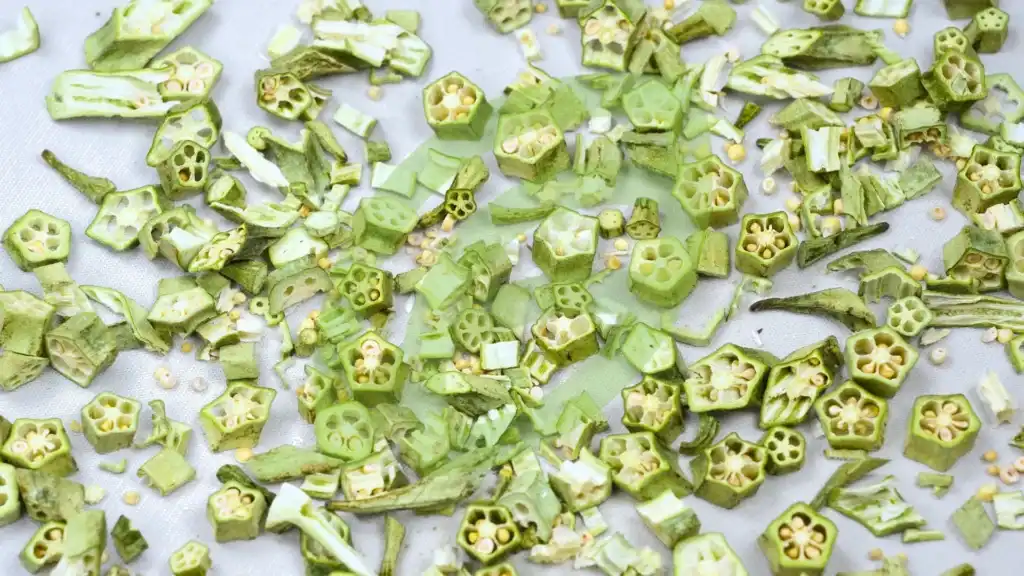
Our Freeze-Dried Okra dices keep a lot of nutrients, including vitamins, minerals, and bioactive substances that break down at high temperatures but are still needed for useful snacking. Our goods, which come in both whole and diced forms and always have a moisture content below 5% and a water activity below 0.3, give buying teams the microbiological stability and long shelf life they need. With a production capacity of more than 1,000 tons per year and focused technical support from our experienced R&D team, we give growing brands the dependability and flexibility they need from their ingredient providers.
Our team is ready to help you reach your procurement goals with consistent quality, quick service, and technical know-how, whether you're coming up with new, useful snacks, instant meal components, or specialized nutrition goods. Get in touch with our team at Lillian@avansnutri.com to talk about your specific needs and find out how working with a reliable Freeze-Dried Okra maker can help your supply chain and speed up your product development.
References
1. Smith, J.R., & Thompson, M.K. (2021). Lyophilization Technology in Food Preservation: Nutrient Retention and Quality Parameters. Journal of Food Science and Technology, 58(4), 1245-1258.
2. Anderson, P.L., Chen, W., & Roberts, D.F. (2022). Functional Snack Market Trends: Consumer Preferences and Ingredient Innovation. International Food Research Journal, 29(2), 334-347.
3. Martinez, C.E., & Wilson, H.G. (2020). Supply Chain Resilience in the Nutraceutical Industry: Risk Management Strategies for Global Procurement. Supply Chain Management Review, 24(3), 78-92.
4. Johnson, K.A., Lee, S.H., & Brown, T.M. (2023). Sustainability Metrics in Food Ingredient Procurement: Environmental and Social Governance Integration. Corporate Sustainability Quarterly, 15(1), 112-129.
5. Davis, R.W., & Kumar, A. (2021). Comparative Analysis of Vegetable Preservation Methods: Nutritional Impact and Functional Properties. Food Chemistry Advances, 187, 445-459.
6. Thompson, E.J., Park, Y.S., & Miller, G.H. (2022). Certification Requirements and Quality Standards in Global Food Ingredient Markets. International Journal of Food Safety and Quality, 8(2), 203-218.