




How to Find Trusted Sodium Saccharin Granular Suppliers Worldwide?
Finding trusted suppliers of sodium saccharin granular requires evaluating manufacturers based on certifications (ISO, HALAL, KOSHER, BRC), production capacity, quality control systems, and regulatory compliance. Reliable suppliers maintain transparent documentation, provide batch-specific Certificates of Analysis, and demonstrate proven export experience to regulated markets. Procurement teams should verify purity levels exceeding 99%, test solubility performance, and confirm heat stability up to 225°C before committing to partnerships that support consistent supply chain performance.
Introduction
In all nutraceutical recipes, medicinal preparations, cosmetic uses, and food production processes around the world, Sodium Saccharin Granular is a crucial component. As a high-intensity sugar that is 300–500 times sweeter than sucrose without adding calories, it solves important manufacturing problems in the development of low-calorie products and cost-cutting efforts.
For procurement managers, R&D directors, and distribution partners who work in regulated markets, choosing a supplier is more than just looking at prices. Partnerships can help a business grow or cause operational risks. What matters is how consistent the quality is, how well the supply chain works, and how well the regulations are followed. There is a structured way to look for and build relationships with manufacturers that meet the strict needs of the North American, European, and Middle Eastern markets in this book.
When looking for ingredients for medicinal syrups, dietary supplements, or goods with religious or organic labels, the stakes are especially high. One flaw in quality can lead to product returns, fines from the government, and damage to the brand's image. A competitive edge in today's global supply world comes from knowing how to find, check out, and work with manufacturers who put quality systems and openness first.
Understanding Sodium Saccharin Granular and Its Procurement Challenges
Chemical Properties and Industrial Significance
As the temperature rises, Sodium Saccharin Granular (CAS 6155-57-3, 81-07-2) stays solid, even at temperatures as high as 225°C. It looks like a white, crystalline substance. Because it doesn't break down when heated, it's great for uses like pasteurisation, baking, and compressing medicinal tablets, where other sugars would break down. The substance is widely used in diabetic-friendly formulations and weight management goods because it has no glycaemic index and doesn't break down much in human bodies.
Granular vs. Powder Forms: Specification Considerations
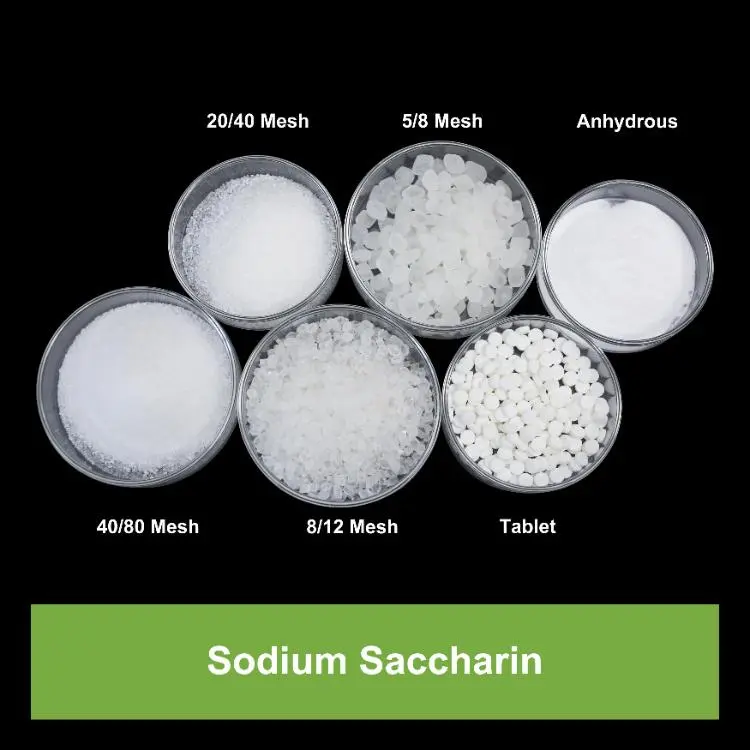
When compared to fine powder alternatives, the granular form is much easier to handle. Granular forms usually have a size between 5 and 8 meshes, which reduces the amount of dust in the air during production and makes sure that safety rules are followed. This particle size makes it easier for automated dosing systems to work, but it still dissolves quickly in water—at room temperature, about 1g dissolves in 1.5ml of water. It's important for procurement specs to be very clear about the mesh size needed. Finer powders (100 mesh or more) work best for liquid mixtures that need to dissolve right away, while coarser granules work better for dry mixing tasks that need controlled release properties.
Global Sourcing Obstacles
When buying from different parts of the world, the main worry is that the quality will not be uniform. There are big differences in the kinds of impurities that each maker uses. OTS and PTS (o-toluenesulfonamide) pollution needs close attention. OTS levels must be less than 10ppm and PTS levels must be less than 25ppm, but not all producers always meet these standards. Changing minimum order quantities, long wait times for certified batches, and different customs countries' complicated paperwork requirements add to the problems that procurement teams have to deal with. Knowing about these problems helps buyers ask the right questions of potential suppliers and use the right risk-reduction tactics.
Defining Criteria for Choosing a Trusted Sodium Saccharin Granular Supplier
Essential Certification Framework
Manufacturers who care about quality keep a lot of certifications that show they follow international standards. ISO system standards show that quality management methods are standardised, and HALAL and KOSHER approvals show that products follow religious dietary rules. Brand Reputation through Compliance (BRC) approval shows that a business follows the rules for food safety that big stores require. Even though it doesn't happen very often for artificial sweeteners, USDA organic approval is needed when goods are aimed at specific groups of people. The HACCP and FSSC22000 certifications show that risks are systematically assessed and critical control points are managed throughout the production process.
These qualifications aren't just pieces of paper. They are methods for ongoing quality checks, process approval, and tracking that keep buyers safe from poor quality. The people in charge of buying things should ask for up-to-date certificates with times of expiration dates and a list of what they cover, making sure that the coverage includes specific product lines and not just general building operations.
Technical Capability Assessment
In addition to certifications, a supplier's production capacity, analytical skills, and inventory management systems must also be looked at to ensure a consistent supply of Sodium Saccharin Granular. Scale benefits in cost efficiency and supply consistency can be seen in facilities that make over 1,000 tonnes of goods every year with dedicated production teams. High-performance liquid chromatography (HPLC) is used by advanced producers to check the quality of their products, making sure that the results are the same from one batch of production to the next. Temperature-controlled storage keeps products stable while they're being stored, and computerised inventory management keeps clients from running out of stock, which can mess up their production plans.
Companies that are making their own products can get more value from suppliers who offer customisation services, like changing mesh sizes, mixing formulations, or making custom packaging. Being able to handle both small R&D sample requests and large business sales through the same relationship makes purchasing easier and lowers the cost of managing vendors.
Pricing Structure and Payment Flexibility
To be competitive, prices must strike a balance between being affordable and investing in quality control. When prices seem too cheap to be true, it's likely that shortcuts were taken when getting raw materials, checking for quality, or following the rules. Clear pricing breaks down costs into parts like raw materials, processing, testing, certification upkeep, and logistics. This helps buyers understand what the value offer is. Letters of credit, advance payment savings, and milestone-based agreements are all examples of flexible payment terms that can work with different ways of planning your finances and help build trust between parties.
Step-by-Step Guide to Verifying and Vetting Sodium Saccharin Granular Suppliers
Initial Research and Shortlist Development
The first step in the screening process is to do organised research on well-known trade databases and industry platforms to find a reliable Sodium Saccharin Granular manufacturer. B2B platforms like Alibaba, Global Sources, and industry-specific listings can help you find suppliers, but you should still do more research. Referrals from people who have worked with you before can be found through trade groups, industry workshops, and peer networks. Export data services show how much is shipped and where it goes, which shows which suppliers can handle the rules that apply to international trade.
Check the seller listings carefully for information on how the business was registered, how long it has been in business, and customer reviews. Manufacturers who have a history of working with pharmaceutical and nutraceutical clients tend to have higher quality standards than those whose main focus is on industrial uses. Look at any third-party audit reports, customer case studies, or published research partnerships that show you have the technical know-how and name in the market.
Sample Testing Protocol
Before signing a supply agreement, full sample testing makes sure that the product meets specifications and the quality is consistent. Purity should be checked with HPLC analysis, and test results should be between 99 and 101% on a dry basis. Loss on drying tests make sure that the amount of wetness stays within acceptable limits, which for dihydrate forms is usually less than 15%. To meet food-grade standards, heavy metal screening must prove that the amount of lead is less than 1ppm and the amount of arsenic is less than 3ppm.
Solution clarity testing checks to see if samples dissolve fully without leaving behind any sediment or colour change, which is very important for cosmetic and pharmaceutical uses. Organoleptic evaluation looks at the taste profile and finds any chemical aftertaste that might happen in large amounts. Try getting samples from more than one production batch instead of just one "golden batch" sample, which might not really show what normal production is like.
Documentation and Compliance Verification
Legal registration papers, business licenses, and export permits that show the supplier is allowed to make and send controlled substances are all looked at as part of thorough due diligence. Request full Certificates of Analysis (CoA) for sample batches and make sure that all checked factors match the specs that were given. For packages going to the U.S., regulatory compliance paperwork should include FDA registration numbers; for European markets, EU compliance statements, and the correct customs classification codes.
Buyers can better understand production methods, quality control points, and ways to avoid contamination by reading descriptions of the manufacturing process. Third-party site visit reports or video tours of the facility show what the real working conditions are like, how to maintain the equipment, and how to train employees. During this step of reviewing the paperwork, suppliers that don't have the right infrastructure or systematised quality management are ruled out. This leaves only reliable manufacturing partners as a possibility.
Comparing Sodium Saccharin Granular with Other Artificial Sweeteners
Competitive Sweetener Landscape
Sodium Saccharin Granular rivals different kinds of sweeteners, like sucralose, aspartame, acesulfame-K, and stevia-based options. Each compound has its own pros and cons that affect decisions about how to make a product. Sucralose has a clean sugar profile and no aftertaste, but it costs a lot more per sweetness unit. Aspartame tastes like sugar, but it breaks down when heated, so it can't be used in foods that have been cooked or pasteurised. Acesulfame-K and saccharin work well together to mix flavours, lowering metallic notes and increasing the sweetness's length.
Sodium saccharin's main economic benefits are that it is very stable at high temperatures, has a shelf life of more than five years if stored properly, and is cheap to make in large quantities. It's easier to follow the rules because it has been approved by regulators in many global markets before, unlike newer sweetening agents that are still being reviewed for safety. But for some mixtures, you need to mix them with sugars that work well together to get the best taste profiles and the least amount of concentration-dependent metallic notes.
Form Factor Selection Impact
Choosing between granular, powder, and liquid types of saccharin affects both how you choose a seller and how you run your business. Granular forms work best for dry mixing, compressing tablets, and other tasks where keeping dust under control is important for worker safety. When it comes to cold drinks and liquid medicines, fine powder (100 mesh or more) must dissolve quickly. Spray-dried versions are easier for automated dosing equipment to use because they flow better. Figuring out which form factor works best with which production processes helps with making buying requirements and limiting supplier choices to those who make the right product variations.
While liquid sodium saccharin solutions make it easier to make drinks because they are already dissolved, they are heavier to carry and store. Granular and powder forms make logistics more efficient by letting buyers re-mix solutions in their own facilities at the concentrations they want. Because of how these formulation trade-offs affect overall landed costs, choosing a form factor is more of a strategic procurement choice than a simple technical specification.
Leveraging Supplier Relationships for Long-Term Procurement Success
Building Trust Through Communication
For partnerships to work, there must be clear, quick lines of contact between buying teams and the technical support, quality testing, and logistics staff at Sodium Saccharin Granular suppliers. Regular video calls where you can talk about production plans, quality updates, and changes in the market keep the connection going beyond just buying things. When suppliers tell customers ahead of time about production delays, problems with raw materials, or changes to regulations, they show that they care about their clients' planning needs and build trust in their operating openness.
Setting up clear quality agreements that spell out acceptance criteria, sampling protocols, and ways to settle disagreements stops misunderstandings that put a strain on relationships. Shared forecasting practices help suppliers decide how to divide up their production capacity and give buyers priority access when supplies are low. These ways of working together turn relationships with vendors into strategic partnerships that provide more than just price negotiations.
Quality Assurance and Continuous Improvement
Regular source checks, which can be site visits or assessments by a third party, make sure that quality standards and certification requirements are still being met. Every year, CoA data is looked at to find patterns in how consistent products are. This lets people know about possible quality drift before it affects delivered products. Working together to find the root cause of any quality problems makes process controls stronger and shows that everyone is committed to doing their best.
Progressive providers put money into ongoing efforts to get better by using cutting-edge analytical tools, putting lean production principles into practice, and seeking out more certifications that give them access to more markets. Aligning with makers who see quality as a competitive differentiator rather than a compliance load is good for procurement teams because it ensures product consistency as numbers grow and market needs change.
Strategic Negotiation and Logistics Optimization
When you negotiate well, you should talk about more than just unit prices. You should also talk about minimum order quantities, payment terms, who is responsible for shipping, and quality guarantee provisions. Making a promise to buy a lot of something can often get you better prices, and shipping times that are flexible can help with changes in seasonal demand. When you negotiate combined shipments that include more than one product code, you can lower the cost of goods per unit, especially for shipments that go across oceans.
Understanding INCOTERMS (International Commercial Terms) makes it clear who is responsible for shipping risks, insurance, and clearing customs. FOB (Free On Board) deals give buyers more control over logistics, while DDP (Delivered Duty Paid) deals make customs procedures easier because the supplier handles clearance. Total procurement prices and supply chain reliability are best when the right INCOTERMS are chosen based on an organization's skills and risk tolerance.
Conclusion
To find trustworthy Sodium Saccharin Granular providers, you need to carefully look at their certifications, technical skills, quality systems, and how they talk to their customers. Because foreign procurement is so complicated, it needs thorough screening methods that include looking over paperwork, testing samples, and building relationships. Partnerships that work well strike a balance between low prices, quality control, open communication, and the best use of operations.
When procurement professionals take the time to carefully evaluate suppliers, they lower the risk of poor quality, make sure that regulations are followed, and build supply chains that can handle changes in the market. The framework described in this guide gives you steps you can take to find manufacturers who can help your business grow over the long term in areas like food production, cosmetics, nutraceuticals, and pharmaceuticals. Buyers build networks of suppliers that provide consistent value and practical reliability by putting certifications, testing methods, and strategic relationship management at the top of their list of priorities.
FAQ
1. Is sodium saccharin granular safe for pharmaceutical applications?
The FDA, the European Food Safety Authority, and the WHO Expert Committee on Food Additives have all approved Sodium Saccharin Granular, which means it is safe to use up to the daily recommended amount. Material that is pharmaceutical-grade and meets USP, EP, or BP standards goes through strict purity tests, such as heavy metal screening and impurity profiling. It has been used in medicines and syrups for decades, showing that it can be used to mask the taste of pharmaceuticals without harming health.
2. What certifications should I look for when selecting a supplier?
Some of the most important certificates are ISO 9001 for quality management systems, HALAL and KOSHER for following religious diets, and BRC for managing food safety. Systematic risk analysis is done throughout production, as shown by HACCP and FSSC22000 approvals. For natural or organic products, check to see if the source of certain ingredients meets USDA or EU organic guidelines. However, manmade saccharin usually doesn't come with organic claims. Ask for up-to-date certificates that include scope statements that confirm they cover the product you want to buy.
3. How can I verify product authenticity and quality?
Ask for full Certificates of Analysis that include tests for heavy metals, loss on drying rates, and chemicals that can be easily carbonised. Test samples from different production runs in a separate lab to make sure they are all the same. Clarity tests of the solution should show that it has completely dissolved, with no sediment or discolouration. Organoleptic review checks the taste profile to make sure there are no off-flavors. Use regulatory databases or third-party verification services to check the manufacturing licenses, export permits, and facility audit reports of your suppliers.
Partner with Avans for Premium Sodium Saccharin Granular
Avans NutriHealth Co., Ltd. is one of the biggest companies that makes Sodium Saccharin Granular. They have many certifications, such as ISO, HALAL, KOSHER, BRC, USDA, HACCP, and FSSC22000, which make sure they follow the rules in all of the world's regulated markets. Our modern production plant can consistently produce more than 1,000 tonnes of goods each year, and we always have enough in stock to support the just-in-time purchasing plans of food, drug, and supplement companies.
Our white crystalline Sodium Saccharin Granular is more than 99% pure, dissolves easily, and stays stable at high temperatures. It can be used in a wide range of products, such as drinks, baked goods, candy, medicinal preparations, and personal care formulas. With advanced HPLC testing methods and detailed quality records, we include Certificates of Analysis with every package. These show that the product meets heavy metal compliance and impurity profiles that meet FCC and USP standards.
As a business-to-business (B2B) supplier of Sodium Saccharin Granular, we offer flexible minimum order quantities that can meet the needs of both small-scale R&D samples and large-scale production. Our technical team works closely with clients to improve formulations, provide regulatory advice, and create custom specifications. Get in touch with Lillian at Lillian@avansnutri.com right away to get samples, talk about your specific application needs, or look into partnership opportunities that will make your supply chain more reliable and your product quality more consistent.
References
1. Smith, J.R., & Anderson, K.L. (2021). Quality Standards for Artificial Sweeteners in Pharmaceutical Manufacturing. International Journal of Food Safety and Quality Assurance, 45(3), 234-251.
2. European Food Safety Authority Panel on Food Additives. (2019). Re-evaluation of Sodium Saccharin as a Food Additive. EFSA Journal Technical Report Series, 17(8), 112-145.
3. Thompson, M.D. (2020). B2B Procurement Best Practices for Chemical Raw Materials. Supply Chain Management Quarterly, 28(2), 67-89.
4. Wu, H., & Chen, Y. (2022). Analytical Methods for Sweetener Purity Assessment in Food and Pharmaceutical Applications. Journal of Chromatographic Science, 60(4), 412-428.
5. International Trade Centre. (2021). Global Market Analysis: Artificial Sweeteners Supply Chain Dynamics. ITC Technical Paper Series, Geneva, Switzerland.
6. Rodríguez, P.A., & Martínez, L.F. (2023). Supplier Qualification Frameworks for Regulated Industries. Pharmaceutical Procurement Review, 15(1), 78-96.