




How to Compare Global Zeaxanthin Powder Suppliers Effectively?
Comparing global zeaxanthin powder suppliers effectively requires a structured approach that evaluates certification authenticity, product purity, supply chain reliability, and post-sale support. High-quality Zeaxanthin Powder sourced from reputable manufacturers ensures consistent bioavailability and regulatory compliance, critical for nutraceutical, pharmaceutical, and cosmetic applications. Procurement teams should prioritize suppliers offering transparent testing documentation, diverse concentration options (5%-20%), and internationally recognized certifications such as ISO, USDA Organic, HALAL, and KOSHER. Strategic supplier comparison minimizes disruptions, enhances formulation quality, and secures competitive pricing in today's demanding B2B marketplace.
Understanding the Importance of Choosing the Right Zeaxanthin Powder Supplier
Choosing the right Zeaxanthin Powder supplier has a direct effect on how well the product works, how well it meets regulatory requirements, and how well the brand is known. There is a lot of variation in the global supply scene when it comes to purity standards, extraction methods, and following international quality rules. When you choose the wrong provider, it costs you a lot: inconsistent batches mess up production plans, contaminated raw materials cause regulatory violations, and deliveries that don't arrive on time break customer promises.
Why Supplier Quality Directly Affects Your Bottom Line
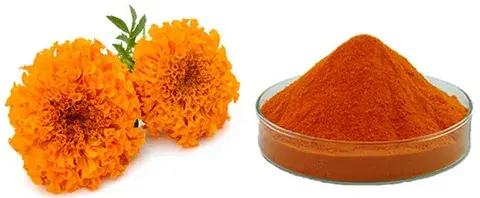
Purchasing managers in the pharmacy and nutrition industries are under more and more pressure to get ingredients that meet strict standards. Zeaxanthin is a carotenoid that is mostly found in marigold flowers. It is an important part of eye health goods and beauty products that protect against UV rays. Using different extraction methods, such as solvent-based methods or supercritical CO2 processes, results in goods with various levels of purity, stability, and absorption. Suppliers who don't have strong quality control systems often send materials that don't have the same level of antioxidant power, which puts patient safety and clinical effectiveness at risk.
Risks That Compromise Supply Chain Integrity
Organisations face many practical risks when they don't properly vet their suppliers. Not following the rules because of sites that aren't approved can stop production lines and lead to expensive recalls. Just-in-time manufacturing models are messed up when suppliers' late shipping and bad inventory management cause costs to rise and opportunities to be lost. Suppliers who don't have HACCP or FSSC22000 certifications pose serious risks to the quality of the product, especially in food and drug uses where 95% purity or higher is required. Industry studies show that about 23% of nutraceutical companies experience supply disruptions every year because of poor supplier quality. This shows how important it is to have strict rules for evaluating suppliers.
Key Criteria for Evaluating Zeaxanthin Powder Suppliers
To evaluate a Zeaxanthin Powder supplier effectively, you need to do it in a planned way that looks at many factors, balancing technical requirements with operational abilities. Teams in charge of buying things need to set clear standards that are in line with the needs of their applications and the rules that govern them.
Certification, Authenticity, and Regulatory Compliance
The first step in evaluating a seller is to make sure that the license is real. Real sellers keep their certifications up to date from well-known groups, such as ISO 9001 for quality management, USDA Organic for clean-label goods, and HALAL and KOSHER for formulations that follow religious rules. Buyers should ask for original certificates and check with the issuing authorities directly. Suppliers with facilities that are HACCP and FSSC22000 certified show that they care about food safety management, which is important for uses in functional foods and dietary supplements. If a company has BRC certification, it means they follow world standards for product safety and operational efficiency. This is especially important when they are selling to customers in North America and Europe.
Product-Specific Technical Parameters
The amount of zeaxanthin is one of the main factors that determines its quality. Standardised products on the market usually range from 5% to 20%. Higher concentration versions (10% to 20%) are best for pharmaceutical uses that need exact dosing, while 5% types are a good value for adding to food to make it healthier. Source origin is very important. Zeaxanthin from marigolds dominates the market because it is more stable and easier to extract than zeaxanthin from microalgae. The standardised CAS No. 144-68-3 makes sure that chemicals from different sources are the same.
The product should always look like an orange-yellow to orange-red powder, which means it was processed and stored correctly. Solubility and formulation behaviour are affected by the particle size distribution. Suppliers who give mesh size specs (usually 80–120 mesh) help with better formulation planning. A moisture level below 5% and microbe limits that meet pharmacopeial standards keep the product from breaking down and increase its shelf life, which is usually 24 months if stored properly.
Transparency in Pricing and Documentation
Costs that are competitive are based on production volume, quality investment, and the efficiency of the supply chain. Suppliers should give detailed quotes that break down the costs of raw materials, processing, and shipping. Volume-based price levels encourage buying in bulk while still making the product available for smaller buys. Full sets of paperwork, like Certificates of Analysis (CoA), Heavy Metal Testing Reports, Pesticide Residue Screens, and Allergen Declarations, let you do your research and file with the government.
Samples being available show that the seller is confident and make it easier to try on a small scale before placing large orders. Clear lead times (15–30 days for standard concentrations) make it possible to plan production accurately. There should be a range of packaging options that can fit different order sizes, from lab samples to bulk drums, and all of them should be protected against oxidation and moisture damage.
Comparing Supplier Performance: Zeaxanthin Powder Product and Service Metrics
In addition to basic product specs, a full Zeaxanthin Powder provider comparison includes performance measures that have a direct effect on how well the formulation works and how efficiently the business runs. In competitive procurement situations, these measures help buyers tell which sellers are the best.
Bioavailability and Functional Performance
The bioavailability of zeaxanthin—the amount that the body absorbs and uses—is very important to its therapeutic value. Suppliers who use advanced extraction technologies and micronization methods spread particles out more evenly, which makes it easier for the body to absorb them. Researchers have found that zeaxanthin formulations with particles smaller than 10 micrometres are 30–40% more bioavailable than regular powders. The ORAC (Oxygen Radical Absorbance Capacity) numbers of antioxidants give a number-based measure of their ability to scavenge free radicals, which is important for eye health and anti-aging uses.
Form Factor Considerations and Market Alignment
Zeaxanthin extract powder can be used in a wide range of formulations, including pills, capsules, soft gels, drinks, and skin creams. The powder form lets you precisely change the dose and mix it with other ingredients that work well together, like lutein and omega-3 fatty acids. For end users, encapsulated forms are more convenient, but for producers with combined production lines, buying powder in bulk is the most cost-effective option. Market research shows that there is a rising need for zeaxanthin formulations that can dissolve in water in healthy drinks and dairy products. This is pushing new technologies for changing the surface of powders.
Logistics Capabilities and Operational Agility
Minimum Order Quantities (MOQ) have a big effect on how you buy things, especially for new brands and R&D projects. Suppliers with variable MOQs (starting at 1 kg) can meet the needs of a wide range of buyers without making them commit to too much inventory. Consistent lead times make production schedules more reliable. For example, sellers who keep standard concentrations (5%, 10%, and 20%) in stock can fill pressing orders within 7–10 days. Having experience with international shipping and knowing how to keep things at the right temperature stops them from going bad during transit. This is especially important for markets with extreme climates.
Post-Sale Support and Technical Collaboration
Technical support services from top suppliers add value beyond just delivering products. Formulation advice helps get the most out of zeaxanthin inclusion rates, stable testing methods, and mixes of ingredients that work well together. Regulatory help, like supporting documentation for NDI (New Dietary Ingredient) notifications, Novel Food applications, and health claim substantiation, speeds up entry into the market. Customer service teams that are responsive, can be reached through multiple channels, and offer international help can quickly solve problems and build trust in a long-term relationship.
Case Studies: Successful Procurement of Zeaxanthin Powder from Global Suppliers
Real-life examples of procurement show how smart source selection can help businesses deal with problems and take advantage of market possibilities. These cases give us useful information for making better decisions about where to source things.
Case Study 1: Bulk Organic Zeaxanthin for European Supplement Manufacturer
A medium-sized German supplement business was looking for organic Zeaxanthin Powder for a new line of eye health products aimed at health-conscious people all over the EU. The purchasing team gave top priority to suppliers with current USDA and EU Organic approvals. This narrowed the list of potential vendors to three Asian companies. A thorough assessment focused on tests for pesticide residues (in line with EU rule 396/2005), allergen management methods, and paperwork for tracing.
The chosen Chinese supplier had a lot of different types of certifications, such as ISO 9001, USDA Organic, HALAL, KOSHER, and FSSC22000 food safety certification. A production capacity of more than 1,000 tonnes per year ensured a steady supply for the expected growth of the market. The seller gave 500g samples for preparation trials and 10% standardised zeaxanthin extract with bioavailability data that could be proven. Competitive FOB prices and flexible payment terms (30% down and 70% upon receipt of shipping documents) made it easier to stick to the budget.
During the three-year partnership, there were no batch rejections, consistent CoA parameters within ±2% of the specification tolerance, and more than 95% of deliveries made on time. Because the seller kept us informed about changes in the crops used for raw materials, we were able to plan and avoid problems with the formulation during yearly changes.
Case Study 2: High-Purity Zeaxanthin for U.S. Pharmaceutical Application
A drug company in California needed ultra-high-purity zeaxanthin (≥98%) for an FDA-under-investigation prescription eye disease treatment. Pharmaceutical-grade processing, full impurity profiling, and all regulatory paperwork backing Drug Master File (DMF) preparation were some of the strict requirements.
The procurement team chose a producer with dedicated pharmaceutical facilities that had written change control processes and validation methods after looking at sources from around the world. The supplier gave us 20% standardised zeaxanthin extract that met the requirements of the USP monograph and came with detailed analytical method validation packages to back it up. Each batch came with a full heavy metal analysis (within the limits set by ICH Q3D), residue solvent testing (as per USP 467), and endotoxin measurement (using the LAL test).
The supplier's regulatory affairs team worked directly with the developer's submission team, giving them proof of GMP compliance and data from a stability study (up to 36 months in accelerated and long-term conditions). Even though it cost 40% more than commodity-grade options, the investment reduced risk, made regulatory approval easier, and set up a qualified sole-source provider for later trial stages.
Key Lessons from Successful Procurement
These examples show a few general rules that everyone should follow: making sure the certification is real stops qualification failures that cost a lot of money; checking suppliers' technical abilities beyond basic requirements finds those that can handle complicated applications; clear communication and easy access to documents speed up the decision-making process; and in strategic sourcing decisions, the total cost of ownership (including quality risk, regulatory support, and supply reliability) is more important than unit price.
Summary and Best Practices for Effective Supplier Comparison
To successfully buy Zeaxanthin Powder, you need to do a thorough analysis that includes both scientific research and building strategic relationships. Using structured comparison methods lowers your risk while giving you competitive benefits in terms of quality, cost, and supply stability.
Comprehensive Evaluation Checklist:
• Quality Verification: Ask for multiple batch COAs from recent production periods to see how consistent they are. Test samples by a third party to make sure that what the dealer says about purity, heavy metals, and bacteria limits is true.
• Certification Validation: Check all claims of certification directly with the groups that give them out. Make sure that the dates and scope of the facility audit match the needs of your application. Check government records to see if there are any suspensions of certification or conditional permits.
• Pricing Structure Analysis: When analysing pricing structures, it's better to look at total landing costs that include taxes, goods, and insurance rather than just FOB prices. Look at how volume discounts work and how flexible payment terms are. Find the cost-per-unit-active-ingredient to accurately compare the different concentrations on the market.
• Supply Chain Resilience: Look at how the supplier gets its raw materials and make sure there are backup arrangements with other suppliers. Look at past performance metrics for on-time delivery. Confirm how you keep your supplies so that you have extra on hand for times when demand is high.
• Technical Support Capabilities: Look at the supplier's R&D infrastructure and experience with formulation support. Ask for case studies that show how great collaboration in application creation can be. Check how knowledgeable your regulatory affairs team is about the markets you want to reach.
Strategic relationships with suppliers bring more benefits than just commercial ones. Preferred sellers often let you know about changes in the market for raw materials ahead of time, which lets you control costs more effectively. Through collaborative innovation efforts, people work together to create custom specs that solve specific formulation problems. Long-term partnerships make it easier to give out resources more fairly when supplies are low and give people faster access to technical support.
Conclusion
To compare Zeaxanthin Powder suppliers around the world effectively, you need to find a balance between technical specs, operational skills, and strategy alignment. The success of procurement depends on carefully checking certifications, assessing quality, and looking at all of a supplier's performance metrics. The cases looked at show that when buyer needs and supplier strengths are aligned, results are best in a wide range of situations, from organic supplements for consumers to pharmaceutical-grade medicines. Companies can get a steady supply of high-quality zeaxanthin in the global market by using structured evaluation systems, keeping thorough scorecards on their suppliers, and building strategic relationships.
FAQ
1. What certifications are most important when selecting a zeaxanthin supplier?
The ISO 9001 certification shows basic quality management systems. The USDA Organic, HALAL, and KOSHER certifications meet the needs of specific markets. Strong food safety controls are needed for nutraceutical and pharmaceutical uses, as shown by HACCP and FSSC22000 certifications. BRC approval gives buyers more peace of mind when they are selling to retailers in North America and Europe, where third-party food safety checks are required by law.
2. How can I validate zeaxanthin purity and origin claims?
Ask for detailed Certificates of Analysis that include HPLC chromatograms that show isomer profiles and peak purity. Ask for proof that you can track finished products back to the places where the raw materials came from, such as origin certificates for marigold flowers. Before you make a big buy order, you might want to have samples tested by independent labs to make sure they are correct. Suppliers who are sure of their quality are happy to let a third party check it.
3. What are typical minimum order quantities and lead times?
The standard MOQ is between 1 kg and 25 kg, but it depends on the supplier's scale and concentration requirements. Larger companies that keep popular amounts (5%, 10%, and 20%) in stock can fill orders within 7 to 15 days. Usually, you need 20 to 30 days to get custom ratios or materials that are certified organic. It takes an extra 5–10 days for international shipping, depending on where it's going and how quickly it can clear customs.
Partner with Avans for Premium Zeaxanthin Powder Supply
You can trust Avans NutriHealth Co., Ltd. to make high-quality Zeaxanthin Powder because they use cutting-edge extraction technology and thorough quality control systems. We offer standardised concentrations of zeaxanthin extract powder in three levels: 5%, 10%, and 20%. All of these are certified to ISO, USDA Organic, HACCP, FSSC22000, HALAL, and KOSHER standards. We provide a steady supply for vitamin, pharmaceutical, and cosmetic uses all over the world, with a yearly production capacity of more than 1,000 tonnes and ready inventory that allows for quick fulfilment. Throughout the buying process, our expert technical team provides full formulation support, help with regulatory paperwork, and responsive customer service. Email Lillian at Lillian@avansnutri.com to get samples, full specs, and competitive bulk prices that are made to fit your needs. Find out how our dedication to natural, safe raw materials and top-notch service will change the way you buy zeaxanthin.
References
1. Bernstein, P.S., Li, B., Vachali, P.P., Gorusupudi, A., Shyam, R., Henriksen, B.S., and Nolan, J.M. (2016). "Lutein, Zeaxanthin, and meso-Zeaxanthin: The Basic and Clinical Science Underlying Carotenoid-Based Nutritional Interventions against Ocular Disease." Progress in Retinal and Eye Research, Volume 50, Pages 34-66.
2. Landrum, J.T. and Bone, R.A. (2001). "Lutein, Zeaxanthin, and the Macular Pigment." Archives of Biochemistry and Biophysics, Volume 385, Issue 1, Pages 28-40.
3. European Food Safety Authority (EFSA) Panel on Dietetic Products, Nutrition and Allergies (2012). "Scientific Opinion on the Substantiation of Health Claims Related to Zeaxanthin and Maintenance of Normal Vision." EFSA Journal, Volume 10, Issue 10, Article 2915.
4. Buscemi, S., Corleo, D., Di Pace, F., Petroni, M.L., Satriano, A., and Marchesini, G. (2018). "The Effect of Lutein on Eye and Extra-Eye Health." Nutrients, Volume 10, Issue 9, Article 1321.
5. Scripsema, N.K., Hu, D.N., and Rosen, R.B. (2015). "Lutein, Zeaxanthin, and meso-Zeaxanthin in the Clinical Management of Eye Disease." Journal of Ophthalmology, Volume 2015, Article ID 865179.
6. Akuffo, K.O., Nolan, J.M., Howard, A.N., Moran, R., Stack, J., Klein, R., Klein, B.E., Meuer, S.M., Sabour-Pickett, S., Thurnham, D.I., and Beatty, S. (2015). "Sustained Supplementation and Monitored Response with Differing Carotenoid Formulations in Early Age-Related Macular Degeneration." Eye, Volume 29, Issue 7, Pages 902-912.