




How to Choose the Right Microcellulose Powder for Your Needs?
To choose the right microcellulose powder, start with your end use, then match it to measurable specifications. Check the cellulose source, particle size, degree of polymerization, moisture, bulk density, and pH. Confirm that the grade meets the standard your market requires, such as USP-NF in the United States. Ask for a certificate of analysis, request samples, and run a pilot trial before you place a bulk order. Finally, compare suppliers on documentation, stock availability, and technical support, not on price per kilogram alone. The sections below cover each step in plain language.
Start With Your Application and the Basics of Microcellulose Powder
Define the Application Before Comparing Grades
I always tell people who want to buy microcellulose powder to write down what it needs to do first. When you use a capsule filler, a fat replacement in baked goods, or a pill binder, you need to do things differently. Pharmaceutical teams are usually interested in how things move and how they can be squished. Food makers think about things like how the food tastes, how it looks, and how it feels in your mouth. A "clean label" means that the supplement makers make sure that the right amounts are given. It's just as important to process. When powder is directly crushed, wetly granulated, dryly mixed, or encapsulated, it is put under different kinds of stress. The way things turn out may also depend on how wet your line is. Labels and government approval are must-haves. Separate things like the package style and private labels, which are nice to have.
Core Properties and Composition
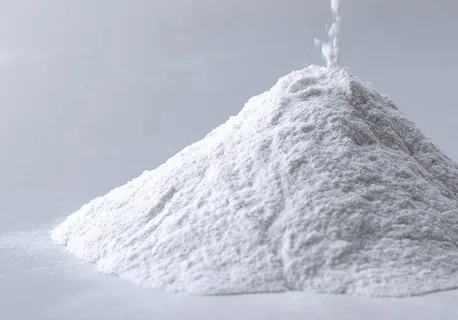
Most types of microcellulose powder come from fibers in plants that have been cleaned up, like cotton linters or wood pulp. Controlled acid hydrolysis can be used to break down microcrystalline cellulose (MCC). The chemical name for it is CAS 9004-34-6. In this step, the fuzzy parts are taken away, leaving only the rigid structure. In a study from 1962, Battista and Smith wrote about it. The main idea is still correct. The leftover powder is white or almost white, stinks bad, and is simple to pack down. Along with that, it keeps water out well. Don't forget that water doesn't break down MCC. For the recipe to really dissolve, it's not enough to say that it grows, spreads out, or holds water. Pay attention to the cracks, the ash, the water content, the particle size, and the bulk density.
Compare Microcellulose Powder With Related Cellulose Materials
Providers don't always use "microcellulose" in the same way. Some people say "microcrystalline cellulose," while others say "powdered cellulose" or "cellulose fiber." You can't use these things interchangeably. They wrote about MCC as a direct compression binder in the International Journal of Pharmaceutics in 2014. A lot of people use it. Plants are crushed to make cellulose powder, which is often used to give things more shape and bulk. Cellulose fibers are used to hold things up and make mixtures. There's also the matter of how big the particles are. Most of the time, coarser grades move more easily. Some grades may have more surface area, but more dust and clumps may also be on them. Before you buy something, you should get a detailed info sheet for it. This sheet needs to say where the item came from, how it was made, how the bits were spread, how it was tested, and what approvals it has.
Set Technical Specifications and Match the Grade to Your Product
Specifications Worth Writing Into Your Purchase Order
The cost and quality are both taken into account in a microcellulose powder written specification. The particle size should be set to mesh or, even better, D10, D50, and D90. Let the tablet get only so wet. The amount of water changes how it moves, clumps, and stays stable for bacteria. It's important to add ash, pH, mass density, and tapping density because density affects how much to mix, how even the mix is, and how much to package. No matter what the product is used for, it should not have too many allergens, microbes, or heavy metals. Instead of a generic brochure, demand a certificate of analysis that is specific to the batch. The MCC series has particles that are 50 to 200 μm in size, a DP range of 180 to 375, a moisture level below 5%, a bulk density range of 0.26 to 0.31 g/cm³, and a pH range of 5.0 to 7.5.
Matching Pharmaceutical and Supplement Needs
That means tablets need a case that works well and doesn't take up much space. It's a dry glue called MCC that can make straight compression work better without having to grind first. It can also break down in two ways: when it's wet or when it's hardened. The fact that it doesn't absorb water well helps keep APIs that are sensitive to water safe. While the capsules are being made, an MCC filler that does nothing keeps the flow of powder steady. This helps get the right dose and makes the line work better. Supplement brands can also make ones that are good for vegetarians and don't have any animal in them. Make sure the grade meets USP-NF standards and works with your active ingredient before you start making more for the U.S. market.
Matching Food and Beverage Needs
There is less fat and more fiber in foods that have MCC added to them. It can be used in place of up to 30% of the fat in baked goods without changing the way they taste or feel. They still taste and feel the same in your mouth. In dairy-free foods and sauces, syneresis stops and emulsions stay stable. In other words, the food stays the same thickness even if the temperature changes. Microcrystalline cellulose is authorized under Regulation (EC) No 1333/2008 in the EU and is known by the number E460(i). For the use you want to make in the U.S., you should follow FDA rules and make sure the seller has food safety certificates like HACCP and FSSC 22000. People who use feed or makeup should ask for paperwork that is made just for them.
Evaluate Suppliers Before You Commit to a Purchase
Manufacturing Capability, Quality Systems, and Certifications
A good microcellulose powder provider takes care of everything, from the raw materials to the sales tax forms. Find out where the alpha-cellulose comes from, how it is cleaned and broken down, and how the history of each batch is kept. Check that the certificates you ask for are up-to-date and useful for your business. The company has organic, Kosher, Halal, BRC, and ISO certifications. Along with the MCC series, you can get certificates for HACCP, FSSC 22000, ISO, and HALAL. Our factory has more than 100 skilled workers who can make up to 1,000 tons of goods each year. This kind of number lets you know if a supplier can give you what you need.
Commercial Terms and OEM Flexibility
If your plan doesn't work with the business rules, it doesn't matter how well it works technically. Find out what the minimum order size is, how long you have to wait, how to pay, how long their goods last, and how to store them for each company. Talk to the seller to see what they have in stock. When you need to get things done quickly, having them on hand saves you time. Our MCC line is all set to go. Also, find out if the supplier has OEM or private-label projects. To add to that, make sure the expert staff answers quickly and clearly. The speed with which you get a quote often gives you an idea of how the service will be once you place your order. A deal should be made that writes down the terms that were agreed upon. It's important to include in this understanding how to handle changes, keep samples, handle issues, and get new things.
Build a Weighted Scorecard
A weighted scorecard says, "What people say is turned into numbers." Making a list of the important things will help you remember them, such as product fit, purity, compliance, physical qualities, batch consistency, expert support, price, transportation, risk controls, and capacity. Give each one a weight to show how important it is to you. After that, give a score to each service you picked. Price isn't the most important thing. A low price per kilogram can add up if you have to handle more than one lot, reject some batches, clean more, shut down the line more often, or do regulatory tests all over again. It doesn't matter how much money you save if the tablet press is slowed down by powder that doesn't flow well. So, don't look at the cost per unit; look at the cost of the whole thing.
Avoid Common Mistakes and Follow a Clear Selection Process
Common Buying Mistakes
It does the same bad thing over and over. The word "microcellulose powder" can mean a lot of different things, but people don't pay attention to it. It might cost more to handle, mix, and clean up powders that are very fine. But they think the tiniest ones are the best. MCC was solid, so they thought it didn't work. But it does work because it gets rid of water and spreads it out. On a big scale, they don't look at lab data or pay attention to how to store and manage water. People also often make the mistake of using a general brochure or an unfinished award as proof instead of paperwork that is specific to the batch. Don't do any of these things if you have a written plan and a staged review plan.
A Step-by-Step Selection Process
By following a simple step-by-step plan, you can lower both technical and business risk. First, you have to describe your application and the type of regulation it falls under. Second, set goals that can be tested for everything from particle size to cleanliness, microbe quality, flowability, and how wet or thick something is. The third step is to make a short list of product types, like MCC, powdered cellulose, or cellulose fiber. Cross off any that don't have an item you HAVE to have. Fourth, ask for samples, certificates, prices, shipping terms, and minimum order amounts (MOQs). Fifth, test with a small group of people first and then in the lab. Sixth, pick the supplier that gives you the most for your money, works the best, is consistent, and follows all the rules. Your quality team can also easily see what they did if they write down each step.
Sample Testing and Pilot Trials
Yes, samples can show things that a data sheet can't. The particle size, moisture level, and bulk density of the sample can all be checked in your own lab. Then, look at the COA and compare what you found. If it is a different product, do a small blend to check the flow, smoothness, die filling, pill hardness, time it takes to break down, or both. Because the weather outside the plant can change the results and the amount of water in the powder, it's important to test outside of the plant. First, write down what you found. Check with a new group to see if the results have changed. It will be hard to deal with a grade that isn't always good. Your lawyers can also use pilot data as strong proof that the provider is real.
Final Checklist and the Avans NutriHealth MCC Series
Pre-Order Checklist
First, make sure you have written proof of the following for the microcellulose powder: the name of the product and its CAS number; where the cellulose came from; what it will be used for; the particle size, moisture content, ash content, density, purity, germ limits; how it will spread; how to store it; and how long it will last. As for the supplier, make sure they can make the product, have all the necessary COAs, SDSs, and certificates on hand, test samples, and fair prices; have exported before; and can help with OEM orders. If something has a hole in it, you should ask about it before you use it to make something. Don't pick the powder based on which brochure looks the best, cheapest, or best. Think about how well the technology works and how long the supply will last instead.
Avans NutriHealth MCC Series Specifications
Microcrystalline cellulose MCC series is the name of the microcellulose powder that Avans NutriHealth Co., Ltd. sells. It is made for business use. You can get very pure alpha-cellulose from plant fibers in China and use it to make it. It's a white or almost white powder. It has a DP between 180 and 375, a bulk density between 0.26 and 0.31 g/cm³, and a pH between 5.0 and 7.5. The water level stays below 5%. The USP, EP, and BP have all given their approval for this medicine ingredient. It can be used in food, vitamins, and medicine. This table with numbers makes it easy for R&D teams to check the new stuff that comes in.
Why Buyers Work With Avans NutriHealth?
Avans NutriHealth started out as a company that made things, but now it sells them. Plant extracts, nutritional supplements, fillers, cosmetic ingredients, and additives that make food and feed better are some of the things we make. For you to get the writing you need, our R&D team, production team, and quality control team all work together. We have ISO, Kosher, Halal, BRC, and organic certifications. FSSC 22000, ISO, HALAL, and COA are some of the certifications that the MCC series has. When they set up test plans or requirements, people who are in charge of buying and distributing goods also get direct technical help. It's not enough to just ask for a catalog order; each question is about your recipe, sales, and market.
Conclusion
To begin, you need to know what you'll be doing with the microcellulose powder. Then you need to be sure of what you want to use it for. Those who want to buy something need to know the difference between cellulose fiber, cellulose powder, and microcrystalline cellulose. First, they should decide what their goals are for particle size, degree of polymerization, wetness, density, and pH. For tablets, pills, and food recipes, they need different grades because they need to bind, flow, or feel in different ways. It's fair to compare things when each one has a weight. You should look at a supplier's licenses, batch records, stock, capacity, and business terms when you check them out. After that, tests on samples and small groups show that the lab data can be used to make things. It's more important to be regular and have the lowest unit price than to have the smallest particles or the lowest unit price.
FAQ
Is microcellulose powder the same as microcrystalline cellulose?
Not all the time. What does this word mean in a broad sense? It can mean MCC, cellulose fiber, or powdered cellulose. MCC is made when acid breaks down sugar. It is very hard to press. Read the scientific data sheet and look at the name of the substance along with its CAS number 9004-34-6.
Does microcellulose powder dissolve in water?
It's not possible to mix microcellulose powder and water. It holds, spreads out, or swells up water, which helps it stay together, keep its shape, and control how wet it is. Make sure it works in your own method by using it.
Which documents should I request from a supplier?
Ask for the COA, TDS, SDS, and certificates like ISO, HACCP, FSSC 22000, and HALAL. Ask about the wait time, the minimum order quantity, and how the goods will be packed as well. Notes that are only for a certain group are more important than general handouts.
Does Avans NutriHealth keep the MCC series in stock?
Yes. Our team can help you with numbers and give you examples. The MCC line can be sent right away.
Request Samples of Avans NutriHealth Microcellulose Powder Today
Are you ready to find out how much you know? Avans NutriHealth sells microcellulose powder and also carries the MCC line. They are certified by ISO, HACCP, and FSSC 22000 as well. Their factory can make up to 1,000 tons of powder a year. Send an email to Lillian@avansnutri.com with your goal, application, and expected volume. We'll send you a sample and a price right away. Visit https://www.avansnutri.com/ to see all of our products.
References
Handbook of Pharmaceutical Excipients, Pharmaceutical Press, 2017
2. United States Pharmacopeia and National Formulary (USP-NF), Microcrystalline Cellulose Monograph, 2024
3. Battista, O. A. and Smith, P. A., Microcrystalline Cellulose, Industrial & Engineering Chemistry, 1962
4. Thoorens, G. et al., Microcrystalline Cellulose, a Direct Compression Binder in a Quality by Design Environment: A Review, International Journal of Pharmaceutics, 2014
5. Trache, D. et al., Microcrystalline Cellulose: Isolation, Characterization, and Bio-Composites Application: A Review, International Journal of Biological Macromolecules, 2016
6. European Commission, Regulation (EC) No 1333/2008 on Food Additives, 2008