




Ginseng Root Extract Powder Benefits for Functional Products
Ginseng root extract powder is a functional product developed by developers with a concentrated, standardized source of ginsenosides in a dry format that is easy to weigh, store, and blend. Compared with milled root, it delivers a more predictable marker level per serving, which helps formulators plan dosage, labeling, and cost. It fits capsules, tablets, instant drinks, gummies, and personal care formulas when the grade matches the application. In this guide, we explain how the ingredient works, which specifications matter, where it performs best, and how U.S. buyers can check quality before ordering.
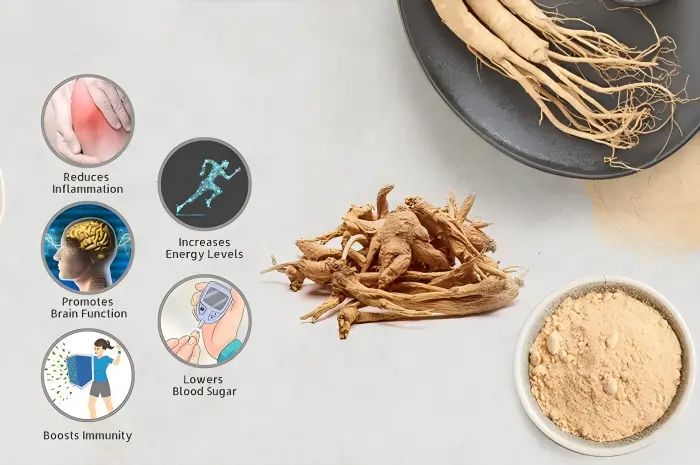
Why Ginseng Root Extract Powder Fits Functional Products?
What Makes the Extract Different from Root Powder?
To begin, the roots of Panax ginseng are dried out. To make ginseng root extract powder, start with this step. The roots are taken out, the powder is dried out, and the liquid is strengthened. Whole-root powder is just ground root that still has all of its fiber. It has been found that ginsenosides are the most studied part of ginseng. There are a lot of these chemicals in the juice. Based on HPLC tests, our Ginseng Root Extract Ginsenosides Panax Ginseng Extract Powder has between 10% and 80% ginsenosides. That means graders can choose a grade based on the number of servings they need to make. This is why it is important to always look at the specifics of "ginseng extract" products. They may vary in strength, color, and how well they dissolve in water.
Functional Positioning Backed by Research
It is often sold as a way to boost energy, focus, handle stress better, and age in a healthy way. There is a patchy history of research. The National Center for Complementary and Integrative Health says that there isn't a lot of proof that Asian ginseng can be used for many things. A 2003 review in Pharmacology, Biochemistry, and Behavior found that mood and thinking effects depend on dosage and preparation. The effects of ginsenosides were compiled in a 2021 report from the Journal of Ginseng Research. The report came from studies done in both labs and with real people. When brands come up with ideas for new products, we tell them to use simple, well-supported language and make sure that the ginsenoside profile fits with how they want to place their goods.
Why Manufacturers Choose Powder Over Liquid or Root?
The powder form is easier to ship than the liquid form because it doesn't need to be kept cold or germ-free. It weighs right and mixes dry mixes evenly, so you don't need any other tools to fill pills, tablets, or packs. Each dose of extract needs less material than a dose of whole-root powder because the actives are more concentrated. This makes more room for other things in a pill or tablet. Some plants were designed to work with liquids. These plants were built to make drinks that are ready to drink. When it comes to dry goods, a standardized powder is often the best way for the buying and research teams to make sure that every batch is the same.
Ginseng Root Extract Powder Specifications Buyers Should Review
Ginsenoside Assay and Standardization
The HPLC test showed that our product has ginsenosides that are between 10% and 80%. It has ginsenoside monomers in it, such as Rb1, Rg1, and Re. It tells us about the extract's make-up because it shows the balance between the ginsenosides that make you feel awake and the ones that make you feel calm. More tests don't always mean a better fit. If a drink wants to stay bitter, it might need a lower intensity grade. A pill, on the other hand, might need a stronger grade so that the serving size stays small. Before you compare quotes, make sure you know how to test each batch, what the acceptable range is, and what the COA says.
Physical Data for Production Planning
The color of our powder ranges from light yellow to brown-yellow. Water levels stay below 5%, and ash levels stay below 3%. An 80-mesh sieve gets rid of about 95% of it. When it's whole, it weighs between 0.45 and 0.65 grams per milliliter. The ginseng root extract powder can handle temperatures up to 60°C, but you shouldn't leave it out there for long periods of time in temperatures above that. Every number is important when making things. How thick or thin a blend is depends on the size of the particles. How dense the capsule's bulk is determines how full it is and how big its package is. If the mixture is not very wet, it is less likely to clump together. Now is the time to tell your building team about these numbers. They will change how the warehouse is planned and how the equipment is set up.
Solubility, Carriers, and Flowability
The amount of solubility in water can be very little to a lot. It stays together in acid but breaks down in cold water, so it works well with drinks that are clear. Maltodextrin is used to make more low-level types, which helps them go through packing machines that move quickly. This is important to know because a test for pure extract is not the same as a test for a carrier mix. Check to see which one fits. Test the powder in your own mix too. The word "soluble" can mean three different things: broken down all the way, spread out quickly, or mixed well. It will deal with all of these in different ways in the end product.
Ginseng Root Extract Powder Applications Across Product Categories
Nutraceuticals and Dietary Supplements
Adaptogenic or nootropic mixes made by some supplement brands are mostly made up of controlled ginsenoside extract. The ginseng root extract powder doesn't break when the tablets are pressed together, so it's easy for the people who make the pills to figure out how many ginsenosides are in each serving. Labels can always show the same values if brands always use the same amounts. Make sure the whole thing is safe and that your customers know what they're getting if you mix ginseng with drugs or caffeine. The best types of high-assay grades are for small-dose pills. On the other hand, low-assay grades that are backed by carriers work well for fast filling lines.
Functional Food and Beverage
It's a good idea to put this into your body through energy drinks, health shots, and nutritious food. The powder gets broken down by cold water, but acid keeps it solid. We've seen this happen with acidic and fizzy drinks. They stay clear and don't settle. It can handle some heat while being pasteurized, but it shouldn't be left out in temperatures above 60°C for days on end. Your time and temperature info needs to be looked at by our tech team to make sure it's right. This flower can make food smell and taste sour, so get other people to try your sweeteners and flavors. You won't have to pay a lot to remix when production goes up if you test the taste early on.
Cosmeceuticals and Personal Care
Cosmetic makers add ginseng root extract powder to serums and creams to slow down the aging process. The extract helps the body make collagen and protects cells from free radicals, based on what we know about science. It also stops the color changes that oxidation can cause, which can ruin a finished cream. Blenders and stabilizers work well with it. If a beauty product says it can change the way your body looks, it might not be a beauty product. It's important to make sure that each claim fits with the rules in your market. Before you give a grade, make sure your base is stable.
How to Evaluate a Ginseng Root Extract Powder Supplier?
Documents and Test Data to Request
Before you place an order, ask for a current COA, a specification sheet, and an explanation of how the process works. What does the COA need to say? Find out the batch number, how the tests were carried out, and the real results for ash, particle size, moisture, and ginsenoside content by HPLC. As well as heavy metals and pesticide residues, we need to know about the microbes that were found. It takes a lot of care to look for contaminants because roots stay in the ground for a long time. Make sure the plant is really what it says it is, and ask how to store it and how long it will last. Check that each document is from the batch you want to buy and not an old one or one that was used for advertising.
Certifications and Facility Controls
The following groups have given us permission to sell our ginseng extract: HACCP, FSSC22000, HALAL, ISO, and FAO. Avans NutriHealth is also certified as organic, Kosher, and by the British Retail Consortium (BRC). A ticket is only useful if it lets you buy what you need. Check out the most recent copy to see what sites and products it talks about. The business that makes Avans NutriHealth goods is called Avans NutriHealth (Qingdao) NutriHealth Technology Co., Ltd. More than 100 people work in the workshop every year to help make up to 1,000 tons of stuff. Since the ginseng root extract powder is in stock, sample and test orders can be filled more quickly.
Sample and Pilot Testing
In the lab, you can see what a powder can do. You can also find out what it will do on site by running it first. Write down how long it takes to dissolve, what color it is, how it tastes, how much residue it leaves behind, and how stable it is in the way you store it. After that, look at the sample and see how it matches your real plan. After that, do it again with real tools and a small group of people. Check ahead of time to see what can't be used. For that reason, facts will matter, not how someone feels. Last but not least, make sure the supplier can make more of what was agreed upon. In other words, the level of the user and the character of the senses should stay the same.
Ginseng Root Extract Powder Dosage, Safety, and U.S. Compliance
Setting a Serving Size
You won't need as much pure extract if you take the right amount of whole-root powder. First, you need to do the test to see how many ginsenosides are in each pill. Then, look at that number and think about how it fits with the style of the product, the audience, and the other parts of the formula that are working. For a tablet, an energy shot, or a mix of pills, you need to use a different method. Not everyone needs the same amount. We have specification data and public papers that you can use as sources. In small amounts, make sure that the dose is spread out properly and that the body can handle it. After that, have scientists and government officials who are qualified look over the final label serving.
Safety and Precautions
Asian ginseng is safe to use for a short time, according to the National Center for Complementary and Integrative Health. Some people are said to have trouble sleeping, headaches, and stomach issues. Ginseng might not work well with diabetes medicines or the blood-thinning drug warfarin either. If you have been sick for a long time, are pregnant or nursing, or are taking medicine, talk to a doctor or nurse first. Some drugs and coffee can make people feel even worse when they are already stressed.
Claims, Labeling, and Documentation
This law from 1994 tells supplement labels in the United States what they can and cannot say. You need to make sure that your sign has the right warnings for the market and that you carefully read over the different methods. The FDA has to warn foods that make claims about their structure or function, and the foods must be reported to the agency within 30 days of going on sale. Making claims about being sick is not okay. Compliance is up to the owner of the brand, and we give you the technical files that back up your file. Check other rules too if you export. In 2014, the European Medicines Agency looked at Panax ginseng root and made a distinction between how it has been used traditionally and how it has been shown to work in science. You should use this difference in your own work.
Conclusion
Because it is easier to measure and handle than ground root, ginseng root extract powder is a uniform, ginsenoside-based material that can be used in goods. This guide made it clear that the correct grade depends on the test, the amount of carriers, the particle size, the amount of water, and how well it dissolves. For creams, pills, and clear drinks, among other things, these traits need to be different. There are still different ideas about what ginseng studies mean, so the method isn't the only thing that counts. They are just as important as the U.S. labeling rules and structure/function claims. You can be sure that a sample that has been approved will work on a large scale because the supplier has run checks such as batch-specific COAs, valid certificates, and pilot tests. Safety precautions and serving sizes should follow the extract's actual standardization.
FAQ
What is the difference between ginseng root extract powder and ginseng powder?
Ginseng powder is made from ground-up ginseng roots. Because it is dried and concentrated from a root extract, we can tell that the ginsenosides are more evenly distributed. That is, you don't need much of it.
Is ginseng root extract powder water-soluble?
When we mix our powder with water, the grade makes a difference. In cold water, it breaks down, but acid doesn't change it. Based on the matrix, pH, and how well it is mixed, different things may happen.
Which ginsenoside grade should I choose?
Based on HPLC, our grades run from 10% to 80%. Pick a lower grade for drinks and a better grade for small pills if taste is important to you. Make sure the fit is good by asking for a sample and a COA.
Request Ginseng Root Extract Powder Samples from Avans NutriHealth.
Need someone to get you powdered ginseng root for your next event? This ginsenoside powder is always in stock at Avans NutriHealth. As of now, ISO, USDA, HACCP, FSSC22000, and HALAL have all accepted it. The grades run from 10% to 80%. If you email Lillian@avansnutri.com with your goal test, product format, and amount, our team will get back to you with a specification, COA, and sample information. Please go to https://www.avansnutri.com/ to find out more.
References
1. Advances in Food and Nutrition Research, 2009
2. Pharmacology, Biochemistry and Behavior, 2003
3. Journal of Ginseng Research, 2021
4. National Center for Complementary and Integrative Health, Asian Ginseng, 2020
5. European Medicines Agency, Assessment Report on Panax ginseng C.A. Meyer, Radix, 2014
6. U.S. Food and Drug Administration, Dietary Supplement Health and Education Act of 1994, 1994