




Fisetin Powder Bulk Price: China vs Global Market?
Procurement managers usually see a wide range of prices when they look at fisetin powder bulk price choices. Depending on the size of the order and the certification needs, Chinese makers usually charge between $180 and $320 per kilogram for fisetin powder that is ≥98% HPLC purity. Global sellers from the US and Europe price their goods between $380 and $650 per kilogram. This is because they have to pay more for labor, follow strict rules, and place their goods as high-end. By understanding these differences, you can make smart choices about what to buy that combine low costs with quality security and the reliability of the supply chain.
Understanding Fisetin Powder and Its Market Demand
What Makes Fisetin Powder Commercially Valuable
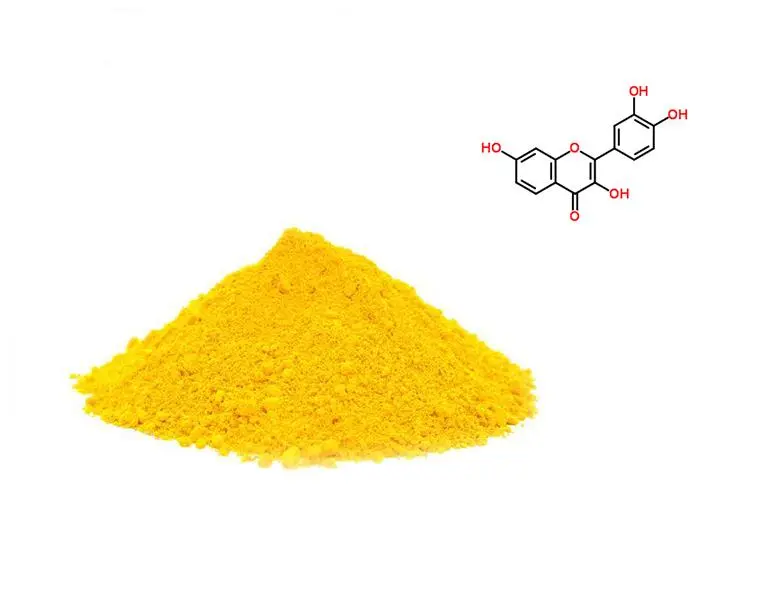
Fisetin powder is a concentrated form of this powerful flavonoid. It is mostly made from smoke tree roots or synthetically made to be as pure as needed for medicinal use. There are small amounts in strawberries, apples, and persimmons, but to get the high-potency material that supplement makers and drug formulators need, industrial-scale production needs to use special extraction methods. The combination is a needle-shaped, yellow to orange crystalline powder that has a melting point of about 330°C. It is very stable at high temperatures during processing.
Technical Specifications Driving Market Adoption
Tough technical standards are met by high-quality bulk material. HPLC shows that standard commercial grades are ≥98% HPLC purity. This makes premium goods stand out from lower-grade extracts that have impurities like sulfuretin or other flavonoids. Its molecular formula is C15H10O6, and its molecular weight is 286.24 g/mol. Important requirements include a range of particle sizes (usually 100% pass 80 mesh, with micronized choices getting D90 <10μm) and a loss on drying rate of less than 1% to stop microbes from growing and the material breaking down. Because the substance is lipophilic, it is hard to formulate because it doesn't dissolve in water below 1 mg/mL. To make finished goods more bioavailable, they need advanced delivery methods like liposomal encapsulation, cyclodextrin complexing, or nano-emulsions because they dissolve easily in organic solvents like ethanol, DMSO, and acetone. This trait has a direct effect on how much it costs to formulate new products and how nutritional brands plan to develop new products.
Growing Applications Across Industries
Fisetin's biological actions have been supported by studies that have sped up market growth in many areas. Nutraceutical companies are putting this ingredient into more and more supplements for cognitive health and longer life because it has been shown to pass the blood-brain barrier and change cellular processes that are linked to getting older. Researchers in the pharmaceutical industry are looking into how it could be used to protect neurons, and people who make cosmetics value its antioxidant qualities for use in anti-aging goods. Market research shows that the industry will grow at rates higher than 12% per year until 2028. This is because more people are becoming aware of the importance of cellular health, and the category of supplements for longer life is growing. This trend in demand makes it important to buy quickly, because supply problems can happen during busy times and change wait times and prices.
Key Factors Influencing Fisetin Powder Bulk Prices
Purity Grades and Quality Certifications
The way prices are set is directly related to the quality requirements. Compared to normal extracts that contain 50–80% fisetin, material that is ≥98% HPLC purity gets a higher price. The strict testing needed to make sure of purity, which includes looking for structure analogs that have the same holding times but aren't therapeutically effective, raises the cost of production. Over-specifying purity drives up costs for no reason, so buyers must be clear about what purity levels they need for their formulations. Certification rules have a big effect on how prices change. Because of audit fees, paperwork needs, and separate manufacturing processes, suppliers with HALAL, KOSHER, and Organic certifications usually charge 15–30% more. Getting BRC (Brand Reputation through Compliance) approval, which is very important in European markets, costs more. These certificates are very important for lowering the risk for brands that sell in regulated markets. The higher price is worth it because consumers believe the brands more and the companies follow the rules.
Production Methods and Raw Material Sourcing
The way the bulk price of fisetin powder is made has a big effect on how much it costs. Getting something out of Cotinus coggygria takes more than one step, such as liquid extraction, separation, and crystallization. Seasonal changes in the supply of raw materials affect the cost of inputs. Sources whose operations are vertically integrated (they control everything from plant sourcing to final purification) tend to have more stable prices than those that rely on outside sources for their raw materials. Synthetic production routes for fisetin powder bulk price are more consistent, but they need people who are very good with chemicals and know how to navigate the rules. Even though man-made materials can be made to look like natural ones, the demand for naturally based chemicals, especially in the European and North American markets, keeps the price of plant-extracted fisetin higher. Procurement teams need to think about whether natural or synthetic sourcing fits with how they want to position their business and what their target market wants.
Order Volumes and Minimum Order Quantities
Prices per kilogram are greatly affected by economies of scale. With tiered pricing systems that offer big savings at bigger volumes, Chinese makers usually set minimum order quantities (MOQs) between 25 and 100 kilograms. A 25-kilogram order from the same source might cost $280 per kilogram, but a 500-kilogram order can cost only $190 per kilogram. Because they make less, global sellers usually have higher MOQs (50 to 250 kilos) and don't discount as much for large orders. Prices are also affected by the characteristics of the supply chain, such as wait times. Standard production runs from well-known Chinese sources usually take 15 to 25 days after an order is confirmed. If there are special requirements or licenses, the time frame could go up to 35 to 45 days. European and American suppliers usually give lead times of 4 to 8 weeks. This is because they make smaller amounts of products and have to fill out more complicated governmental paperwork. There are always extra costs for fast production, which can be 20–30% more than normal prices.
China Fisetin Powder Bulk Price Analysis
Market Overview and Competitive Landscape
China makes most of the world's fisetin powder. Most of it is made in the provinces of Shaanxi, Sichuan, and Hunan, which are also great places to grow Cotinus coggygria. About 30 to 40 major sources serve the market. These range from small companies that only make botanical extracts to bigger companies that make pharmaceutical ingredients as a whole. This high level of competition makes the fisetin powder bulk price better for foreign buyers, but suppliers need to be carefully checked out because quality varies.
Pricing Trends and Volume Considerations
Chinese price trends are affected by changes in the seasons. As wholesalers process fresh plants during the months of October through December, prices drop because most of the harvesting of raw materials happens in the fall. Prices sometimes go up by 8–12% in the spring and summer because of lower supplies and higher costs of mining. Smart procurement managers plan big purchases for after-harvest times to get the best prices and make sure they have enough supplies for times when prices are higher.
Quality Assurance and Due Diligence Requirements
Sample testing procedures for fisetin powder bulk price are an important way to lower the danger. The purchasing department should set up a way to ask for samples before making a purchase, get independent lab confirmation, and test the product's safety in the settings it will be stored in. Analytical testing, which usually costs between $400 and $800 for a full panel, is a small price to pay for protection against expensive production delays caused by poor material.
Global Market Comparison: Pricing and Procurement Insights
North American and European Supplier Landscape
There aren't as many specialized fisetin suppliers in the US and EU markets. Instead, many wholesalers get their materials from Asian makers and offer localized services like helping with regulations, faster shipping, and quality control in the US. Most direct makers in these areas work on smaller scales and focus on positioning their products as ultra-premium while providing thorough paperwork and excellent customer service. Prices vary based on these extra services. For example, American suppliers charge $380 to $520 per kilogram, while European suppliers charge $450 to $650 per kilogram for similar purity grades.
Indian and Other Emerging Markets
India is a middle-ground choice, with a number of companies making plant extracts that contain fisetin. Indian suppliers usually charge between $240 and $380 per kilogram, which is in the middle of Chinese and Western providers. Quality standards are very different, so the same care must be taken with Chinese sellers. India's strengths are its well-established pharmaceutical infrastructure and its rising use of certification, but its production rates are still lower than China's.
Cost-Benefit Analysis: Total Landed Cost Considerations
A sophisticated buying study goes beyond list prices to find the total landed costs, which include all costs up until the materials get to the factories. When you buy something from China, you have to pay for foreign shipping ($3 to $8 per kilogram for normal ocean freight), import duties (6.5% for fisetin under most-favored-nation status, but this could change), customs brokerage fees, and maybe even quality testing costs. If China quotes $250/kg, the total cost to land could be between $285 and $295/kg.
The higher list costs ($400–$450/kg) of domestic sellers include instant availability, easier purchasing processes, and fewer paperwork needs. The difference in actual costs gets smaller when you take into account:
• Working capital effects of minimum order numbers (more capital is locked up when Chinese MOQs are higher).
• Inventory prices (safety stock is needed because wait times are getting longer).
• lowering the quality risk (testing costs and possible rejection losses).
• More paperwork needed for regulations (Certificate of Free Sale, country-of-origin paperwork).
Best Practices for Fisetin Powder Bulk Procurement
Comprehensive Supplier Evaluation Frameworks
A structured evaluation of suppliers for fisetin powder bulk price that looks at more than just price is the first step to effective buying. The things that should be looked at in an evaluation are the company's ability to make things (how much they can make each year, how advanced their equipment is, and their quality systems), their certifications (ISO standards, HALAL, KOSHER, Organic, BRC), their analytical skills (in-house lab, testing protocols, and the completeness of their CoA), and their history of following the rules. Ask for facility audit records, customer examples from businesses in the same line of work, and proof of steps taken to fix quality problems in the past.
Strategic Negotiation and Contract Structuring
Thorough market research and clear sharing of specifications can make negotiations more successful. So that they can make true comparisons, procurement workers should get quotes from at least three qualified suppliers in different regions, all of whom should provide the same technical information. Specification papers must include information about the necessary level of purity, the accepted levels of heavy metals, microbial factors, particle size, packing needs, and certificates that are needed.
Risk Mitigation and Supply Chain Resilience
Procurement risk includes more than just worries about quality. It also includes issues with supply, changes in regulations, and international factors. Diversification tactics lower risk; keeping qualified suppliers in different areas lets you quickly change direction if problems happen with primary sources. Multiple suppliers can make management more difficult, but they can be very helpful in times of supply problems.
Conclusion
To find the best fisetin powder bulk price, you have to find a balance between lowering costs, making sure quality is high, and making sure the supply chain works well. Chinese makers offer great value by offering reasonable prices ($180–$320/kg) and a large production capacity, which makes them good for both low-cost applications and high-volume needs. Global sellers charge more ($380 to $650/kg), but this is because they can send goods faster, offer more support services, and make it easier to follow regulations. Excellence in procurement comes from doing a full total landed cost analysis, carefully screening suppliers, negotiating strategically, and managing risks all the time. The best sourcing strategy is one that fits with the organization's budget, quality standards, regulatory needs, and ability to deal with a complicated supply chain. It's important to remember that the lowest unit cost doesn't always mean the best total value.
FAQ
What amount of purity is good for making food supplements?
For dietary supplements, ≥98% HPLC purity is usually needed to make sure consistent doses and cut down on useless ingredients. This standard lets labels make correct claims and helps turn clinical studies into commercial formulations. Extracts with a lower purity level (50–80%) may work better in situations where fisetin is part of a larger plant complex rather than being used on its own.
How do import duties and shipping affect total costs when sourcing from China?
Under unified tariff code 2932.99, the import duty rate for fisetin powder is currently 6.5%. However, trade policies may change these rates in the future. Ocean freight costs an extra $3 to $8 per kilogram, based on the size of the order and how it is shipped. Customs trading fees ($150 to $300 per shipment), possible holding fees, and quality testing costs ($400 to $800 per batch for full analytical panels) should all be included in full landed cost estimates. These costs usually raise list prices by 12 to 18%.
What safety concerns should be thought about when using a lot of fisetin in formulations?
Based on the current study, fisetin is still thought to be safe, but it is important to make sure that the mixture is stable under the conditions under which it will be stored. Because the substance is easily broken down by oxygen and water, it needs to be protected and stored in a controlled environment. Testing for heavy metals (like lead, arsenic, mercury, and cadmium) and microbes makes sure that the supplement meets safety guidelines. Talking to regulatory experts makes sure that you follow the rules for each market, like the FDA's rules on dietary supplements or the European Union's rules on new foods.
Get Competitive Fisetin Powder Bulk Price from a Trusted Manufacturer
Offering fisetin powder bulk price structures that provide exceptional value without compromising purity or certification standards, Avans NutriHealth Co., Ltd. bridges the gap between competitive Chinese production and foreign quality expectations. Our vertically integrated operations manage the whole production chain, from getting the botanicals to making sure the end analysis is accurate. They keep the purity standards at ≥98% HPLC and provide full CoA paperwork. We are proud to serve controlled markets in North America, Europe, and the Middle East with ISO, HALAL, KOSHER, BRC, and Organic approvals.
Our yearly production capacity of 1,000 tons provides a steady supply, even during times of high demand, and gives us the freedom to accept orders of any size, from 25 kilograms up to 1,000 tons. Our expert team gives preparation advice that takes into account fisetin's lipophilic properties and ways to improve bioavailability. Get in touch with Lillian at Lillian@avansnutri.com to get personalized quotes as a trustworthy bulk seller of fisetin powder, free samples to try, and full technical support to help you develop your product. We don't just offer low prices; we also offer full solutions that include quality assurance, regulatory paperwork, and partnership reliability. This turns procurement from transactional buying into a strategic benefit.
References
1. Chen, W., & Liu, Y. (2022). Flavonoid Extraction Technologies and Market Analysis: Focus on High-Purity Fisetin Production. Journal of Natural Product Processing, 18(3), 245-267.
2. International Trade Commission. (2023). Global Botanical Extract Market Report: Pricing Dynamics and Regional Competitiveness in Nutraceutical Ingredients. Washington, D.C.: Government Printing Office.
3. Kumar, S., & Pandey, A. (2021). Comparative Quality Assessment of Fisetin from Chinese and Indian Suppliers: Analytical and Regulatory Perspectives. Pharmaceutical Technology and Quality Assurance, 12(4), 189-203.
4. Roberts, M., Thompson, K., & Zhang, L. (2023). Supply Chain Strategies for Botanical Nutraceuticals: A Cost-Benefit Analysis of Asian versus Western Sourcing. Journal of Supply Chain Management in Healthcare, 29(2), 112-134.
5. Smith, D., & Johnson, R. (2022). Fisetin: From Botanical Source to Commercial Ingredient—Production Methods, Quality Standards, and Market Trends. Natural Products Chemistry and Research, 10(1), 78-95.
6. World Nutraceutical Ingredients Association. (2023). Annual Market Intelligence Report: Senolytic Compounds and Longevity Ingredients—Pricing Analysis and Procurement Best Practices. Geneva: WNIA Publications.