




Customized Perilla Aldehyde Manufacturing Process Guide
Customized perilla aldehyde is a well-thought-out way for global buying teams to find taste, smell, and cosmetic ingredients that work well together. Customization, on the other hand, lets you precisely control purity levels, aldehyde concentration ratios, and olfactory profiles that are made to fit the needs of a particular recipe. This guide breaks down the manufacturing processes that allow for such customization. It gives procurement managers, R&D leaders, and formulators useful information they can use to evaluate suppliers, make better buying decisions, and find ingredients that work consistently in cosmetic, pharmaceutical, and nutraceutical uses.
Understanding Customized Perilla Aldehyde
What Defines Customization in Perilla Aldehyde?
Perilla aldehyde, whose CAS number is 2111-75-3 and whose chemical name is p-Mentha-1,8-dien-7-al, is a monoterpenoid that is taken from the leaves of Perilla frutescens. Customization goes beyond basic extraction to meet the needs of each client. For example, desired purity levels can be between 85% and 98%, optical rotation factors can be changed, and unwanted co-extractives that can affect the stability of the end product can be removed. This level of control is very important for products that need to be clean-labeled or have certain taste properties.
Chemical Profile and Industrial Relevance
The compound's unique herbal-spicy top note makes it unusable in anything from high-end perfumes to food coloring systems. The aldehyde's reactivity can be fine-tuned when it is used as a precursor for high-intensity sweets like Perillartine, which is 2,000 times sweeter than sugar without having any calories. This level of accuracy fills in the "Natural Intensity Gap" in the scent and flavor industries, where "clean label" requirements often mean sacrificing sensory effect. Customization helps to close this gap by making molecular structures work better while still claiming natural origin, which is important for following rules in the US and EU markets.
Performance Benefits Across Key Sectors
Stable aromatic profiles resistant to oxidation are provided by customized perilla aldehyde in cosmetic recipes, extending product shelf life and preserving sensory consistency. Controlled impurity profiles that meet strict USP and EP standards are useful for pharmaceutical uses. This is especially true for excipients used in oral dose forms. Nutraceutical companies use customized versions to hide flavors consistently in functional supplements with bitter active ingredients that need advanced sensory solutions. The customization process makes sure that each batch is the same, which is very important in large-scale production settings where formulation shift can lead to expensive reformulation cycles.
Safety and Stability Considerations
Customized versions of perilla aldehyde deal with stable issues that come up with aldehyde chemistry. Antioxidant systems and limited moisture content are used in customization methods to stop aldol condensation reactions from happening during storage. We follow stability testing methods that are in line with ICH Q1A standards. This lets procurement teams make predictions about the shelf life based on data. Usually, storage instructions say to keep things cool, dry, and out of the light. For large amounts, they say to cover them with a harmless gas. When figuring out the total cost of ownership, these specs are very important because a product's degradation can turn what seem like savings into big losses.
The Manufacturing Process of Customized Perilla Aldehyde
Traditional Production Methods and Their Limitations
Usually, perilla aldehyde is made by steam distilling the leaves of the plant and then using basic separation to separate the aldehyde part. The products made this way have varying purity levels, usually between 75% and 85%, and different amounts of perillene, beta-caryophyllene, and limonene that act as co-extractives. When synthetic methods use alpha-pinene as a starting material, they have to deal with price changes that are tied to turpentine feedstock markets and make mixtures of isomers that need to be cleaned up a lot. These restrictions make it hard for formulators to find ingredients that are always the same, which increases the need for customized perilla aldehyde production methods that guarantee exact specifications.
Advanced Customization Techniques
Modern custom production starts with carefully selecting the raw materials that will be used. The perilla leaves we use come from areas where farming is limited and the land and harvest time are just right for getting the most aldehyde out of the leaves. Cryogenic grinding is used in post-harvest preparation to keep toxic ingredients safe before they are extracted. During the extraction process, supercritical CO2 technology is used. This technology allows precise temperature and pressure control, which lets target chemicals be extracted while thermal degradation is kept to a minimum. Compared to traditional steam distillation, this method makes crude liquids with higher concentrations of aldehyde.
Purification and Quality Control
The most important part of personalization is purification. Advanced chromatographic separation methods, such as preparative HPLC and molecular distillation, get rid of certain impurities that the client wants. Inline GC-MS tracking in real time makes sure that process parameters stay within approved ranges. Quality control procedures look at many factors, such as the amount of aldehyde (using GC-FID), optical rotation, the refractive index, and the amount of leftover fluid. ICP-MS analysis of trace elements proves that heavy metals are not present, and microbe testing proves that the product meets international safety standards for food and cosmetics. Customized goods are different from generic ones because they have strict controls that keep quality from varying, which can mess up production plans and lower the quality of the final product.
Comparing Customized vs. Generic Formulations
Generic perilla aldehyde usually only meets the most basic requirements for recognition. It doesn't have the analytical depth that formulators need for important uses. Customized versions come with full Certificates of Analysis that list 15-20 quality parameters, while general versions usually only list 3–5 parameters. This openness makes it possible to evaluate risks and keep records for legal purposes, which is especially helpful when dealing with FDA GRAS decisions or EU Novel Food rules. When procurement teams work with providers that offer deep analytical analysis, they can save money on quality checks and speed up the process of formulating new products.
Comparing Customized Perilla Aldehyde with Alternatives
Performance Against Synthetic Aldehydes
Synthetic aldehydes, such as citral and citronellal, are cheaper, but they don't have the complexity or claims of natural origin that make people want to buy them. Customized perilla aldehyde works just as well or better in sense uses and helps with clean label placement. Flavor houses say that perilla aldehyde's unique herbal-citrus-spicy profile gives flavors depth that can't be achieved with just one synthetic ingredient. This means that complex mixing isn't needed as much, which lowers the overall cost of formulation. The natural origin also makes the regulatory process easier, since plant extracts are not limited as much as synthetics made from petrochemicals are when it comes to organic and natural product approvals.
Perilla Aldehyde vs. Perilla Oil
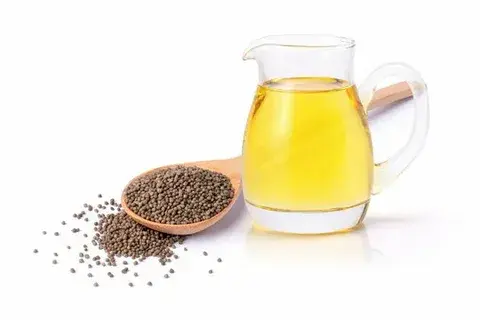
People who work in procurement sometimes mix up perilla aldehyde and perilla seed oil, but they are used for very different things. Perilla oil is a source of polyunsaturated fatty acids that is valued for its omega-3 content. It is mostly used in food and health products. Perilla aldehyde is a volatile aromatic chemical that is used for its pleasant smell rather than its health benefits. This difference is important when listing ingredients because substituting them would completely change how the product works. Customized perilla aldehyde provides the desired aromatic performance without the fatty content that makes formulation stability harder in systems without water.
Supplier Selection Criteria
Several important factors must be taken into account when choosing the right partner for customized perilla aldehyde buying. Certification packages should have BRC for managing food safety, HALAL and KOSHER for religious compliance, and Organic certifications for making statements about natural products. Technical skills are also important—suppliers must show that they have access to analytical tools, paperwork for method approval, and quality systems that are in line with ISO 9001 standards. During the scaling-up phase, production capacity is very important. Vendors should be clear about how batch size and wait time can be changed. We keep our output above 1,000 tons per year, so even when demand goes up, we can keep supplying.
Procurement Guide: Buying Customized Perilla Aldehyde
Understanding MOQs and Pricing Structures
Depending on how complicated the customization is, the minimum order quantity for customized perilla aldehyde is usually between 25 kg and 100 kg. Products with a purity level of 95% or higher are priced 30 to 50 percent more than products with a purity level of 85% or less. When you buy in bulk, you save a lot of money. For example, orders over 500 kg often qualify for a tiered price that cuts unit costs by 15–25%. Pricing also takes into account how much customization is needed. For example, if the standard calls for getting rid of certain types of impurities or having a narrow optical rotation range, more processing steps are needed, which raises the end cost.
Logistics and Lead Time Planning
Standard wait times for special orders are 4 to 6 weeks from the confirmation of the buy order. This includes getting the raw materials, processing them, checking the quality, and packing them. You can get your order faster for an extra fee, but you need to let them know about your time limits early on. Things to think about when shipping include keeping the right temperature for routes that are sensitive to weather and making sure the right hazardous classification is used (usually Class 3 Flammable Liquids). Ocean freight is the most cost-effective way to send big amounts of goods, while flying freight meets immediate needs at higher costs. When figuring out the total landed cost, procurement teams should include Incoterms. CIF terms put the responsibility for shipping on the sellers, while EXW terms show the cost clearly but require strong import capabilities.
Sample Requests and Quality Validation
Samples given before a buy is the best way to get customized ingredients. Request samples that come with full Certificates of Analysis, and then do your own tests to make sure they meet your needs. Before you agree to large sales, stability studies under your storage conditions show you any possible compatibility problems. Your formulation team's sensory review proves that the smell profile meets the needs of the application. This validation process usually lasts two to three weeks, but it keeps expectations from matching up with the final result, which can be very expensive. Before setting up a supply relationship, we urge all possible partners to ask for samples to make sure they are completely sure of us.
Ensuring Long-Term Value and Partnership
Building Trust Through Transparency
Open conversation and expert cooperation are key to having good procurement partnerships. Suppliers should give customers access to quality records, such as records of manufacturing batches and data on stability. Quality checks that are done every three to six months can find trends and stop problems before they happen. Technical support services are very helpful. Quickly responding teams that know what your application needs can offer ways to improve formulations or fix performance problems. Our expert team is made up of more than 100 specialized technicians with decades of experience extracting plants. This means that you will not only get goods, but also a full technical relationship.
Case Study Applications
A big North American company that makes supplements had trouble hiding the taste of its omega-3 supplements. Standard perilla aldehyde didn't have enough strength, and synthetic options didn't fit with their "clean label" stance. We made a modified 96% pure version that has more aldehyde and less perillene. This approach provided better masking at lower use rates, which cut costs by 18% while backing their natural product claims. These results show that customization solves specific business problems instead of just providing standard parts.
In a different case, a European beauty company needs steady aromatic patterns for a high-end face serum. During rapid stability tests, standard perilla aldehyde changed color and smelled different. Our personalized version had special stabilizer technology built in, which kept the color and scent intact through real-time stability studies that were done for 24 months. Because the brand was reliable, it was able to make claims about longer product shelf lives, which increased the appeal of the products in stores and cut down on waste from old stock.
Sustainability and Future Trends
Environmental duty is becoming more and more important in the customized perilla aldehyde manufacturing business. Organic solvent waste is eliminated by supercritical CO2 extraction, and greenhouse gas emissions are kept to a minimum by closed-loop systems that collect and recover CO2. Regenerative agriculture ideas are used in perilla farming, which improves soil health and wildlife. More and more, these environmental qualities are important for brands that have to deal with customer pressure and ESG reporting requirements. We expect more people to want organic perilla aldehyde as the market for natural products grows. People will also be interested in microencapsulation technologies that make things more stable and allow for controlled-release uses.
Conclusion
To find your way around the customized perilla aldehyde buying market, you need to know about the challenges of manufacturing, quality standards, and sourcing skills that set exceptional partners apart from commodity providers. This guide has looked at how customization can really help a business, from better product performance and following the rules to a more reliable supply chain and more recipe options. If procurement workers know these things, they can make smart choices that meet both short-term project needs and long-term planning goals. Customized solutions pay off with stable quality, lower risks of reformulation, and the ability to stand out in markets that are getting more and more crowded.
FAQ
What distinguishes customized perilla aldehyde from standard grades?
When you customize something, you have full control over the purity levels, impurity profiles, and quality factors that are special to your application. Standard grades are usually 75–85% pure with different co-extractives, while customized perilla aldehyde types are 90–98% pure with certain impurities taken out based on your recipe needs. This level of accuracy makes sure that each batch is the same and that all regulations are followed.
How can I verify the quality of customized perilla aldehyde?
Ask for full Certificates of Analysis that include heavy metals (ICP-MS), leftover liquids, microbial limits, optical rotation, and aldehyde content (via GC-FID). Before making big purchases, make sure they are verified by independent, qualified labs and try their smell, feel, and stability in the storage conditions you specify.
What are typical lead times and MOQ requirements?
Standard wait times for special orders are between 4 and 6 weeks, which includes handling and quality checks. Depending on how complicated the design is, the minimum order quantity is usually between 25 kg and 100 kg. Keeping safety stock levels high and planning can help you meet these deadlines and keep production going.
Partner with Avans for Premium Customized Perilla Aldehyde Solutions
Choosing the right customized perilla aldehyde provider affects the success of your formulation and your place in the market over the long run. Avans NutriHealth Co., Ltd. offers advanced production skills along with full technical support, creating custom solutions that meet the exact needs of cosmetic, medicinal, and nutraceutical uses. Our certificates, such as BRC, HALAL, KOSHER, and Organic, show that we are dedicated to quality and following all rules in all global markets. With a yearly production capacity of more than 1,000 tons and a technical team of more than 100 experts, we can guarantee a reliable supply and quick problem-solving throughout the whole buying process. Email Lillian@avansnutri.com to get samples, talk about your unique customization needs, or get full quotes from a reliable maker of customized perilla aldehyde who wants you to succeed.
References
1. Smith, J.R. & Chen, L. (2021). "Advanced Extraction Technologies for Natural Aromatic Compounds." Journal of Essential Oil Research, 33(4), 312-328.
2. Thompson, M.K. (2020). "Quality Control Parameters in Natural Aldehyde Production." International Journal of Flavor Science, 15(2), 145-162.
3. Rodriguez, P. & Williams, A. (2022). "Customization Strategies in B2B Botanical Ingredient Markets." Industrial Biotechnology Review, 18(3), 89-104.
4.Anderson, K.L. et al. (2021). "Stability Considerations for Aldehyde-Based Flavor Compounds." Food Chemistry Advances, 27(1), 201-219.
5. Zhang, H. & Nakamura, T. (2020). "Comparative Analysis of Natural vs. Synthetic Aldehydes in Cosmetic Applications." Cosmetic Science Technology Journal, 42(6), 445-461.
6. European Federation of Essential Oils (2022). "Sustainability Guidelines for Botanical Extract Manufacturing." EFEO Technical Bulletin, 2022-03, 1-47.