




Can grape seed extract powder Support Antioxidant Products?
Grape seed extract powder can robustly support antioxidant products. Derived from Vitis vinifera seeds, this fine brownish-red botanical ingredient is standardized for Oligomeric Proanthocyanidins (OPCs) and total polyphenols, two bioactive classes with a free-radical scavenging capacity that measurably exceeds that of vitamins C and E. Peer-reviewed research consistently documents its ability to reduce oxidative stress markers, protect vascular endothelium, and stabilize collagen-rich tissues. For nutraceutical, pharmaceutical, and cosmetic manufacturers, it represents a science-backed, clean-label solution to oxidative instability in complex formulations.
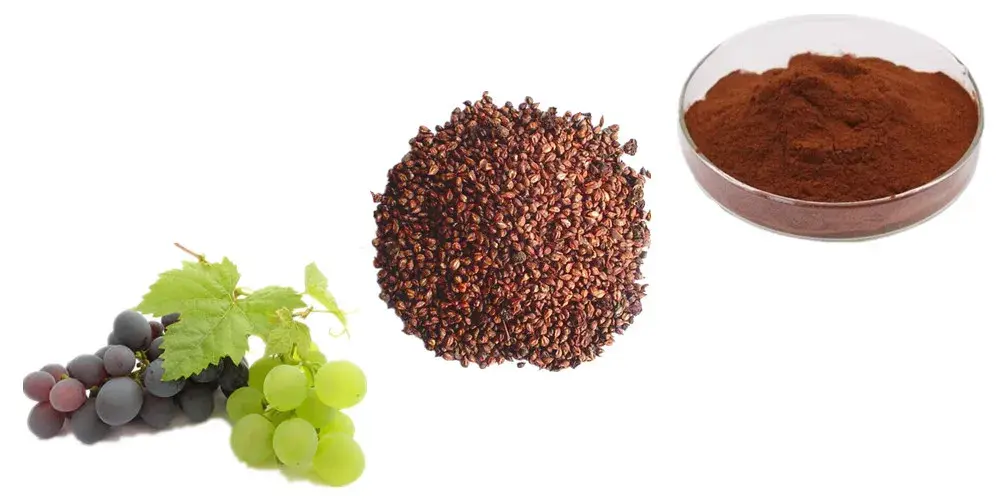
Understanding the Antioxidant Properties of Grape Seed Extract Powder
These are called OPCs, and they are low-molecular-weight flavanols. They have a very compact structure that lets them pass through membranes, even the blood-brain barrier. Many times, a UV test is used to make sure that a commercial-grade product has at least 70% total polyphenols or 95% proanthocyanidins. It's important to remember that a UV score by itself isn't proof of authenticity. It is also necessary to have an HPLC profile of the monomeric and oligomeric fractions. This is what makes real grape seed material different from cheap fillers like pine wood or peanut skin extract.
When compared to antioxidants found in plants, the data is very clear. Grape seed proanthocyanidins had an ORAC value about 20 times that of vitamin C and 50 times that of vitamin E when tested in the same way. This was found in a well-known study from 2012 in the journal Food Chemistry. Pycnogenol and grape seed extract both have a proanthocyanidin backbone that is very similar. However, grape seed extract usually has a wider range of oligomers and costs less per active unit, which is great for formulators who need to buy a lot of it.
For R&D teams, the powder is also very stable at temperatures below 80 °C. This means that most spray-drying, pill compression, and packaging methods can be used with it. It's easy to dissolve in water and ethanol, and its mass density is between 0.40 and 0.60 g/ml. This means that recipe makers can use it in a number of different delivery methods without having to start from scratch.
Practical Applications — How This Ingredient Supports Antioxidant Products
Three types of products that are important in the business world are helped by antioxidants in grape seeds. If people who make B2B materials look at this, they should keep the following main uses in mind:
Adding supplements to your food (capsules and tablets): For hard-shell pills and crushed tablets, grape seed extract powder that meets OPC standards works just fine. Since it is solid at high temperatures, the antioxidant power stays the same even when it is squished together. This backs up claims that protective coats can protect cells and keep the heart healthy.
To make functional drinks, the extract dissolves quickly in low-pH settings. This keeps the color from moving and haze from forming. This works for health shots and clear, acidic sports drinks. It stays stable in acidic environments, which makes it useful for ready-to-drink drinks where clear pictures are important for business.
- Dietary supplements (capsules and tablets): OPC-standardized powder integrates seamlessly into hard-shell capsules and compressed tablets. Its thermal stability preserves antioxidant potency during mechanical compression, supporting cardiovascular health claims and cellular-protection positioning without requiring protective coatings.
- Functional beverages: In acidic, clear sports drinks and wellness shots, the extract's solubility in low-pH environments prevents haze formation and pigment migration. Its stability under acidic conditions makes it particularly suited to ready-to-drink formats where visual clarity is a commercial requirement.
- Nutricosmetic and topical systems: Applied both orally and topically, proanthocyanidins neutralize reactive oxygen species generated by UV exposure, reinforcing collagen cross-linking and reducing photoaging markers — a validated benefit that supports anti-aging positioning in premium skincare lines.
To sum up, these three reasons show why buyers in the functional food, cosmetics, and nutraceutical industries keep putting this ingredient at the top of their lists. When mixed with other antioxidants like vitamin C, resveratrol, or coenzyme Q10, they make the network for getting rid of radicals bigger. This gives firms proof that their antioxidants do work in more than one way.
The product has a clear comfort profile when it comes to safety. In tests with real people, taking up to 300 mg/day by mouth did not have any major side effects. Individuals who are pregnant or taking blood thinners should be extra careful because it could stop platelets from growing. There is a good range of things here that skilled formulators can handle.----[
Comparison and Procurement Insights for B2B Buyers
Case Studies and Success Stories in Antioxidant Product Development
Clinical proof from studies of finished products helps people who make products by giving them useful guidelines. In 2009, the journal Phytotherapy Research published a study that showed that giving people with metabolic syndrome grape seed extract powder proanthocyanidin extract as a supplement greatly reduced LDL oxidation and signs of inflammation throughout the body. It was found in a different study that people who used nutricosmetic products with OPC-standardized extract for 12 weeks had changes in the flexibility of their skin and less hyperpigmentation.
This proof has been used to make new product lines for business-to-business clients in the areas of heart health, skin health, and metabolic wellness. Formulators say that using high-OPC materials that have been proven by HPLC cuts down on the number of times they have to redo the recipe and speeds up the time it takes to market. This is mostly because different batches have the same amount of drug, so there's no need to overdose to make up for it.
Future Trends and Strategic Recommendations for Procurement and Product Innovation
About USD 3.5 billion was spent on antioxidant chemicals around the world in 2023. There will be more than 6% growth every year until 2030. This is mostly because people want bioactives that come from plants and are called "clean." Grape seed polyphenols are a great example of this trend.
More and more people are buying antioxidant mixes that work together. To make these, OPCs are mixed with curcumin, astaxanthin, or pterostilbene. They protect against oxidative damage in more than one way. As the health market splits into smaller groups, procurement workers who make long-term deals with providers that can give private-label packaging, custom standardization levels, and a range of batch sizes will stay ahead of the competition.
Conclusion
In nutraceuticals, skincare, and functional foods, grape seed extract powder is a useful antioxidant that can be used economically. It is one of the best-protected plant-based bioactives that product developers can use right now because it has a stable OPC content, works well with many formulations, and has strong clinical support. When you want to buy something, the most important thing is to find a qualified seller who has been checked by HPLC. This is what makes formulations that work better different from formulations that don't work well.
FAQ
1. What is the standard OPC concentration in commercial grape seed extract powder?
Most commercial grades are standardized to 95% proanthocyanidins by UV assay or ≥70% total polyphenols via the Folin-Ciocalteu method. HPLC verification of the oligomeric fraction is the gold standard for confirming authenticity and ruling out adulteration with cheaper botanical matrices.
2. How does grape seed extract compare to green tea extract for antioxidant formulations?
Both are polyphenol-rich botanicals, but their active profiles differ. Grape seed extract is dominated by proanthocyanidins, while green tea extract centers on catechins, particularly EGCG. For applications targeting vascular health and collagen stabilization, OPC-dominant grape seed material typically demonstrates stronger target-tissue affinity.
3. Is grape seed extract powder compatible with beverage applications?
Yes. Its solubility in acidic, water-based systems makes it well-suited for functional beverages. Standard commercial grades remain stable at pH 3–5 without significant precipitation, maintaining product clarity in ready-to-drink formats.
4. What certifications should procurement managers require?
At minimum: HALAL, HACCP, ISO, and FSSC 22000. For markets requiring organic or religious-compliance positioning, USDA Organic and KOSHER certification add meaningful credentialing.
Partner With Avans — Your Trusted Grape Seed Extract Powder Supplier
Avans NutriHealth Co., Ltd. has manufactured certified botanical extracts since 2005. Our grape seed extract powder (CAS 84929-27-1) is HALAL, ISO, HACCP, and FSSC 22000 certified — available in stock, in bulk, with custom standardization options tailored to your formulation. Whether you are scaling a supplement line or developing a functional beverage, our team delivers consistent quality backed by 30+ research partnerships. Contact us today at Lillian@avansnutri.com to request samples and specifications.
References
1. Bagchi, D., et al. "Free radicals and grape seed proanthocyanidin extract." Toxicology, 2000.
2. Feringa, H. H. K., et al. "The effect of grape seed extract on cardiovascular risk markers." Journal of the American Dietetic Association, 2011.
3. Nuttall, S. L., et al. "An evaluation of the antioxidant activity of a standardized grape seed extract." Journal of Clinical Pharmacy and Therapeutics, 1998.
4. Yamakoshi, J., et al. "Proanthocyanidin-rich extract from grape seeds attenuates the development of aortic atherosclerosis." Atherosclerosis, 1999.
5. Shi, J., et al. "Polyphenolics in grape seeds — biochemistry and functionality." Journal of Medicinal Food, 2003.
6. Sano, A., et al. "Proanthocyanidin-rich grape seed extract reduces leg swelling in healthy women during prolonged sitting." Journal of the Science of Food and Agriculture, 2013.