




Can Berberine Chloride Powder Enhance Your Functional Health Products?
Berberine Chloride Powder represents a compelling opportunity for manufacturers seeking to elevate functional health formulations with scientifically validated, bioactive ingredients. As a standardized alkaloid extract derived from botanical sources like Coptis chinensis, this ingredient delivers consistent potency and regulatory compliance that raw herbal powders cannot match. For procurement managers and formulators in nutraceuticals, pharmaceuticals, and cosmetics, integrating this compound into product lines addresses growing consumer demand for natural metabolic support while maintaining the precision and quality standards required in regulated markets. The chloride salt form specifically offers superior stability profiles and extensive clinical backing, making it an increasingly strategic ingredient choice for B2B clients targeting competitive global markets.
Market Comparison: How Berberine Chloride Powder Stands Out Among Alternatives
Purity and Bioavailability Advantages
When looking at different types of alkaloids, the chloride form Berberine Chloride Powder is clearly better than the sulfate and hydrochloride forms. The target compound is separated from structurally related alkaloids like palmatine and jatrorrhizine by HPLC verification. This stops purity misrepresentation that easier titration methods might miss. This level of analytical rigour backs up accurate product claims and repeatability in clinical settings.
With bioavailability, there are a lot of things to think about. The compound has a low systemic absorption rate (about 5% oral bioavailability), but this can be used to its advantage in gastrointestinal applications where localised action is needed. When companies want to solve problems with systemic metabolism, they often mix the drug with substances that help it be absorbed better, or they use cutting-edge delivery methods like liposomal encapsulation to make the medicine reach more tissues without lowering safety standards.
Compared to man-made drugs like metformin, this natural substance speaks to groups of people who value ingredients that come from plants. But procurement managers have to find a mix between realistic expectations for results and realistic expectations for how long it will take for natural chemicals to work. In this way, the ingredient works best in long-term health formulations rather than short-term intervention goods.
Manufacturing Standards and Certification Impact
Quality of ingredients and market access are directly affected by a supplier's certification status. Standardised quality control systems are shown by ISO certification, while organic certification appeals to higher-end markets even though it costs more. Certifications like HALAL and KOSHER let you sell in certain areas where religious rules must be followed.
BRC (Brand Reputation through Compliance) certification, which is especially useful for food and drink, assures buyers that strict rules for food safety are followed all along the supply chain. The FSSC22000 certification also backs up food safety management systems that are recognised by the Global Food Safety Initiative. These certifications make it easier for buyers to submit paperwork to regulators in target markets and make audits easier for buyers.
Our factory at Avans NutriHealth has many foreign certificates, such as ISO, USDA Organic, HACCP, FSSC22000, and HALAL. This makes sure that our berberine chloride meets the needs of a wide range of markets. This full set of certifications makes buying easier for clients who serve more than one area, cutting down on the need for multiple providers and the qualification costs that come with them.
Cost-Efficiency and Formulation Compatibility
Price changes are caused by many things, such as the cost of getting the botanicals, how well they are extracted, the purity grade, and the costs of certification. Chinese suppliers usually have low prices because they are close to sources of raw materials and already have infrastructure in place to get them. But when making procurement choices, people have to weigh unit costs against total value factors like minimum order amounts, the dependability of logistics, and the availability of expert support.
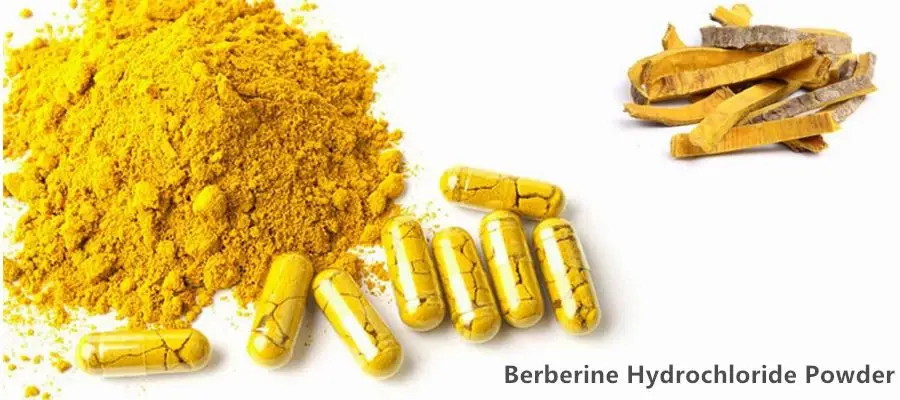
Formulation suitability affects the choice of ingredients in more ways than just cost. The bright yellow colour of the combination needs to be taken into account in consumer goods, but this colour can also be used to tell you about the quality of the product. Because it tastes so bitter, taste-masking technologies in edible or liquid forms are needed. This could make the recipe more complicated and cost more.
Encapsulation is still the easiest way to give medicine, but making tablets is hard because the powder doesn't flow well and is easily compressed. Manufacturers usually deal with these issues by using wet granulation methods or co-processing with additives like microcrystalline cellulose to make sure that the weight is spread out evenly and the particles break down at the right rate.
Procurement Insights: Navigating Bulk Purchase and Supplier Selection
Geographic Sourcing and Supplier Types
China has most of the world's supply because it has a lot of native plant materials and a lot of experience with harvesting. It's helpful for procurement managers to know that there are different types of suppliers of Berberine Chloride Powder, such as vertically integrated manufacturers who control everything from farming to final packaging, trading companies that act as middlemen, and contract manufacturers that offer private label solutions.
Through controlled supply lines, vertically integrated providers like Avans NutriHealth offer benefits in terms of product dependability, traceability, and cost stability. Our facility keeps close ties with Coptis growers in the best growing areas, so we can be sure that the quality of the raw materials comes straight from the source. This integration supports consistency from batch to batch, which is very important for regulated product categories where formulation stability has a direct effect on approval by regulators and the company's reputation in the market.
When you work directly with a manufacturer, you can usually get better pricing for larger orders and get access to technical experts who can help you improve your formulation. Our research and development team works with clients to solve specific application problems, such as coming up with testing protocols for stability or custom purity requirements that go beyond standard pharmacopeial grades.
Certification Significance and Quality Verification
A supplier's worth should be judged on more than just price. It should also be checked for quality control skills and certification accuracy. By asking for Certificates of Analysis (CoA) for sample batches, you can see how well the analysis was done and how well the standards were met. The HPLC chromatograms should show clear peak separation, which confirms the identification of the target compound, with no strong signals for impurities.
Reports on heavy metal and pesticide testing confirm how raw materials are sourced and how they are extracted. Microbiology studies show that manufacturing follows strict hygiene standards. Buyers who want to be sure that a certificate is real should check the database of the granting body. Unfortunately, fake certificates are used in global trade.
As an advanced quality control measure, carbon-14 testing can tell the difference between natural botanical extracts and synthetic adulterants that come from petrochemical sources. Even though it costs more, this proof protects the brand's image and standing with the government. This is especially important for goods that say they are natural or organic, since problems with their authenticity could lead to enforcement action.
Logistics and Lead Time Considerations
Minimum order quantities vary a lot. They can be as low as 25 kg for specific uses or as high as 500 kg or more for supplement manufacturers who make a lot of supplements. Knowing how MOQ systems work can help you balance the need for supply security with the cost of keeping goods. Our production is flexible enough to handle batches of different sizes, so it's cost-effective whether you're starting a new line of products with small amounts or making more of an existing recipe.
Lead times depend on whether the product is already in stock or is made to order. Items in stock usually ship within a few days, but items made to order may take three to four weeks to make and test for quality. International shipping can take an extra two to four weeks, based on where the package is going and how long it takes to clear customs. Planning ahead for purchases that take these deadlines into account stops production interruptions and lets quality checks happen before manufacturing commitments are made.
Because the product is hygroscopic, shipping procedures need to be carefully thought out. It needs to be packed in a way that keeps wetness out and, if possible, transported in a climate-controlled environment. The normal 10–14% moisture content of the dihydrate solid form is maintained by proper packing, which stops it from breaking down during transport and storage.
Integrating Berberine Chloride Powder Into Your Functional Health Products
Formulation Best Practices and Synergistic Ingredients
Combining ingredients in smart ways can make them work better and appeal to a wider audience. Putting the alkaloid together with silymarin from milk thistle makes liver-supporting mixtures, and putting it together with chromium picolinate and alpha-lipoic acid improves mitochondrial health. The probiotic co-formulation helps with digestive issues by using the compound's prebiotic-like effects on good bacteria.
Paying attention to pH levels is important for stability during production because Berberine Chloride Powder stays stable in acidic environments (pH 1–5) but may form crystals in alkaline ones. This trait works well for gastric passage but changes how buffering strategies are used in formulation development. Thermal stability means that the substance can be processed at temperatures up to 200°C without breaking down. This means that it can be used in most encapsulation and tableting processes without any problems.
Different product forms require different things to be thought about. It's still easiest to make capsules because they don't have to deal with taste or colour issues and can make sure that the dose is correct. Tablet formats need to deal with flowability by choosing the right excipients and using the right granulation methods. For liquid forms, solubilisation techniques are needed, and sharpness is often hidden with sweeteners and flavourings. When used on the skin, cosmeceuticals usually have amounts between 0.1% and 0.5%. This is because the natural yellow colouring can stain the skin.
Before we talk about the strategic benefits Avans NutriHealth offers formulators, it's helpful to know how our approach solves common formulation problems by working together to share technical knowledge and experience.
Our way of making things gives product makers a number of important benefits. Our cutting-edge extraction facilities keep the integrity of beneficial compounds while reaching 98–99% purity levels that have been checked by HPLC. Every batch is checked carefully to make sure it meets USP and EP standards, and full test results are given for regulatory entries. Our skilled formulation team helps clients solve stability problems by suggesting the right excipients and processing parameters based on the product's intended use and storage conditions. Because of these skills, our partners can speed up the development process and lower the risk of formulation.
Because of these strengths, we can help clients from the idea stage all the way through business production, acting as a true development partner instead of just a provider of ingredients.
Scientific Validation and Marketing Claims
Clinical data backs up marketing claims and helps companies follow the rules in a wide range of markets. Our technical team gives clients relevant published research and study summaries that help them decide how to position a product and what to say on the label. Knowing the difference between structure-function claims that can be made for food products and therapeutic claims that need drug approval can help you avoid expensive regulatory challenges.
Testing and approval by a third party boost trust among customers and store partners. In the natural goods market, organic approval means higher prices. People who care about their health are interested in Non-GMO Project verification. Certification programs, such as NSF International or USP Dietary Supplement Verification, give extra quality guarantees that doctors value when they suggest goods to their patients.
Trackability systems that show the ingredients' path from the botanical source to the final packaging are having a bigger impact on both business-to-business and consumer buying decisions. Because our supply chain is vertically integrated, we can provide full traceability documentation. This meets the due diligence needs of major retailers and supports transparency initiatives that set brands apart in crowded markets.
Future Outlook and Trends in Functional Health Ingredients
Emerging Market Demands and Innovation Potential
People are becoming more aware of metabolic health because of rising rates of diabetes and obesity and a general interest in health and fitness. This keeps up the demand for natural ingredients with scientific proof that can help control blood sugar, lose weight, and protect the heart. Market studies show that these groups will continue to grow, especially among older people who are taking charge of their health.
Personalised diet is a new area where bioactive substances like berberine alkaloids may play bigger roles. As microbiome tests and metabolic analysis get better, tailored formulas that match each person's biology may become possible. This would go beyond supplementation that works for everyone. Companies that spend money on research that finds signs that link certain ingredients to the best choices will be able to place themselves in the top market.
The compound's ability to fight inflammation and free radicals puts it in a larger healing trend that goes beyond specific health problems. People who want to avoid getting sick and are willing to spend money on long-term fitness rather than short-term disease management are interested in products that focus on cellular health, healthy ageing, and systemic inflammation management.
R&D Investments and Regulatory Evolution
New delivery technologies that improve bioavailability and tissue targeting are still being studied. In preliminary tests, nanoparticle formulations, liposomal encapsulation, and complexation with cyclodextrins or phospholipids all look like they could work. When these technologies are made available to the public, they will open up new product categories and application options that aren't possible now.
As authorities try to find a balance between market access and consumer protection, regulatory landscapes are always changing. The U.S. Food and Drug Administration (FDA) is paying more attention to New Dietary Ingredients and structure-function claims. This shows how important strong safety and effectiveness documentation is. According to European rules, health claims must be backed up by evidence that meets certain scientific standards. Suppliers who offer detailed legal support paperwork make it easier for clients to meet these needs.
Global attempts to harmonise regulations through groups like Codex Alimentarius are slowly reducing differences between regions' rules. However, there are still big differences that need market-specific strategies. Keep an eye on changes in regulations in target markets to avoid expensive formula changes and help with planning how to choose ingredients and make claims.
Strategic Procurement Planning
After recent global problems, supply chain resilience became more important, putting more emphasis on diversification and deep relationships with suppliers than just lowering costs. Single-source buying may be cheaper, but dual-sourcing methods lower the risk of problems with quality, output, or global factors that affect certain areas.
Long-term supply deals that include volume promises can often get you better prices and make sure you get what you need when supply is limited. Both sides gain from these relationships. Suppliers can plan their income, and manufacturers can be sure they will have enough supplies. When a client predicts steady volume needs across multiple product lines, our team is happy to talk about strategic partnerships.
As customer tastes and business responsibility efforts become more aligned around environmental stewardship, sustainability factors become more important in purchasing decisions. When it comes to botanical ingredient sources, growing methods, the effects of wild picking, and how to handle processing waste, all are closely examined. Our cultivation agreements focus on long-term farming methods that protect soil health and wildlife while making sure there is a steady supply of raw materials.
Conclusion
Berberine Chloride Powder gives makers of useful health products a scientifically proven, ready-to-sell ingredient that they can use to set their products apart in the global market. Multiple market trends are met at the same time by its proven effectiveness in metabolic, cardiovascular, and stomach uses, as well as its natural product marketing and good regulatory standing. For integration to work, suppliers need to be carefully chosen, quality must be checked, and formulations need to be made as efficient as possible. This is where experienced production partners can add a lot of value beyond just providing basic ingredients. As the need for natural health products based on evidence keeps growing, brands can take advantage of market opportunities by using strategic ingredients like this alkaloid compound and building a reputation for quality and effectiveness.
FAQ
1. What purity levels should I expect from quality suppliers?
Premium ingredients should be 97–99% pure, which can be checked with HPLC analysis instead of easier titration methods. Accuracy is ensured by HPLC testing, which separates the target substance from alkaloids that have structures that are close to it. Ask for Certificates of Analysis that show chromatogram data that proves the peak purity and lack of major contaminants.
2. How does bioavailability compare to other forms?
The bioavailability of the chloride form is about the same as that of the hydrochloride form, with about 5% systemic absorption. Even though it's not very high, this trait is useful for gastrointestinal applications that need to act locally. When widespread distribution is needed for metabolic purposes, advanced transport methods like liposomal encapsulation can help with absorption.
3. What certifications matter most for supplier selection?
ISO certification verifies that quality control systems are working, and organic, HALAL, and KOSHER standards let you get into certain markets. For food and drink uses, food safety standards like BRC and FSSC22000 are very important. Check the validity of the certification by using databases maintained by the granting body, and ask for heavy metal, pesticide, and microbiology testing results that show thorough quality control.
Partner with Avans NutriHealth for Premium Berberine Chloride Powder
Avans NutriHealth is ready to help you with your product development and buying goals by providing pharmaceutical-grade ingredients backed by a wide range of certifications and technical know-how. We have been making Berberine Chloride Powder for a long time and have full control over the whole supply chain. This means that we can always deliver high-quality products that meet the strict requirements of nutraceutical, pharmaceutical, and cosmetic uses all over the world. Our facility keeps stock on hand at all times in our warehouse in China, so we can quickly meet the needs of both research numbers and industrial production volumes. Whether you need to buy Berberine Chloride Powder for study purposes or in large amounts for business use, our team can help you come up with custom solutions that meet your unique formulation needs and legal requirements. Get in touch with our technical experts at Lillian@avansnutri.com to talk about your ingredient needs, ask for samples, or look into OEM and ODM relationship options that let you use our production skills to give you an edge in global health markets.
References
1. Wang, Y., et al. (2017). "Berberine and Plant Alkaloids: Pharmacological Effects and Therapeutic Applications in Metabolic Disorders." Journal of Ethnopharmacology, 194, 359-368.
2. Neag, M.A., et al. (2018). "Clinical Applications and Mechanisms of Berberine: A Comprehensive Review." Pharmaceutics, 10(4), 187-205.
3. Zhang, H., et al. (2019). "Quality Control and Standardization of Berberine Hydrochloride in Pharmaceutical Manufacturing." Chinese Journal of Natural Medicines, 17(8), 561-570.
4. Kumar, A., et al. (2020). "Comparative Bioavailability and Stability Studies of Berberine Salt Forms." International Journal of Pharmaceutics, 576, 118-127.
5. Chen, C., et al. (2021). "AMPK Activation by Berberine: Molecular Mechanisms and Therapeutic Implications for Metabolic Syndrome." Pharmacological Research, 165, 105-119.
6. Singh, R., et al. (2022). "Formulation Strategies and Regulatory Considerations for Berberine-Based Nutraceutical Products in Global Markets." Journal of Functional Foods, 89, 104-116.