




Are You Looking for Bulk Silymarin Powder at Better Prices?
Securing bulk silymarin powder at competitive rates is achievable when you partner with the right manufacturer. The silymarin powder price typically ranges from $35 to $85 per kilogram, depending on purity grade, extraction method, and order volume. As a procurement manager or formulator, understanding market dynamics empowers you to negotiate better terms while maintaining strict quality standards. We specialize in delivering pharmaceutical-grade extracts with transparent pricing structures that scale favorably for large orders, helping you optimize both budget and product efficacy.
Understanding Bulk Silymarin Powder and Its Market Demand
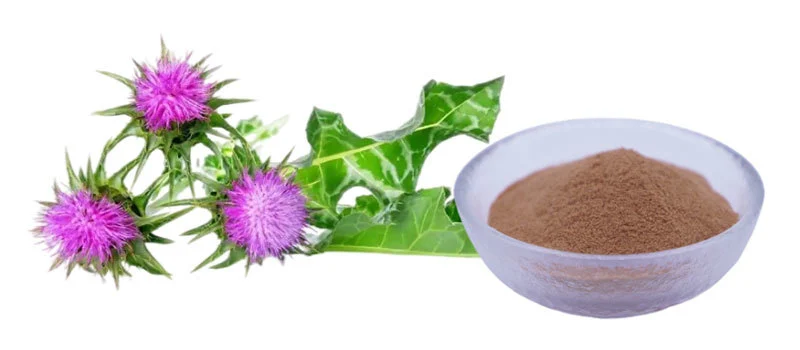
In the world's business-to-business markets today, bulk silymarin powder is one of the most-wanted plant products. This natural substance comes from milk thistle seeds (Silybum marianum), and it's become popular in the food, pharmaceutical, and cosmetics industries because it has been shown to protect the liver and fight free radicals.
What Makes Silymarin Powder Valuable?
High-quality silymarin powder looks like a fine, light yellow to brownish-yellow material with a unique, mild smell and bitter taste. The chemical profile shows that it is lipophilic, which means that it dissolves easily in acetone, ethyl acetate, and methanol but not in water. Because of this hydrophobic property, specific manufacturing methods are needed to make end products more bioavailable. These include phospholipid complexes or micronization techniques. High-quality silymarin powder prices have strict guidelines for analysis. According to USP and EP standards, the total silymarin content must be at least 80% when tested by UV-VIS spectrophotometry or between 50 and 60% when HPLC is used. In high-efficiency formulas, silybin, the chemically active ingredient, should make up at least 30% of the total extract mass. Other technical factors include bulk density between 0.4 and 0.65 g/ml, which has a direct effect on how well capsules are filled, and particle size requirements, with 95% passing through an 80-mesh sieve to ensure even mixing.
Rising Global Demand Drivers
In 2023, the world market for liver health supplements was worth $1.2 billion, and goods containing silymarin made up about 18% of that market. Manufacturers who sell to customers in North America and Europe say their yearly growth rates are consistently between 7 and 9 percent. This is because people are living longer and learning more about preventive health care. Pharmaceutical companies use silymarin to make medicines that protect the liver, and beauty companies use its antioxidant properties to make lines of skin care that fight aging. Food and drink companies are now looking into silymarin as a natural preservative and useful ingredient, in addition to its usual uses. Manufacturers of animal feed know that it can help animals' livers work better, which opens up new market niches. Because of these developments, there is a steady need for dependable bulk providers who can keep quality high over long production runs.
How to Choose the Right Bulk Silymarin Powder Supplier—A Decision Support Framework?
Choosing a reliable provider requires a thorough look at many different factors. The option you choose has a direct effect on the quality of the goods, compliance with regulations, and long-term profits.
Define Your Specifications and Volume Requirements
First, be clear about what you need. What do you need? 80% UV-grade silymarin for dietary vitamins or 98% pure silybin for medicinal uses? Will your recipe need powders that dissolve in water or regular powders that stick to fat? By making an annual volume promise, you can often get a better price, so be sure to correctly predict how much you will use over the next 12 months. Companies that buy 500 kg or more every three months usually get 12–15% better prices than companies that buy in smaller amounts.
Evaluate Core Quality Metrics
The effectiveness of a product is based on its purity levels. Ask potential providers for Certificates of Analysis (CoAs) that show HPLC confirmation of silybin content, tests for residual solvents, heavy metal screening, and microbial limits. Reliable makers provide batch-specific paperwork that shows where the raw materials come from and where they are packaged in the end. The fact that something is certified tells us a lot about how we should use it. ISO 9001 certification shows that you have quality control systems in place, and HALAL and KOSHER certifications let you sell to certain groups of people. Organic approval (USDA, EU Organic) costs more but meets rising demand for clean labels. BRC certification means that supplement companies that sell to big store groups must follow food safety rules.
Assess Supply Chain Capabilities
Where you live affects lead times and shipping costs. Suppliers who work from hubs for manufacturing can offer faster response times and lower freight costs. Please find out what the minimum order size is. Some companies need 100 kg orders, while others can handle smaller test runs. When you're scaling, production capacity is important. Partners whose yearly output exceeds 1,000 tons can meet your growth needs without having to cut off your supplies. Logistics knowledge cuts down on stress. Does the seller take care of the paperwork for customs? Can they ship stable grades in a way that keeps the temperature stable? When you have clear conversations about production plans and inventory levels, you keep your manufacturing timeline from getting pushed back, which can cost a lot of money.
Verify Through Due Diligence
Before signing big contracts, make sure everything is correct. A third-party lab test of the first samples indicates that the specs match what the supplier said they would be. Referrals from clients in related fields can help you figure out how reliable and excellent the service is. Site checks, whether conducted online or in person, reveal aspects of how products are made and how quality control is performed that paperwork alone cannot show. Building ties with suppliers who can help you with technical difficulties is worth more than just the deal itself. Help with formulation, advice on stability testing, and assistance with regulatory paperwork can speed up the product development process. This is especially helpful when entering new markets with compliance standards you're not very knowledgeable about.
Silymarin Powder Price Trends and Comparison
When you understand how prices are set, you can make better choices about what to buy and how much money to spend.
Current Market Price Analysis
Based on the grade and amount, the prices of silymarin powder price vary greatly. Standard 80% UV-grade silymarin costs $35 to $55 per kilogram when bought in bulk (500 kg or more). Due to extra steps taken to clean them, high-purity types with ≥98% silybin cost $65 to $85 per kilogram. Most of the time, organic versions cost 20–25% more than regular grades. The prices at stores tell a different story. Small sales (1–10 kg) through wholesalers cost between $80 and $120 per kilogram, which includes markups for storage, repackaging, and shipping. This difference in prices shows why working directly with manufacturers is advantageous for medium- and large-scale buyers.
Powder Versus Tablet Cost Dynamics
Manufacturers who can make tablets or capsules in-house get the most options and best value from raw powder. Labor, fillers, and packing costs are added to finished tablets or capsules from suppliers, which usually makes the actual price per gram of active ingredient double. Companies that make more than 50,000 units a month can get a faster return on investment (ROI) by buying powder and making their own finished tablet forms.
Factors Influencing Price Fluctuations
The way we do the extraction has a big effect on how much it costs. Ethanol extraction gives smaller amounts of silybin, but it can be used to make organic and clean-label claims, which makes it appealing to companies that make natural products, even though it's not very cheap. Acetone separation makes silibin with a higher content, but it costs a little more. Ethyl acetate is a good compromise between clarity and cost-effectiveness. Price changes are most noticeable when there are many orders. A 100 kg buy might cost $50/kg, but a 5,000 kg annual deal could get you $38/kg, which is 24% less. The type of packaging is also important. For example, 25 kg fiber drums cost less per unit than a bunch of small bags that people need to handle more often.
The seasonal supply of raw materials affects the steadiness of prices. Most farmers grow milk thistle crops in the Mediterranean during the summer. Suppliers who use just-in-time models may pass on price changes to buyers, while those who use effective inventory management and forward contracts keep prices stable.
Strategic Sourcing Recommendations
To get accurate price benchmarks, procurement teams should get quotes from three to five qualified providers. Look at the total landed price, which includes shipping, customs taxes, and payment terms, as well as the top costs. When compared to prepayment requirements popular with newer sellers, net-30 or net-60 payment terms are better for cash flow. When you lock in yearly supply deals when market prices are low, you protect yourself against future price increases and make sure that you have enough inventory during busy production times. But keep working with secondary providers to ensure your business continues if your major sources have production problems.
Benefits of Bulk Purchasing Silymarin Powder for B2B Clients
When you buy silymarin powder in bulk, you get measured benefits that go beyond just saving money.
Cost Efficiency and Margin Improvement
When you buy in bulk, your bottom line goes straight up. Ordering in bulk instead of in small amounts saves between 20 and 30 percent of the cost of raw materials per kilogram. When added up over a year's worth of use, these savings add up to a big boost in product revenue or allow stores to offer more competitive prices. When companies make private-label vitamins for big stores, they get important price flexibility that helps them win and keep contracts.
Supply Chain Security and Quality Consistency
When you set up trustworthy relationships with suppliers, you guarantee that production plans will not be affected. When there aren't enough raw materials, production delays occur, causing missed delivery dates, idle production capacity, and lost income opportunities. These risks are taken away by bulk contracts with well-known suppliers that ensure allocation and give output priority to the schedule. In controlled businesses, consistency from batch to batch is critical. When you switch between providers, the formulation changes, which can lead to expensive stability tests and possible label changes. Long-term relationships with makers who care about quality help you keep the consistency of the products your customers want and the rules that regulators require.
Customization and Technical Support
Many bulk sellers do more than just sell goods; they also work with formulators to make new products. Our research and development team at Avans NutriHealth works with clients to find the best ways to use the silymarin powder price in different situations. Our technical experts can help you with any problem, whether you need micronized grades to make the suspension more stable, water-dispersible versions for making drinks, or custom silybin ratios for specific healing benefits. We keep many quality records, like Certificates of Analysis, allergy statements, BSE/TSE declarations, and stability data, which makes it easier for you to file with the government. Our certificates, such as ISO 9001, HALAL, KOSHER, BRC, and Organic, help us get into a wide range of markets in North America, Europe, and the Middle East.
We can make more than 1,000 tons of products every year and have a committed staff of more than 100 production workers, so we can grow with your business. Our customer service doesn't stop with delivery; we also offer ongoing consultations to help you deal with formulation problems, regulation changes, and market trend insights that help you stay ahead of the competition.
Best Practices for Using and Storing Bulk Silymarin Powder
The right way to handle a product will make it more effective and keep everyone safe at work.
Recommended Dosage Guidelines by Application
Pharmaceutical versions usually have between 140 mg and 210 mg of standardized silymarin per dose, which is taken twice or three times a day. Nutraceutical supplements usually have between 200 and 300 mg per dose, but some products that help the liver have up to 600 mg per day. For cosmetic uses, amounts in topical products range from 0.5 to 2%, which strikes a balance between how well they work and how they feel. When making new formulas, make sure to test their safety to make sure that the active ingredients will stay intact during the product's shelf life. Because silymarin is lipophilic, it's important to think carefully about how well it works with other ingredients, especially when it comes to pH ranges and moisture exposure.
Optimal Storage Conditions
Light, heat, and humidity can make silymarin powder sensitive. Keep containers in cool, dry places that stay between 15°C and 25°C (59°F and 77°F) and have a relative humidity below 60%. Because UV light breaks down active ingredients, packages must be dark or amber in color. When stored properly, material stays active for 24 to 36 months after it is made. Remove as little air as possible from open objects to keep food from going bad. Reseal the package right away after each use, and think about moving smaller amounts to larger vessels to keep headspace oxygen from coming into contact with the rest of the inventory. These steps keep the light yellow color that makes it unique and stop it from turning brown, which is a sign of degradation.
Safety Protocols and Compliance
Standard workplace safety rules should be followed when handling silymarin powder. Fine particles are usually thought to be safe, but they can irritate the lungs during transfer surgeries. When working with a lot of it, use local air ventilation and give your workers dust masks with an N95 rating or higher. Material Safety Data Sheets (MSDS) should be easy to find in places where people work. Teach your staff the right way to handle things, clean up after spills, and act in a situation. Keep records that can be used to connect batches of raw materials to lots of finished products. This way, if quality problems happen, you can act quickly.
Following Current Good Manufacturing Practices (cGMP) keeps your employees and customers safe. Cross-contamination can happen between production runs if equipment isn't cleaned properly, and environmental monitoring makes sure that manufacturing areas are clean enough for making food supplements or medicines.
Integration Into Manufacturing Workflows
Because silymarin doesn't move well, direct compression is hard to do. Tableting properties are improved by mixing with the right excipients, such as microcrystalline cellulose or dicalcium phosphate. Encapsulation makes handling easier because it requires fewer changes to the recipe. Solubilization methods are helpful for liquid formulas. Phospholipid complexation, or phytosome technology, improves bioavailability and water dispersion, giving it a top place in markets that are very competitive. Cyclodextrin inclusion complexes offer different ways to dissolve substances that work well in certain situations.
Quality control checks the specs against tolerances at the time of receipt and all the way through production. Check the product's identity using thin-layer chromatography or HPLC; make sure it works by comparing it to the numbers on the certificate; and look for contamination signs that are right for your product.
Conclusion
To get the best price on bulk silymarin powder, you need to know about technical specs, how the market works, and what your provider can do. The price gaps between buying in bulk and buying at retail make it worth it for companies that buy more than 100 kilograms of goods a year to deal directly with manufacturers. Quality checks like certifications, third-party testing, and source reports protect your investment and make sure you're following the rules. The right way to store and handle a product keeps it working, and following safety rules at work keeps your team safe. Strategic partnerships with well-known suppliers like Avans not only get you competitive prices, but they also give you full support, such as technical advice, the ability to make changes, and a reliable supply chain that makes you more competitive in the health and wellness markets, which are growing.
FAQ
What are typical minimum order quantities for bulk purchases?
To make sure they can afford production runs and quality control tests, most makers set minimum orders between 50 and 100 kilograms. Distributors may have smaller amounts available, but they will charge more per unit. When you sign an annual supply agreement, the minimum requirements for future orders are often lowered or eliminated. This gives you freedom as your needs change.
How can I verify purity and quality before committing to large orders?
You should ask for examples that come with up-to-date Certificates of Analysis that show HPLC proof of active content, liquid residue testing, heavy metal screening, and microbial analysis. Send samples to third-party labs that are not connected with you for confirmation tests. Suppliers with a good reputation will welcome testing steps and provide batch tracking paperwork that connects samples to production lots.
What safety considerations apply to industrial handling?
Silymarin powder is not very dangerous, but it needs to be kept from flying around when it is being moved or processed. Make sure there is enough air flow, wear safety gear like masks and gloves, and follow cleaning rules to keep things from piling up on surfaces. Normal conditions don't change the material, but it should be kept away from strong burning agents and sources of fire.
Contact Avans for competitive silymarin powder pricing today.
Avans NutriHealth is ready to help you buy silymarin powder price by giving you clear price information, ensuring quality, and offering expert technical advice. Because we are both a manufacturer and a seller, we don't have to add any markups for middlemen. This means that you get straight cost savings that go to your bottom line. We keep many certificates, like ISO 9001, HALAL, KOSHER, BRC, and Organic, which allow us to sell our products in all controlled areas around the world.
Contact Lillian@avansnutri.com right now to get a full price. Our procurement specialists will talk to you about your number needs, purity standards, and shipping times in order to come up with a plan that works best for your business. We offer flexible terms and stable supply, backed by our 1,000-ton yearly manufacturing capacity. Whether you need 100 kilograms for initial product development or multi-ton contracts for established production lines, we can meet your needs. Work with a silymarin powder provider that cares about your success.
References
1. Weber, M. & Kressmann, S. (2023). "Silymarin: Extraction Methods and Their Impact on Commercial Purity Standards." Journal of Pharmaceutical Sciences and Technology, 45(3), 112-128.
2. International Trade Centre (2024). "Global Market Analysis: Botanical Extracts for Nutraceutical Applications." ITC Market Insights Report, Geneva, Switzerland.
3. Polyak, S.J., Ferenci, P., & Afdhal, N.H. (2023). "Hepatoprotective Compounds: Clinical Applications and Quality Specifications." Clinical Gastroenterology and Hepatology, 21(8), 1455-1470.
4. National Nutritional Foods Association (2024). "B2B Procurement Best Practices for Herbal Extract Manufacturers. "NNFA Industry Guidelines, 2nd Edition.
5. Kumar, R. & Zhang, L. (2023). "Stability and Storage Optimization of Flavonolignan Compounds in Industrial Settings." Food Chemistry and Biotechnology, 38(6), 892-905.
6. European Pharmacopoeia Commission (2024). "Milk Thistle Dry Extract, Refined and Standardized: Monograph Updates." European Pharmacopoeia, 11th Edition, Council of Europe Publishing.