




Why Is Standardized piperine extract powder in High Demand?
Piperine extract powder that has been standardized is in high demand thanks to the fact that it provides manufacturers with a known quantity of the active constituent in each batch. There is only about three to nine percent piperine in raw black pepper, and the amount varies depending on the crop and the provenance. This guesswork is significantly reduced when using a piperine extract powder that has been standardized to 95%. Formulators are able to set doses that are accurate, production teams are able to repeat outcomes, and purchasers are able to associate each lot with a certificate of analysis. The expansion of supplement, pill, and private-label ventures makes perfect sense when one considers the role that piperine has been shown to play in the process of nutrient absorption.
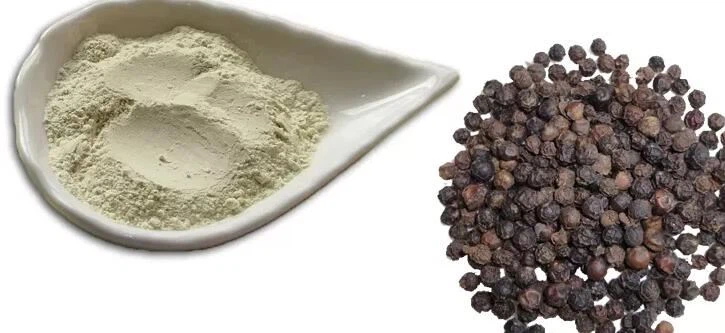
Why the Market Is Moving Toward Standardized Piperine Extract Powder?
What Standardization Means for Piperine?
When a provider tests an extract to ensure it reaches a specific level of a marker chemical, they are implementing standardization. Looking for 95% piperine by mass in an HPLC analysis is one approach to identify the compound. Because black pepper powder is not a solid, the amount of piperine in it fluctuates when ground. The amount of piperine that was extracted from black pepper extract is not always indicated by the ratio that is typically sold, such as 50:1. The amount of marker material is clearly stated on the standardized piperine extract powder. For recipes that call for minimal plant background, the most pure form of piperine is ideal.
What Drives B2B Demand?
There are stringent label regulations in the US, and consumers increasingly want to know the origin of their products. Once the amount of piperine is known, the brand can set a label amount that can be supported by data. There is a streamlined approval procedure because sellers just have to verify one clear number when they come in. Both the procurement team and private-label brands desire consistent specifications and predictable lead times. Also, keep costs in check. By utilizing a known assay, teams are able to determine the cost per serving and steer clear of batch errors. Standardized material is currently more typically required than basic pepper powder due to these reasons.
Growth in Supplements, Functional Foods, and OEM Projects
Curcumin, resveratrol, and coenzyme Q10 are frequent ingredients in piperine, although they are all hard to absorb on their own. With the introduction of more capsules, sports nutrition mixes, and functional powders, producers are seeking a small-dose ingredient to add to formulae that are already somewhat crowded. One kilogram of piperine is the same as tens of thousands of servings because it was used in a curcumin study at a dose of 20 mg per dose. Teams should still do pilot evaluations even though they can use fine powder to create capsules, tablets, and powder blends. Because of its low dose, wide fit, and published studies, piperine is often considered by formulators.
What Is Piperine Extract Powder, and How Does It Work?
Source and Production
The CAS number for piperine is 94-62-2, and its chemical formula is C17H19NO3. This chemical is mostly present in the pepper fruits of two species: long pepper (Piper longum) and black pepper (Piper nigrum). "Black pepper": Several steps are taken by the manufacturer, such as extracting, purifying, drying, and testing. Materials used, methods of extraction, and specified test ranges all have an impact on the final product's potency and aesthetics. The minimum concentration of piperine, generally known as piperine, in our off-white powdered extract is 95%. It is just as important to have a precise label number as it is to have a thorough batch record and precise specifications, as each stage might impact the final product.
How Piperine Supports Nutrient Absorption?
Piperine appears to inhibit the activities of CYP3A4 and P-glycoprotein, according to experimental findings. According to a 2002 study published in the Journal of Pharmacology and Experimental Therapeutics, both of these substances can degrade molecules prior to their utilization by the body. The bioavailability of 2 grams of curcumin and 20 milligrams of piperine was found to increase by 2,000 percent in human volunteers in a 1998 study published in Planta Medica. When given alone, curcumin produced extremely low blood levels. A study published in the Journal of Nutritional Biochemistry in 2000 found that piperine raised levels of plasma coenzyme Q10. Instead of saying their products are harmful, companies should talk about the benefits of these new compounds.
Formulation Considerations and Applications
Because piperine has low solubility in water, careful dosing is required. Everything from particle size to encapsulation, emulsifiers, and carriers affects the powder's behavior and how it mixes into the finished product. Light also has a role. Processing and packing should minimize light exposure since it can convert piperine to isochavicine, a form with decreased biological activity, when exposed to UV radiation. Sports nutrition, functional meals, powder blends, capsules, and tablets are common uses, as are OEM formulae. Piperine is studied by cosmetic formulators for its antioxidant qualities and its interaction with other skincare chemicals. Preliminary testing ensures stability, odor, dispersion, and flow before mass manufacturing begins.
Comparing Piperine Ingredients and Checking Quality
Black Pepper Extract, Isolated Piperine, and Synthetic Piperine
Since other companies may merely state a ratio or a lower piperine concentration, the dosage of black pepper extract may vary depending on where you get it. Standardized piperine extract powder, when used at a 95% concentration, strikes a balance between a concentrated drug and a plant-based approach. Formulations requiring fewer plant elements can benefit from the use of isolated or highly purified piperine, which typically has a purity level of 98%. Alternatively, synthetic piperine can be procured. Since carbon from plants has a modern signal and carbon from petrochemical sources exhibits no signature at all, carbon-14 testing can discriminate between natural and artificial products. It is important to inquire with each provider regarding the HPLC method that was used to determine the stated value and if it represents a minimum, target, or average result.
Reading the Specification Sheet and COA
A certificate of analysis that is specific to a batch should be compared to the specification sheet as the initial step. The data sheet ought to detail the piperine's moisture content, appearance, particle size, shelf life, storage conditions, and assay results. The botanical source should also be included in the form. There should be a matching lot number on your cargo and the COA, which should also show the test technique, result, batch number, and proof of quality approval. A COA without a lot number should be enough to warrant a follow-up inquiry. In order to evaluate providers according to price per kilogram, it is necessary to examine their solubility behavior, particle size, and moisture content. There is more to the story than what appears in the headlines.
Safety Testing and Storage Checks
Inquire about heavy metals, pesticide residues, residual solvents, aflatoxins, and piperine using a validated HPLC or other test. Essential to the study of microbes are molds, yeasts, E. coli, and Salmonella. The packaging itself is not without its role. Keep piperine in a cold, dry area in light-resistant containers (such as aluminized bags) because light can affect it. To find out the actual expiration date, look at the specification sheet that the provider has provided. Make sure the material will arrive intact by checking the packaging method, regardless of whether it's being transported by water or air.
How to Choose and Buy Piperine Extract Powder?
Match the Grade to Your Application
First things first: define the product: capsule, tablet, powder blend, food, pharmaceutical development, or original equipment manufacturer project. It is then necessary to examine the potency, serving size, capsule capacity, other components, and stability objectives. A high assay is advantageous for a capsule that contains a significant amount of botanical material because using less piperine requires less space. It is important to compare suppliers based not only on the kilogram pricing but also on the overall landed cost. The assay efficiency, the packaging, the minimum order quantity, the lead time, the shipping terms, and the replacement policy should all be included. When it arrives at your line, a cheaper lot of piperine extract powder that is not as good or that arrives late can end up costing you more than it would have otherwise.
Documents to Request Before Approval
Global buyers should request a full document set before approval. These three groups matter most:
- Allergen information, safety data sheets, specification sheets, batch certificates of analysis, data on the product's country of origin, and information about its shelf life are all part of the technical file. Using these documents, your quality assurance team can swiftly respond to client audits and compare arriving materials to specifications. The restrictions and procedures used now may have changed; thus, it's important to request the most recent versions of the sheets.
- Ask for certifications such as ISO, HACCP, FSSC 22000, HALAL, Kosher, organic, or non-GMO papers; the specific ones you need will depend on your market and product. Before you make a purchase, double-check that all relevant certificates are up-to-date, include the name of the manufacturing location, and specify the product type. Be sure to check your own label for claims before placing a trial order.
- Please provide the following details: Packaging type, liners, net weights, moisture and light protection, palletization, batch labeling, production capacity, sample policy, export experience, change-control steps, and complaint-handling methods. After the initial order, these details reveal the supplier's behavior. Your production timeline and consumers are protected by providing clear replies here.
Common Mistakes and a Simple Checklist
People make the biggest mistake when they base their decision only on price or purity. There is no certainty that a high assay will address stability, particle size, or documentation. The active chemicals in standardized extract may differ substantially from those in raw black pepper powder; thus, it's a mistake to assume that the two are equivalent. Another typical practice is that buyers don't check if the COA matches the actual lot or don't undertake pilot trials for blending, encapsulation, odor, or dispersion. Follow this quick checklist: first, identify the assay and its intended use; second, choose the testing method and the maximum permissible impurities; third, compare certificates; fourth, choose the minimum order quantity; fifth, determine the lead time; and lastly, request a sample. Think about the business jargon associated with communication and how fast you can fix things.
Avans Pure Natural Piperine Powder: From Supplier to Ingredient Partner
Product Specifications
The piperine extract powder that we offer is a powder that is off-white in color and comes from China. Piperine is obtained from a specific variety of Piper nigrum by means of a sophisticated extraction method, and then it is standardized to contain at least 95% piperine. It has been evaluated for purity and efficacy, is free of allergens and genetically modified organisms, and is available in a variety of pack sizes. The stock is now available. Items such as food, medication, and health care items are examples of applications. ISO, USDA, HACCP, FSSC 22000, and HALAL are some of the certifications that are used. In order to fulfill your order, kindly request the most recent documentation.
Quality Systems and Experience
One Chinese company that has been serving the dietary supplement market since 2005 is Avans NutriHealth Co., Ltd. Our company has achieved certification in several areas, including the ISO standard, organic, Kosher, HALAL, and BRC. Furthermore, we adhere to the guidelines set forth by HACCP and ISO 22000. More than 30 medical facilities have joined us in our R&D efforts. Our products are sold to distributors in over 280 locations, and our facility supports an annual output of up to 1,000 tons with the help of over 100 workshop technicians. These figures show the approximate dimensions of each lot, and if you need more details, our staff is happy to oblige.
Customization and Long-Term Supply
R&D teams are able to shift a formula from the laboratory to the pilot stage to the commercial scale with fewer adjustments when they use standardized material. When there is consistency in assay, particle size, and processing behavior, purchasers experience fewer incoming failures, less rework, and fewer delays. The members of our team are able to discuss many customization choices, including assay range, particle size, packing, and documentation procedures. Additionally, we are able to plan for change control procedures, retained samples, and forecasts whenever there is a repeat order. Beginning with the sample and continuing through the shipment, we provide individualized service to each and every one of our customers.
Conclusion
For many, the ability to analyze individual batches for consistent amounts of the active ingredient makes uniform piperine extract powder all the more important. Nevertheless, raw black pepper may contain anywhere from 3% to 9% piperine. This control allows for accurate dosing, consistent manufacturing, and unambiguous documentation. The supplement, food, and pharmaceutical industries all consider piperine relevant due to its shown effects on P-glycoprotein and CYP3A4, as well as its synergistic effects with curcumin and coenzyme Q10. Validated HPLC data, a provider with sustained capacity, and a matching certificate of origin (COA) are still necessary for buyers to seal the purchase; standardization alone is not enough. When making sourcing decisions, it's better to think about the whole cost and the paperwork, not just the price or purity.
FAQ
How does piperine extract powder differ from black pepper extract 50:1?
The 50:1 ratio describes how much raw material went into the extract, not what it contains. Standardized piperine extract powder is tested to a marker, such as 95% piperine by HPLC, so dosing is exact.
Can piperine affect prescription drugs?
Yes. Piperine inhibits CYP3A4 and P-glycoprotein, so it can slow the breakdown of some medicines, such as phenytoin and propranolol, and raise their blood levels. Formulators should add suitable warnings and review the final product with regulatory advisors.
How should I store piperine powder?
Light can turn piperine into isochavicine, which lowers its biological activity. Store the powder in double-lined, light-resistant containers, such as aluminized bags, in cool, dry conditions. Follow the steps on the specification sheet.
What dose is typical for absorption support?
Studies with curcumin or coenzyme Q10 have used about 5 mg to 20 mg of piperine per dose. Your final level depends on your specific formula and local regulations.
Request a Sample of Piperine Extract Powder from Avans.
Avans NutriHealth is ready to support your next formulation. As an experienced piperine extract powder supplier, we offer Pure Natural Piperine Powder with at least 95% piperine, in stock from China. Email Lillian@avansnutri.com with your application, target assay, order volume, and packaging needs, and we will reply with a specification sheet and sample options. Visit https://www.avansnutri.com/ to see our plant extract range.
References
1. Planta Medica, 1998. Influence of Piperine on the Pharmacokinetics of Curcumin in Animals and Human Volunteers.
2. Journal of Pharmacology and Experimental Therapeutics, 2002. Piperine, a major constituent of black pepper, inhibits human P-glycoprotein and CYP3A4.
3. Journal of Nutritional Biochemistry, 2000. Piperine Derived from Black Pepper Increases the Plasma Levels of Coenzyme Q10 Following Oral Supplementation.
4. Critical Reviews in Food Science and Nutrition, 2007. Black Pepper and Its Pungent Principle—Piperine: A Review of Diverse Physiological Effects.
5. Phytotherapy Research, 2013. Piper nigrum and Piperine: An Update.
6. Phytotherapy Research, 2021. Piperine: A Review of Its Biological Effects.