




Why Is Microcellulose Powder Gaining Popularity in Modern Products?
Microcellulose powder is gaining popularity because it gives manufacturers a plant-based, white, neutral powder that does several jobs at once. It binds tablets, adds bulk, manages moisture, improves powder flow, and adds texture to food. Buyers also like its renewable origin, clean-label appeal, and steady batch performance. In the United States, formulators in supplements, pharmaceuticals, and food use it to cover several functions with one ingredient. I will walk you through what it is, where it works best, how to choose a grade, and what to ask a supplier before you order. I also share the specifications of our own MCC series.
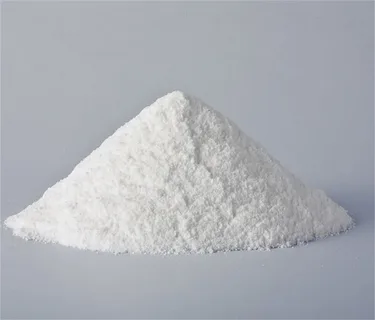
What Is Microcellulose Powder?
Definition and Chemistry
Microcrystalline cellulose (MCC), which has the CAS number 9004-34-6, is what most people call microcellulose powder. It is cellulose from plant fibers that has been cleaned up and depolymerized in part. Cellulose is a natural polymer that is made up of glucose units. It breaks down the open, amorphous parts, but it doesn't break down the solid parts that are packed together tightly. Because of its structure, MCC can be compressed well and handle water in a steady way. A white or almost white powder with no smell is what you end up with. Please be aware that this term is used in a broad sense in the market, and some sellers of powdered cellulose use names that sound like this too. I always check the standard sheet to make sure the grade and CAS number are right before I compare prices.
How the Powder Is Made?
Alpha-cellulose that is very pure and made from plant fibers is the first step in the process. When acid hydrolysis is controlled, it breaks down the chains of cellulose and gets rid of the amorphous stuff. The next steps are to wash, dry, grind, and sort the particles by size. Quality control tests are the last step in the process. The size, density, wetness, and degree of polymerization (DP) are all set by these steps. DP tells us how long the chains are on average. Battista and Smith wrote in 1962 that DP levels off when it is broken down by acid. MCC is still made with this idea. The powder moves and sticks together in different ways after each step. That's why I believe in a certificate of analysis (COA), which tells me a lot more than the name of the product.
Avans MCC Series Specifications
We have the MCC line in stock, which is a white or almost white powder from China. The DP is between 180 and 375, and the particle sizes are 50 to 200 μm. The bulk density is between 0.26 and 0.31 g/cm³, and the pH ranges from 5.0 to 7.5. USP, EP, and BP all give the grade good marks. You can get certificates like HACCP, ISO, USDA, COA, and HALAL. They make it easy for R&D teams to start testing medicines and foods. This team also helps with technology problems that come up during testing. Ask for the COA for the exact lot to make sure you have all the right numbers before you choose a formula.
Why Is Microcellulose Powder Gaining Popularity?
Clean-Label and Plant-Based Sourcing
In the US, people read ingredient labels very carefully, so companies react by using plant-based products. From plant fibers, microcellulose powder is made. It can be used as a glue, filler, texturizer, or fiber source. The government knows a lot about cellulose too. When the European Food Safety Authority looked at celluloses used as food additives again in 2018, they found no safety issues with the ways they were being used or how much they were being used. The people who work on making plant-based foods and vitamins for vegetarians know that record for sure. But each recipe still has to follow the rules of its own market. Find out what the rules are for food and supplements in your area.
One Ingredient, Several Jobs
People who make medicines like short lists of ingredients. MCC is used as a dry glue in tablets to break them up and keep them from sticking together. It gives food structure, replaces fat, and gives you healthy fiber. It stays in the machine that fills the tubes and fills up any empty space inside them. When a piece of material can do more than one thing, it cuts down on the number of buy orders, audits, and contacts that need to be tested. It also makes it easier to keep track of inventory. A short list also helps with claims of clean labels. Because of this, R&D teams often compare MCC to a number of drugs that only do one thing. Function changes depending on grade, dose, and process conditions, so make sure the benefit works in your own formula.
Direct Compression and Plant Efficiency
Direct compression skips the step of granulating while wet, which saves time, energy, and dirty work. A direct-compression binder known as MCC has been looked into a great deal. Its role in a quality-by-design setting was looked at by Thoorens and his coworkers in 2014. Its crystalline bits change form and stick together when it is put under pressure, which makes tablets that are hard. Low hygroscopicity helps keep APIs safe when they are in water. It is also easier to give the right dose when the flow stays steady when the pills are full. Because it has these useful properties, MCC is still often used in pill and tablet forms. Before making any changes to the process, a test run is still needed to see how hard, friable, and dissolvable it is.
Microcellulose Powder Uses and Applications
Pharmaceutical Tablets and Capsules
For a long time, MCC has been used as an ingredient in pharmaceutical work. There are lists of it in both the USP–NF and the European Pharmacopeia. It can be used as a dry binder for tablets that need to be pressed hard without breaking. It dissolves and breaks up quickly because it does so well when mixed with water and being pressed directly. The MCC line from us meets the needs of USP, EP, and BP, which is good for teams that file in the US and other places. APIs that are sensitive to water are protected by low hygroscopicity, and the powder makes tablets harder while keeping their ease of dissolving. Check the results with your own active ingredient in a test run.
Food, Beverage, and Baked Goods
MCC makes food less caloric while giving it more shape and body. It lowers the number of calories in baked goods without changing how they taste or feel. From what we know about our product, it can take the place of up to 30% of the fat and keep the same taste and structure. It also stops syneresis, the separation of water that ruins texture, and keeps emulsions stable in sauces and dairy alternatives. It helps the item stay put on the shelf and keeps its stickiness even when the temperature changes. Tests should be done in a small area at a few different replacement levels before going big, since the results depend on the recipe. Also, check to see if what the label says is legal in the US.
Dietary Supplements and Other Uses
When capsules are made, MCC is used as a filler that doesn't do anything but keep the powder moving while it's being put inside the capsules. That makes output more efficient and helps make sure that doses are the same. On top of that, it can be used naturally to make vegetarian foods look better on the label by adding bulk. Cellulose materials are used in more than just food and medicine. They are also used in cosmetics, animal feed, and industrial goods. But the government needs to give each of these places its own grade and oversight. Our MCC series can be used in both food and medicine. Don't wait to tell our tech team about your plans if you want to use it for something else. We'll help you figure out if the standard works.
Microcellulose Powder Benefits, Performance, and Comparisons
Flow, Compressibility, and Particle Size
The first step in performance is to find properties that can be measured. This number (0.26–0.31 g/cm³ for our grade) tells you how much space a kilogram takes up in a bin, drum, or scoop. Less than 5% wetness stops it from clumping and keeps it stable to work with. Smaller bits, between 50 and 200 μm, have more surface area, a smoother shape, and can stick to tablets better. That being said, bigger particles tend to flow better. After getting the D50 and D90 numbers, you should test them on your gear to see how they work. Place two grades next to each other. No brand claim can help you figure out how much to mix, fill, and compress better than these numbers.
Dispersion Versus Dissolution
When people buy things, they sometimes think that MCC will go away. It doesn't mix with water all the way. It makes things spread out, soaks up water, and can help keep things from sticking together. You need to change the way you make drinks, sauces, and suspensions because of this. It should be cloudy, and the viscosity can change based on temperature, shear, and concentration. Do not test viscosity in a beaker; do it in the real process. The length of the chain changes how things behave, as shown by DP. Our range is from 180 to 375. Ask your provider for distribution data that fits the amount of use you want to make. Next, use the batch size you have to do a stir test before you make more.
MCC Versus Powdered Cellulose and Starch
Powdered cellulose and MCC are both made from plants, but they are not the same. They are different because of the EU add-on codes. Both E 460(i) and E 460(ii) are cellulose powders. It is microcrystalline cellulose, which is E 460(i). MCC sticks together well because it has a clear crystalline structure and pharmacopeial grades. It is good for adding bulk or fiber because the pieces are longer and look like fiber. Heat and water are what turn starch into gelatin, so the way it thickens varies on how hot it is. On the other hand, MCC doesn't turn into gelatin. MCC makes it easier to squeeze, can be used instead of fat, or keeps the viscosity stable. Starch thickens food while it's cooking. If microcellulose powder doesn't have a CAS number, you should find out what kind it is.
How to Choose Microcellulose Powder and a Supplier?
Define Your Application and Request Documents
Begin with the product, the group it's for, and the market it's going to. A US supplement tablet, a pharmaceutical tablet, and a bakery mix all need to follow different rules and fill out different forms. Write down the particle size, moisture level, density range, and pH range that you want. Then, compare those on your list with what the seller says. Ask for the COA, the specs, records of how the food was grown or made, and certifications such as ISO, HACCP, FSSC22000, or HALAL. Before you place a bulk order, you should order samples to test the line for its ability to blend, fill, compress, disperse, and stay stable over time. With a clear brief, you can avoid weeks of back and forth.
Evaluate the Manufacturer and Export Support
Seek controlled sources of raw materials, milling and sorting tools, ways to keep the product from getting contaminated, ways to keep track of batches, and tests that prove the final product is safe. Ask any seller how they deal with problems and how they fix them. More than 100 workshop technicians work for Avans in a factory that can make up to 1,000 tons of goods a year. At the business level, we have ISO, Kosher, halal, BRC, and organic licenses. When bringing goods into the US, check the boxes, customs forms, certificates of origin, Incoterms, and wait times. We have the MCC series in stock that we sell from China. It's best to bring up private-label packaging and custom requests right away, since they might need more time to build and a minimum order quantity.
Common Procurement Mistakes
Four mistakes keep happening. If you only look at the price per kilogram, the total cost could go up if batches are turned down, flow is bad, or too much is dosed. It is important to know that cellulose powders are not all the same. They differ in how crystallized they are, how big their particles are, and how pure they are. Problems with compatibility are hidden until production starts because test samples are not used. Rules for the target market must be followed, or shipments may be held up. Before you sign a long-term supply agreement, make sure of capacity, raw material continuity, and lead times. Ask for details and do test batches to avoid these problems. A package that is turned down costs a lot more than a few extra weeks of waiting.
Conclusion
Because it is made from plants and can be used to join pills, add bulk, control wetness, improve flow, and replace some of the fat in food, microcellulose powder, or MCC, is becoming more and more common. Because it is solid, it can be easily crushed, and an EFSA review in 2018 found that the ways cellulose was used did not pose any safety risks. It is more important to choose the right grade than to know what the product is called. Particle size, moisture, density, and DP all affect performance. Mixed cellulose and starch powder is not the same as MCC. Also, fine and large types of MCC act in different ways. Buyers who define the application, look over the COA and certificates, run pilot tests, and check logistics and capacity can avoid making common mistakes when they buy something. In real life, this means batches that are more stable and formulations that don't come as a surprise.
FAQ
Is microcellulose powder the same as microcrystalline cellulose?
Sometimes, but not all the time. MCC has the CAS number 9004-34-6 and is a standard, partly depolymerized cellulose that meets rules for pharmaceuticals. Microcellulose powder is a more general term used in business; therefore, before you buy, make sure you know the grade and specs.
Does microcellulose powder dissolve in water?
No, it doesn't break down all the way. It soaks up water and spreads out, and it can help keep particles in the air. In the way that your process works, check the stickiness and spread.
Which particle size should I choose?
Pick the right size for the job. The bigger bits flow more easily, while the smaller ones stick to tablets better and feel smoother. Our MCC series maintains 50–200 μm, and you can try out different batches to see which one works best for your line.
Which documents should I request before ordering?
Along with the specs and certificates your market needs, ask for a COA for the whole thing. This is our MCC series. It has labels for COA, ISO, USDA, HACCP, FSSC22000, and HALAL.
Is the product available now?
Yes. The Avans team can talk about sample and bulk sales for our MCC line, which is already in stock.
Request Microcellulose Powder Samples from Avans
Avans NutriHealth Co., Ltd. is a microcellulose powder manufacturer with MCC series stock, COA documents, and ISO, HACCP, FSSC22000, and HALAL certificates. Our factory can reach 1,000 tons of annual output, so we support recurring orders. Email Lillian@avansnutri.com with your application, target particle size, volume, and destination, and our team will reply with a sample plan and quotation. Visit https://www.avansnutri.com/ for more details.
References
1. Industrial & Engineering Chemistry, 1962: "Microcrystalline Cellulose," Battista and Smith.
2. EFSA Journal, 2018: "Re-evaluation of celluloses E 460(i), E 460(ii), E 461, E 462, E 463, E 464, E 465, E 466, E 468, and E 469 as food additives."
3. International Journal of Pharmaceutics, 2014: "Microcrystalline cellulose, a direct compression binder in a quality by design environment—A review," Thoorens et al.
4. International Journal of Biological Macromolecules, 2016: "Microcrystalline cellulose: Isolation, characterization, and bio-composites application—A review," Trache et al.
5. Pharmaceutical Development and Technology, 2006: "Excipients for direct compaction—an update," Bolhuis and Armstrong.
6. Handbook of Pharmaceutical Excipients, 2020: Microcrystalline Cellulose monograph, Pharmaceutical Press.