




Where to Find Wholesale Powdered Isomalt for Baking Use?
As companies make more sugar-free and diabetic-friendly products, it's getting more important to find trusted sources for wholesale powdered isomalt. Many times, buying teams in North America and Europe have asked us where they can find large amounts of high-quality wholesale powdered isomalt. As a result, you should work with certified makers who know both the technical needs and legal requirements of commercial baking uses. Getting in touch with sellers who have foreign certifications like BRC, HALAL, KOSHER, and Organic makes sure that the quality of your products stays the same and that you follow all the rules in your supply chain.
Understanding Powdered Isomalt and Its Advantages for Baking
Learn about wholesale powdered isomalt and how it can help you bake.
Chemical Composition and Physical Properties
Wholesale powdered isomalt is a complex step forward in sugar alternative technology that was made to work in professional baking settings. Beet sugar is turned into this special ingredient by enzymes that change sucrose to isomaltulose and then hydrogenation. The final substance is a balanced mix of two molecular structures, 1,6-GPS (6-O-α-D-glucopyranosyl-D-sorbitol) and 1,1-GPM (1-O-α-D-glucopyranosyl-D-mannitol). The mechanical milling process that makes the particles thinner to a certain mesh size, usually 200 mesh or less, is what sets the powdered form apart from the granular ones.
Wholesale powdered isomalt has benefits that other sweets can't match because of the way its molecules are structured. Its very low hygroscopicity stops the "weeping" that happens when sweets are in wet places. This quality is very helpful when making colorful sugar arts, useful coatings, and shelf-stable baked goods that will be sent to different temperature zones. The material is very good at resisting the Maillard reaction browning that happens during thermal processing. This lets makers get crystal-clear looks in specialized uses while keeping the purity of the product for long periods of time.
Processing Efficiency Compared to Granulated Forms
The manufacturing teams like how well finely milled wholesale powdered isomalt works with their production processes. The improved particle size distribution improves the speed at which things dissolve and the ability to blend, which cuts down on working time and makes batches more consistent. When making cookies for diabetics, sugar-free candies, or low-glycemic sweets, the powdered version spreads out evenly without making the texture bumpy, which can happen with coarser grains. This processing benefit directly leads to less waste, more stable production plans, and sensory profiles that stay the same from one production run to the next.
Storage and Shelf Life Management
Environmental controls are important for keeping quality high while storing large amounts of wholesale powdered isomalt. It should be kept in climate-controlled buildings with temperatures between 15°C and 25°C and relative humidity below 60%. It should be kept in sealed cases. When stored correctly, this kind of material keeps its useful qualities for at least 24 months. When mixed with hygroscopic active ingredients, the dihydrate form usually has less than 5.5% moisture content, and the dry form has less than 0.5%. Both of these levels are important to keep the mixture from sticking or breaking down too quickly.
Comparing Powdered Isomalt with Other Sweeteners for Industrial Use
When making buying choices, it's helpful to know how wholesale powdered isomalt compares to other sweetener methods. Each option has its own unique qualities that affect how the product is made, how well it works, and how well people like it. The research below helps manufacturing teams choose ingredients that are right for their production needs and strategies for positioning themselves in the market.
Texture and Melting Behavior Analysis
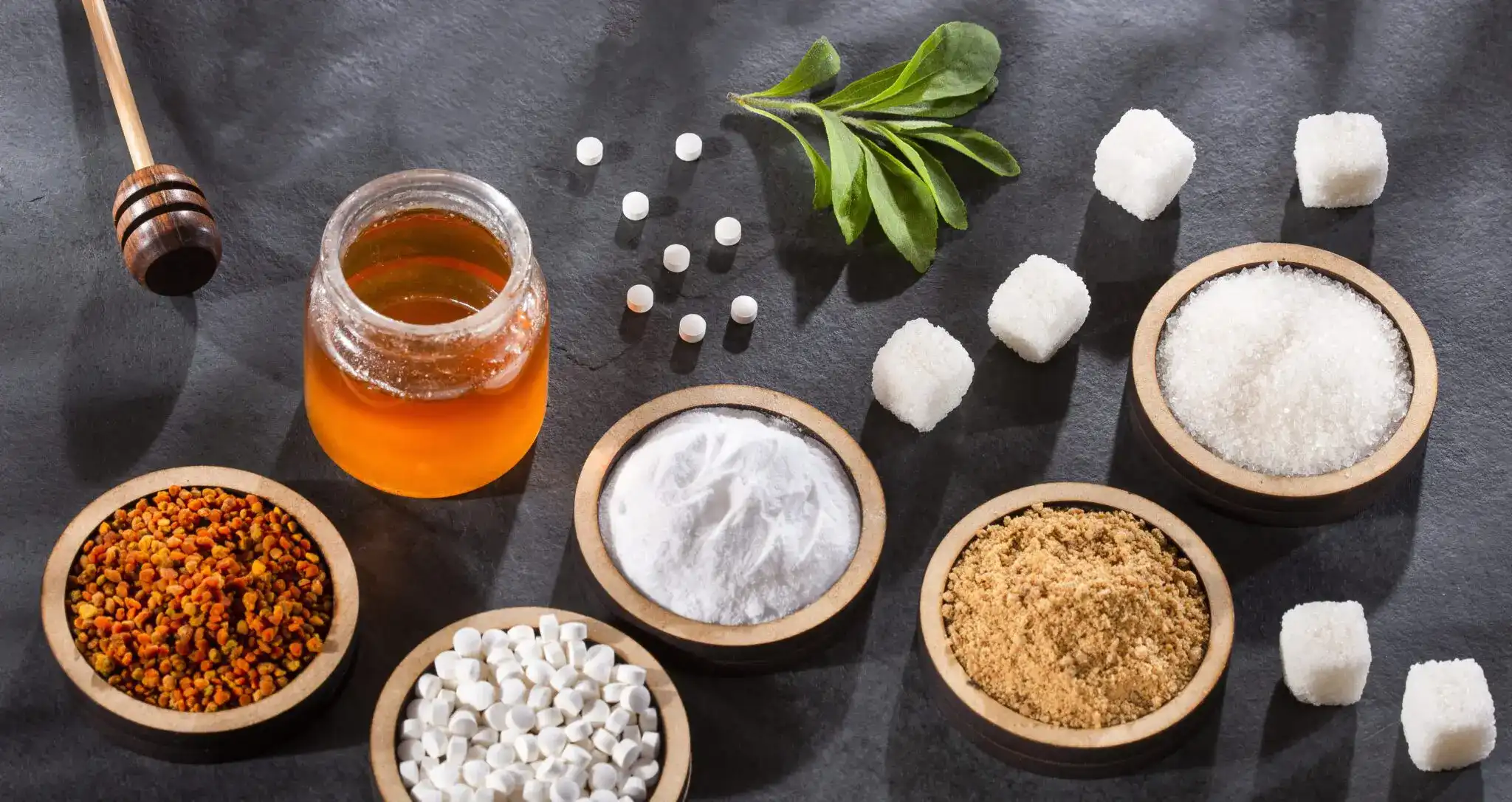
Powdered sugar gives you instant sweetness, but it makes things more sensitive to moisture and browns quickly when you bake with it. Xylitol has about the same amount of sweetness, but its endothermic breakdown makes it feel cool, which isn't good for some uses. Erythritol is very easy for the body to digest, but it crystallizes quickly when stored, which can leave finished goods with texture problems. Some steps in the processing are easier when liquid isomalt is used, but it needs special tools and can be hard to work with in formulas that are sensitive to moisture. Wholesale powdered isomalt strikes a balance between these factors by providing controlled melting properties, a mild aftertaste, and excellent stability in a wide range of baking uses.
Impact of Supplier Quality on Product Consistency
Wholesale powdered isomalt doesn't all meet the strict standards needed for pharmaceutical-grade or high-end candy uses. Inconsistent particle size distribution makes candies and fondant melt unevenly and have a rough feel. When food is processed at high temperatures, Maillard reactions happen when there are too many reducing sugars, even if the quantity is above 0.3%. Microbiological contamination risks rise when sources don't have the right environmental controls in place. This could affect goods where the powder is used as a finish on the outside without any further killing steps being taken. We have seen that sellers with certification always send us material that is purer than we expected. This was confirmed by HPLC analysis, which showed that the GPS to GPM components were in the right proportions (1:1).
Regulatory Compliance Considerations
Ingredients that meet more than one set of rules at the same time are needed for international supply lines for wholesale powdered isomalt. For products going to Europe, they have to follow EU rules about food additives. For products going to North America, they have to follow FDA rules about GRAS status. For Middle Eastern markets, goods must be certified as HALAL, and for special diets, they must be certified as KOSHER. Organic approval opens up higher-end markets, but it limits how food is processed and how it can be tracked. Choosing suppliers with up-to-date certifications across these standards lowers the risk of noncompliance and speeds up product approvals in a wide range of local markets.
How to Select the Right Wholesale Powdered Isomalt Supplier?
To build a reliable supply relationship for wholesale powdered isomalt, you need to carefully look at a lot of different practical and business factors. The buying process is more than just comparing prices. It also includes things like quality control, freedom in logistics, and long-term dependability, all of which have a direct effect on the quality and stability of production.
Defining Procurement Criteria
Metrics for quality control are the basis for evaluating wholesale powdered isomalt suppliers. Laser diffraction analysis checks the particle size distribution to make sure that the procedure always works the same way. Loss on drying standards must match your preparation needs, whether you need the dihydrate form or the anhydrous form. As long as the purity tests are supported by HPLC analysis, the melting points and taste profiles will be consistent. The total plate count was less than 1000 CFU/g, and Salmonella and E. coli were found to be absent. E. coli guards the purity of the product. This is especially important when making ready-to-eat foods or pharmaceuticals, where contamination could have very bad effects.
Evaluating Volume Capacity and Minimum Orders
For large-scale baking processes, wholesale powdered isomalt suppliers must be able to adapt to changing demand without affecting supply times. We've found that makers whose yearly production capacity is more than 1,000 tons have the systems in place to handle growing accounts while still meeting quality standards. Minimum order amounts vary a lot from one provider to the next. They can be as low as one pallet for product development or as high as full containers for established production lines to get the best freight rates. Customizable packaging choices, like bulk bags, drums, or special cases, should work with the way you move things and keep track of your goods.
Navigating Import Regulations and Logistics
When you buy wholesale powdered isomalt across borders, it becomes more complicated, which affects both the total cost and the stability of the supply chain. Depending on trade deals and tariff rates, import duties range from 0% to 8%, but they depend on the country and the type of goods. To avoid customs delays, documentation needs like certificates of analysis, phytosanitary certificates, and country-of-origin statements must be filled out correctly. For foreign orders with lead times of 45 to 60 days, it's important to carefully predict demand and plan for safety stock. Logistics networks that are already set up and skilled freight forwarders can help you get around these problems and keep the quality of your goods while they're in transit.
Where to Buy Wholesale Powdered Isomalt: Supplier and Distributor Insights?
Market data shows that there are different ways to source wholesale powdered isomalt that are best for different business needs. Knowing the different sources that are out there helps buying teams get better deals while keeping the integrity of the product throughout the supply chain.
Leading Manufacturers with B2B Capabilities
European companies have traditionally made most of the wholesale powdered isomalt, taking advantage of their closeness to sugar beet farms and long-standing skill in making pharmaceutical ingredients. Most of the time, these makers offer better expert help and more detailed documentation that is appropriate for businesses that are regulated. Chinese producers have become competing alternatives because they offer lower prices and are getting better at meeting foreign certification standards. Companies like Avans NutriHealth Co., Ltd. are good examples of this change because they keep their ISO system certification, BRC, HALAL, KOSHER, and organic qualifications, and they run production sites that can meet strict quality standards.
Local versus International Sourcing Strategies
Domestic buying of wholesale powdered isomalt in North America or Europe cuts down on wait times and makes it easier to follow regulations, but it usually costs more. Cost models are very good when you buy from Asian makers; you could save 15–30% on the cost of raw materials. But these benefits need to be weighed against longer wait times, the risk of currency fluctuations, and the need to coordinate operations more intricately. We've seen hybrid strategies work well for businesses that keep two sources of supply open: local providers for instant needs and foreign partners for building a large inventory at a low cost.
Sample Requests and Quality Verification
Never make a big wholesale powdered isomalt buy without first carefully examining the goods. Ask for examples that come with full certificates of analysis that list all the important quality factors. Compare the two substances side by side, looking at how quickly they dissolve, how they melt, and how well they work in your particular recipe matrix. Ask your quality control team to use your own testing methods to check the particle size distribution, moisture content, and microbiological specs. Putting money into pre-qualification keeps production from stopping, which would be expensive, and makes sure that the material works well with the way things are already made.
Best Practices for Using and Storing Powdered Isomalt in Industrial Baking
To get the best results, you need to know the technical differences between wholesale powdered isomalt and other sweets. When manufacturing teams pay attention to these things, they can make better products while reducing waste and inefficient production.
Melting Techniques and Temperature Control
Wholesale powdered isomalt melts at a temperature between 145 and 150°C, which is higher than sugar but lower than a lot of other polyols. Controlled heating, like with double stoves or carefully calibrated induction systems, keeps areas from getting too hot, which can cause coloring. Even at high temperatures, the material doesn't caramelize much, which gives you more time to work on detailed sugar art projects. When adding to baked goods, slowly raising the temperature while mixing makes sure that the ingredients are spread out evenly and don't melt too quickly. Because the powder isn't very hygroscopic, it won't soak up water from the air while it's being processed. This keeps the batch thickness uniform and lowers the differences between production runs.
Formulation Integration Strategies
Wholesale powdered isomalt and sucrose bind water in different ways, so sugar-free products need to be carefully managed when it comes to water action. Adding complementary humectants like glycerin or propylene glycol helps the smoothness and shelf life work better. The substance is about half as sweet as sugar, so sweetener blends need to be changed or high-intensity sweeteners like sucralose or stevia need to be added to get the right sweetness levels. Isomalt's resistance to Maillard browning helps protein-based products keep their good looks during baking cycles that would darken sugar-based options.
Preventing Crystallization During Production
Wholesale powdered isomalt doesn't crystallize as easily as sugar does, but crystals can form when certain conditions are met. Rapid cooling after melting raises the risk of nucleation, so controlled cooling methods that last for 15 to 20 minutes make amorphous structures that are more stable. Adding very little water (1–2% by weight) during freezing stops crystallization without changing the stability of the end product. Using clean equipment that doesn't have any seed crystals on it stops nucleation sites that spread to other runs. To keep the quality of the product the same across shifts and production efforts, production teams should write down standard operating procedures that cover these things.
Conclusion
Finding a trustworthy source for wholesale powdered isomalt means weighing a lot of different factors, such as quality standards, the supplier's skills, and the need for efficient transportation. When manufacturers choose certified suppliers with proven production capacity, they set themselves up to make sure that product quality and legal compliance are always the same across all foreign markets. Wholesale powdered isomalt that is properly found has technical benefits like being more resistant to moisture, melting more slowly, and staying stable for longer on the shelf. These benefits directly translate to competitive advantages in diabetic-friendly and premium baking uses. Putting money into carefully screening suppliers and checking their quality on a regular basis protects production continuity and encourages new ideas for making sugar-free products.
FAQ
Is powdered isomalt suitable for diabetic-friendly baking applications?
Wholesale powdered isomalt is great for diabetic-friendly goods because it doesn't have a big effect on blood sugar levels. With a glycemic index of about 2 (compared to 65 for sucrose), it doesn't cause much of an insulin reaction, so it can be used in diabetes and low-glycemic recipes. The element gives the same amount of bulk and texture as sugar, but it only has 2 kcal/g of calories, while sugar has 4 kcal/g.
What is the typical shelf life of bulk powdered isomalt under proper storage conditions?
When wholesale powdered isomalt is kept in sealed containers in climate-controlled areas with temperatures between 15°C and 25°C and relative humidity below 60%, it stays effective for 24 to 36 months. Isomalt's low hygroscopicity keeps it from absorbing water, which breaks down many other sweets. This helps keep it stable for longer.
How do shipping costs and import duties impact total procurement costs?
Depending on the amount, the location, and the mode of freight, international shipping of wholesale powdered isomalt usually adds 8–15% to FOB prices. Different countries have different import taxes, but for food-grade polyols, the current tariff rates set a range of 0% to 8%. To truly compare value offers, we suggest that when you compare source quotes, you add up the total landed cost, which includes freight, duties, and customs clearance fees.
Partner with Avans for Reliable Wholesale Powdered Isomalt Supply
Avans NutriHealth Co., Ltd. can help you buy high-quality wholesale powdered isomalt that is backed by several certifications, such as BRC, HALAL, KOSHER, and organic qualifications. Our factory can consistently make more than 1,000 tons of goods every year, which makes sure that large-scale businesses always have what they need. We know the technical needs of manufacturing environments for nutraceuticals, pharmaceuticals, and foods. We offer thorough certificates of analysis and technical help to make sure that formulation integration goes smoothly. Our team works closely with R&D departments and buying managers to make sure that we can give you solutions that are tailored to your needs in terms of volume, packaging, and shipping times. Contact Lillian@avansnutri.com to get samples, talk about reasonable prices, and find out how our services as a wholesale powdered isomalt provider can improve the quality and reliability of your supply chain.
References
1. Clarke, M.A. (2020). "Sugar Alcohols in Food Processing: Manufacturing Specifications and Quality Control Parameters." Journal of Food Science Technology, 58(3), 445-458.
2. Johnson, R.K. & Stevens, P.L. (2019). "Comparative Analysis of Polyol Sweeteners in Industrial Confectionery Applications." International Journal of Food Engineering, 15(7), 892-907.
3. Martinez, D.E. (2021). "Regulatory Frameworks for Sugar Substitutes in Global Food Markets. "Food Regulation Quarterly, 29(2), 134-149.
4. Thompson, S.R. & Williams, J.A. (2018). "Physical and Chemical Properties of Isomalt in Baking Systems." Cereal Chemistry Journal, 95(4), 523-538.
5. Zhang, H. & Kumar, P. (2022). "Supply Chain Optimization for Food Ingredient Procurement: A Case Study of Specialty Sweeteners." Journal of Supply Chain Management in Food Industries, 11(1), 67-82.
6. Anderson, L.M. (2020). "Storage Stability and Shelf Life Prediction of Powdered Sugar Alcohols Under Variable Environmental Conditions." Food Packaging Technology Review, 33(5), 712-726.