




Where Is aluminium stearate powder Used in Coatings?
Aluminium stearate powder is a metal soap derived from aluminium salts and stearic acid. In coatings, this white fine powder functions as a thickener, anti-settling agent, matting agent, and water-repellent additive. Its strong hydrophobicity and thermal stability make it particularly valuable in solvent-based and oil-based coating systems, where it modifies rheology, prevents pigment sedimentation, and enhances surface durability. Formulators across industrial, architectural, and specialty coating segments rely on it to deliver consistent film performance and extended product shelf life.
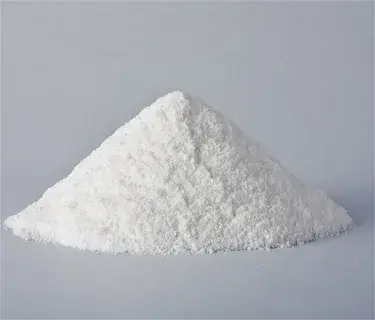
Understanding Aluminium Stearate Powder in Coatings
Chemical Properties That Drive Performance
Aluminum stearate has three stearate chains attached to each aluminum atom, which makes it very lipophilic. This chemical structure makes the material very hydrophobic, with a melting point range of 115–145°C and resistance to polar solvents. These qualities directly lead to stable viscosity profiles, less water absorption, and reliable color dispersion in coating matrices. The powder's particles are usually between 10 and 50 microns in size, which is a wide range that can change both how the film flows and how smooth it is, based on the grade chosen.
Quality Control and Batch Consistency
Tough requirements for the raw materials are needed for the coating to work reliably. Every batch of aluminum stearate made at Avans NutriHealth Co., Ltd. goes through strict in-process testing against parameters like moisture levels, heavy metal limits, and free fatty acid content. A detailed Certificate of Analysis is sent with every shipment. The building has many certifications, such as ISO, HACCP, FSSC22000, HALAL, and others. This gives procurement teams proof that the building is in compliance before materials are sent to production lines.
Core Applications of Aluminium Stearate Powder in Coatings
This coating additive serves a number of different purposes, and formulators can get the most out of their raw material spend by understanding each one.
Anti-Settling and Thickening Agent
In coating vehicles, aluminium stearate powder makes a gel-like network that keeps pigment and filler particles from sinking to the bottom of storage cases. This process cuts down on the need for thorough re-mixing before use and makes the product last longer. In alkyd and oleoresinous systems, normal inclusion levels are between 0.5% and 2.0% by weight. These levels increase the viscosity without changing the end film qualities too much.
Matting and Surface Finish Control
Aluminum stearate gives you exact control over the level of flattening that is achieved when you need uniform low-gloss or matte surfaces. Its particles spread out light that was reflected off the coating, which brought down the specular gloss to the desired level. Aluminum stearate tends to keep things clear in clear systems, unlike silica-based binding agents that can make things cloudier. Because of this quality, industrial furniture coatings, automotive primers, and protective wood finishes all work better.
Water and Chemical Resistance Enhancement
Because this additive doesn't like water, it forms a barrier against moisture inside the cured film. Studies in the journal Progress in Organic Coatings have shown that adding metal stearates to alkyd-based systems improves the water contact angle and lowers the rate at which water vapor moves through the system. This resistance also works with light chemicals, which makes it useful for industrial upkeep coatings that need to protect against corrosion.
Advantages of Aluminium Stearate Powder Over Other Stearates in Coatings
When mixed with water, calcium stearate spreads out pretty well. However, it doesn't thicken coatings that are mixed with solvents very much. It is possible for magnesium stearate to not work as well when it is cured at high temperatures because its melting point is lower. Zinc stearate helps keep the outside smooth, but it's not very good at making gel tubes. On the other hand, aluminum stearate forms a strong thixotropic structure in oil and alkyd vehicles. This gives people who make industrial coatings the anti-sag traits they need.
It works even better for this reason if you pick the right particle size grade. More coarse grades make thick-film coats less likely to sag, while finer grades make thin ornamental films more even. Formulators have more control over this soap than with most metal soaps because it can be tuned.
It's also important to follow the rules for safety and the environment. Aluminum stearate is not very poisonous in the short term, and it can be safely handled as long as the right steps are taken to keep dust down. As long as it's used normally, it doesn't add any heavy metal worries, which is good for formulators in North America and Europe who need to follow VOC and dangerous substance rules.
How to Choose the Best Aluminium Stearate Powder for Coatings
Rather than just price, choices about how to buy this material should be based on factors that can be measured. Before placing a large buy, you should carefully consider the following features:
- Purity and fatty acid profile: Verify the stearate-to-palmitate ratio through supplier-provided gas chromatography data. Inconsistent ratios alter thickening efficiency batch to batch.
- Particle size distribution (D50, D90): Request laser diffraction data. A D50 of 15–25 microns suits most industrial coating applications, but confirm against your specific formulation requirements.
- Certification documentation: Certificates covering ISO, HACCP, FSSC22000, and HALAL reflect manufacturing discipline and give regulated-market buyers confidence during audits.
- Certificate of Analysis per lot: Batch-specific COAs covering moisture, heavy metals, and free acid content are non-negotiable for quality-conscious procurement teams.
- Sample availability before bulk commitment: Reputable aluminium stearate powder suppliers offer trial quantities to validate performance in your actual production system before large orders are placed.
Avans NutriHealth gets aluminum stearate powder from China and has it in stock right away. The minimum order quantity is flexible, so it can be used for both small-scale R&D tests and full production runs. Professional help with export paperwork and international logistics makes the import process easier for people in the US.
Future Trends and Innovations in Aluminium Stearate Use for Coatings
More than USD 11 billion will be spent on paint additives around the world by 2030. The need for low-VOC and sustainability will shape demand more and more. Aluminum stearate works well in this path because it doesn't add volatile components to systems that already have a lot of solids or not much liquid.
Progress in particle engineering is making it possible for new things to be used. It is now possible for waterborne coatings to have more even matting thanks to micronized grades with tightly controlled particle size ranges below 10 microns. This is an area where this class of chemicals has had trouble in the past. Surface-modified aluminum stearate grades that help them mix better in water-based fluids are also being looked into by researchers. They might be better for use in building oil paints because of this.
As more people shop, the supply chain's dependability is becoming just as important as the price per unit. When people buy from companies with strong certifications and close production links, they can better handle problems with raw materials without having to stop making things.
Conclusion
Aluminium stearate powder has a long-standing and growing part in coating recipes because it can thicken, stop settling, mat, and repel water all in one additive. It works better than similar metal soaps and is now coming in types that work with current low-VOC systems. This makes it a material that should be carefully specified instead of just bought as a commodity. When coating makers work with a certified manufacturer that gives them full batch paperwork and quick technical help, this choice of raw material becomes a real competitive edge.
FAQ
1. Is aluminium stearate safe to handle in a production environment?
Aluminium stearate presents low acute toxicity under standard industrial hygiene conditions. Dust control measures, appropriate respiratory protection, and grounded equipment for static dissipation are recommended during handling. Review the supplier's Safety Data Sheet for specific exposure limits and first-aid guidance applicable to your jurisdiction.
2. Can aluminium stearate replace zinc stearate in a coating formulation?
These two metal soaps are not directly interchangeable without reformulation work. Aluminium stearate builds stronger gel networks in oleoresinous systems, while zinc stearate delivers different surface properties. Small-scale substitution trials with viscosity monitoring are advisable before production-scale changes.
3. What are typical lead times for bulk orders from China?
Standard production and dispatch for in-stock material at Avans NutriHealth typically allow sea freight shipment within 7–15 business days of order confirmation. Air freight options are available for urgent requirements. Avans provides complete export documentation to facilitate smooth customs clearance for US importers.
4. How should aluminium stearate powder be stored?
Store in sealed, moisture-proof packaging in a cool, dry location away from direct heat sources and strong oxidizing agents. Properly stored material maintains specification compliance for 24 months from the production date under standard warehouse conditions.
Partner with Avans for Reliable Aluminium Stearate Supply
Avans NutriHealth Co., Ltd. is a trusted aluminium stearate powder manufacturer with immediate stock availability, rigorous multi-certification quality systems, and dedicated technical support for coating formulators and procurement teams across the United States. Request your sample, technical datasheet, or bulk pricing today — reach our team directly at Lillian@avansnutri.com to begin your sourcing evaluation with a partner built for demanding industrial applications.
References
1. Progress in Organic Coatings — Elsevier, 2019
2. Surface Coatings International — JOCCA, 2020
3. Coatings Technology Handbook — Tracton, A.A. (Ed.), CRC Press, 2006
4. Industrial & Engineering Chemistry Research — American Chemical Society, 2018
5. Paint and Coatings Industry Magazine — BNP Media, 2022
6. Journal of Applied Polymer Science — Wiley, 2021