




What Is Ginseng Root Extract Powder? A Sourcing Guide
Ginseng root extract powder is a concentrated botanical substance that is produced by first extracting active chemicals from ginseng roots and then drying the liquid through a drying process to produce a fine powder. Ginsenosides, which are triterpene saponins, are the primary markers that are measured by high-performance liquid chromatography (HPLC) in laboratories. The extract, in contrast to ground root, possesses a precisely defined strength, which enables formulators to more effectively plan dosage, labels, and batch targets. The purpose of this guide is to provide an explanation of how the substance is manufactured, where it is utilized, how it compares to other types of ginseng, and how to obtain it with less hazards. Additionally, we describe the characteristics of the Panax ginseng extract powder that we offer.
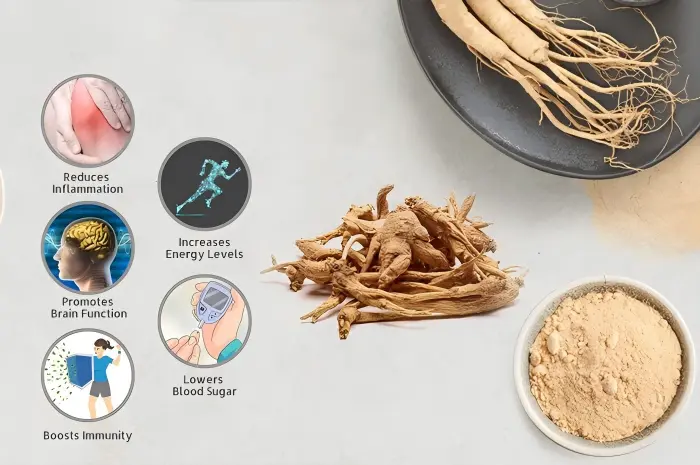
What Is Ginseng Root Extract Powder, and How Is It Made?
Extract Powder vs. Ground Root
In order to produce ginseng root extract powder, stearic acid and aluminum are combined after being blended together. The CAS number for this substance is 637-12-7, and it is frequently marketed as aluminum tristearate. The compound is composed of Al(C₁₄H₃₅O₂)₀, which is an abbreviation for C₅₄H₁AlO₆. An individual mole of this substance weighs 877.4 grams. A very fine white powder can be found at this location. It is not compatible with water and cannot be combined with it.
Specifications That Define the Ingredient
However, the items that are sold in stores could be different from one another. Powders containing base ginseng root extract are available in a variety of forms, and some grades allow for the substitution of these forms. People who are interested in purchasing should, as a result, first look over the specifications. Using this number, you will be able to inquire further about the products and learn how to evaluate them. There is a possibility that two or more things with the same name will behave differently during a melt.
From Raw Root to Finished Powder
When mixed with plastic, this metal soap can do more than one thing. It can keep water out, make it easier for parts to come out of molds or dies, and treat mineral fillers to help them spread out more evenly. It can also help the melt move. Most of the time, engineers mix two effects to make one. When these bands are oiled, they move against each other in a different way. There is grease on the outside of metals where they touch. The most important thing that changes is the glue, the temperature, and the other things that are mixed in.
Ginseng Root Extract Powder Benefits and Nutrition Considerations
Common Commercial Applications
People who work with plastics use a metal soap made from ginseng root extract powder to keep things operating smoothly, get rid of rust, and change the appearance of the surface. Ginseng will also modify the appearance of the surface. The one that is most suitable for you will be determined by the kind of plastic you have, the quantity that you require, the particle size, and the documentation that your provider is able to provide you with. This guide will assist you in comparing pricing in a fair manner and locating the appropriate quality of powder for polypropylene, polyethylene, or polyvinyl chloride (PVC). From a practical standpoint, you should start with a tiny quantity of ginseng root extract powder and gradually add more of it while paying attention to how it seems, how it feels, and how it moves.
A Functional Botanical, Not a Nutrition Source
It is only possible to make use of this addition in specific circumstances. It is possible that things will perish or become entangled if there is not enough. What if you use an excessive amount? It is possible that it will alter the gloss, strength, printing capability, or the manner in which the coatings and inks adhere to one another. When it comes to determining how slippery plastic sheets and films are, ASTM D1894 is a standard that should be familiar to anyone who works in the film industry. When you discover something, compare it to a test batch that did not contain any extras from the original quantity. Whether the powder makes things better or worse is something that it reveals to you. It will inform you of things such as whether or not it will break the seal or cause the print to not adhere properly.
Quality Checks to Confirm the COA
What you start with will depend on the glue you have. A lot of the time, stabilizers and grease get mixed up. See how long it takes to fuse, how flexible it is, how well it works with stabilizers, and how smooth the surface is. Watch how the polyethylene and polypropylene films dry, how they move, and how much they stick to each other. Check out how the slip and close change before you add. This will help the lines on your film stay straight. Why do people recycle plastics and other things? It's because of what's in them and how they melt together.
Ginseng Root Extract Powder vs. Other Ginseng Ingredients
Extract Powder vs. Whole-Root Powder
More often, checks should be done on engineering plastics to see how they change over time, how they smell, and how stable ginseng root extract powder is when it's hot. It doesn't matter what grade it is when the temperature goes up. When we take full and masterbatch drugs, we think about other things. How well does it work? After you've added a lot of filler, check to see if the powder still fits the resin.
Red Ginseng, White Ginseng, and Finished Capsules
Also, pay attention to how the pellets cut. First, try out the idea in a lab. After that, do a quick test with your own tools. In other words, you might find bridging in a hopper or leftovers on a die during sample runs but not during bench tests. Make sure you're ready for both before you start full production. For a grade, it's not enough to say how clean something is and how much it costs.
Using the Powder in Finished Products
Ash, solids, free fatty acid, water, heat, and a scent are all present in the environment. Take a look at these objects to determine the amount of each that is present. According to ISO 13320, laser scattering is a typical method that is used to acquire measurements. Don't simply refer to it as "fine powder." Rather than that, you should inquire about the D50 and D90 figures, which indicate the size of the particles. With regard to how the surface fills, wets, distributes, and covers, the size of the particles is the determining factor. Moreover, the number needs to correspond to the procedure. As a result of shape shots, you will feel and look better.
Ginseng Root Extract Powder Dosage, Safety, and How to Choose
Why No Universal Dosage Exists?
The force and the building in the die are under a lot of stress during this process. It's important to be clear, plan ahead, and be able to write in film. Most of the time, you should follow the business standard, even if the facts don't support it. Don't look at price when choosing ginseng root extract powder. Instead, look at how well it works. Calcium stearate is often used to keep PVC stable and smooth.
Safety and Possible Side Effects
Zinc stearate makes a lot of different types of rubber and plastic stick to and slide off of other things. A lot of people know it from powders, makeup, and pills. Ginseng root extract powder might be better if you want to keep water out, make something heavier, fix the surface, or let go. To make sure the tests are all fair, use the same glue, amount, tools, and temperature range. Check out how they look, how strong they are, how much torque they have, and how well they keep water out.
Choosing the Best Ginseng Root Extract Powder
Sincere people will give you the papers right away. Ask for the Technical Data Sheet, the Safety Data Sheet, the product specification, instructions on how to store it, and a Certificate of Analysis that is specific to the batch. What should be on the COA? You need to know the lot number, when it was made, when it was tested, how it was tested, what the real results were, and what the specs allow. Following the rules in 21 CFR Parts 174 to 178 is what the FDA must do when plastic comes into contact with food. Follow the rules set by the TSCA for any plastic that is going to the US.
Buying Ginseng Root Extract Powder in Bulk from the Right Supplier
Bulk Buying and Total Cost of Ownership
Which way you pick will depend on how much work you need to get done, how quickly you need to get it done, and what kind of technology you need. Direct makers can usually handle long-term deals, big sales, and one-of-a-kind requests. A lot of things affect the price, such as the raw materials used, how pure they are, the particle size, the way they are made, how they are packed, how much they order, testing, certification, shipping, and so on. Read quotes that use the same Incoterms, like CIF, DDP, EXW, or FOB. Find out how much it weighs in total, how to pay, how long you have to wait, and how it's packed.
Manufacturer, Distributor, or Trader?
You should look at how well the company can make things, how well they can sell, and how much professional help they offer to make sure you choose the right one. Bring the team examples, up-to-date COAs, and information about the plant. Keep an eye on how quickly and clearly they answer. Ginseng root extract powder manufacturers can sell fewer items and get them to guests faster when they use local stock. Write down the particle size, purity, packaging, labeling, limits, sample approval, batch release, and what to do if a lot of it doesn't meet the standards for private label or custom supply.
A Practical Sourcing Process and Common Mistakes
In a controlled study, it is less likely that both the recipe and the supply will go wrong. To begin, pick the resin, the additives, the dose range, the working conditions, and clear goals. Next, try a few different types or doses. Look at how it flows, how strong it is, how it smells, and how well it works with other things. It's easy to see how fast thermoplastics melt with ASTM D1238. After that, test runs are done to see how well the machine clears, mixes, feeds, extrudes, or molds, and builds up in the die. Finally, make a list of what you need, how you'll make changes, and how you'll do reviews.
Conclusion
Ginseng root extract powder can be used to smooth plastic, remove it from molds, and alter its water resistance. But the effects depend on the method, the amount of resin used, the particle size, and the resin itself. PVC, polyolefins, industrial plastics, and things that are filled should all be put through different tests. To pick a score, you should use numbers instead of being vague. Numbers can be used to describe things like the D50 and D90 numbers, the amount of aluminum, and the level of moisture. It is fair to compare metal stearates in the same way, even though they are used for different things. Landing prices are easy to compare when Incoterms are matched, full papers are sent, and quality control is made clear.
FAQ
What is the difference between ginseng powder and ginseng root extract powder?
Isn't ginseng root extract powder good for all kinds of plastic? It does, yes. How the glue is made, how hot it is, and what else is mixed with it all make a difference. Before you grade your idea, try it out in the lab and with small groups of people.
What is ginseng extract powder used for?
What kinds of papers should I ask the seller for? Find out what the item's SDS and TDS are, as well as its batch COA and how to store it. For example, you could add details about TSCA or FDA food contact if your customers want it.
Which documents should I request from a supplier?
How can I compare quotes in a fair way? For each offer, use the same Incoterms, net weight, packaging, and terms of payment. Then, figure out how much it costs to send each kilogram by adding up the freight, insurance, taxes, and inspection fees.
How do I buy ginseng extract in bulk?
What is the CAS number and method? To give you an idea of how heavy it is, its formula is C₈₄H₁₀AlO₆. Avans sells it with the code CAS 637-12-7. It's important to read the specs carefully because they may include business-grade ginseng root extract powders.
Request Ginseng Root Extract Powder Samples from Avans
We sell ginseng root extract powder, which is a fine white powder. It's ready to ship and has the CAS number 637-12-7. We now have stock. It's used in business, makeup, and food, among other applications. Our team will talk with you about your resin and process before you place a test order. FSSC22000, HALAL, ISO, and other rules make sure that our company always has high quality. Each batch is tested as it is being made, and a certificate of analysis is sent with every shipment. Send an email to Lillian@avansnutri.com telling us what kind of resin you want, how much you need each year, and where the material is going. Visit https://www.avansnutri.com/ for details.
References
1. National Center for Complementary and Integrative Health, Asian Ginseng, 2020
2. Attele, Wu, and Yuan, Ginseng Pharmacology: Multiple Constituents and Multiple Actions, Biochemical Pharmacology, 1999
3. Christensen, Ginsenosides: Chemistry, Biosynthesis, Analysis, and Potential Health Effects, Advances in Food and Nutrition Research, 2009
4. Kim, Pharmacological and Medical Applications of Panax Ginseng and Ginsenosides, Journal of Ginseng Research, 2018
5. Ratan et al., Pharmacological Potential of Ginseng and Its Major Component Ginsenosides, Journal of Ginseng Research, 2021
6. U.S. Congress, Dietary Supplement Health and Education Act, 1994