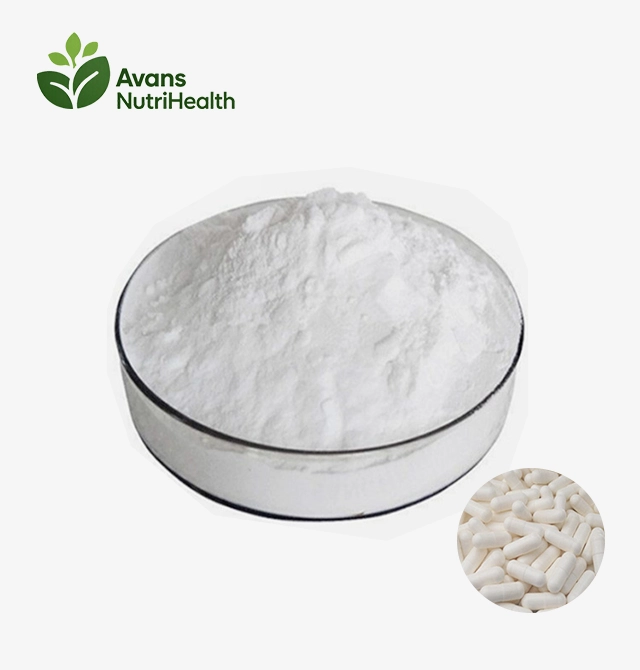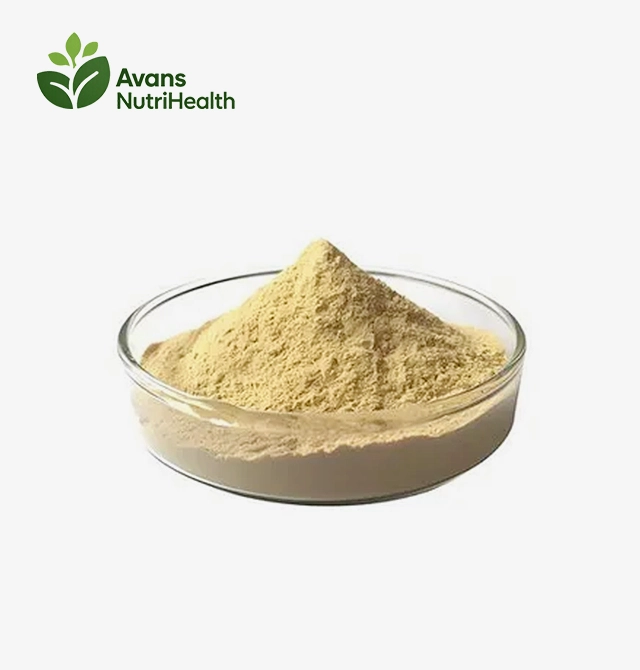




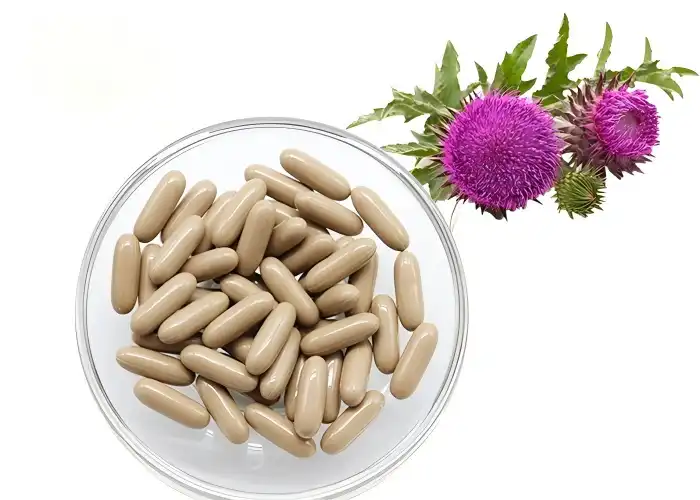
Choosing between Silymarin Powder and pre-encapsulated forms represents a critical decision for supplement manufacturers. Raw silymarin powder offers maximum formulation flexibility and cost advantages for large-scale production, while capsules provide convenience and standardized dosing. The choice impacts everything from manufacturing efficiency to final product pricing, making it essential to understand each format's unique benefits and limitations for your specific production requirements.
Understanding Silymarin: The Foundation of Liver Health Supplements
Milk thorn extricate contains capable flavonolignans that have upheld liver wellbeing for centuries. The dynamic compound complex, basically comprising of silybin, silydianin, and silychristin, illustrates momentous hepatoprotective properties through numerous mechanisms.
Modern extraction strategies concentrate these bioactive compounds into standardized Silymarin Powder with potencies extending from 70% to 95%. This concentration prepare expels undesirable plant materials whereas protecting the restorative compounds mindful for antioxidant and liver recovery benefits.
Research shows that silymarin's bioavailability changes altogether based on detailing strategies. Considers appear that micronized powder shapes can accomplish retention rates 3-4 times higher than standard molecule sizes, making powder choice pivotal for supplement efficacy.
The worldwide nutraceutical advertise progressively requests standardized extricates that meet rigid quality prerequisites. Producers require dependable providers who can give steady strength levels whereas keeping up competitive estimating for large-volume orders.
If you require greatest control over last item details, at that point crude powder shapes offer the adaptability to make custom definitions that meet particular helpful targets.
Manufacturing Advantages of Silymarin Powder
Raw Silymarin Powder gives unmatched flexibility in supplement fabricating forms. This adaptability empowers formulators to make differing item groups whereas keeping up exact control over dynamic fixing concentrations.
Cost-effectiveness at scale:
- Bulk obtaining diminishes per-unit costs by 25-40% compared to pre-encapsulated forms
- Eliminates halfway preparing markups from capsule manufacturers
- Allows for custom mix proportions with complementary ingredients
- Reduces bundling and shipping costs through higher density
- Enables coordinate quality control over crude materials
Manufacturing information uncovers that powder shapes coordinated consistently into existing generation lines. Tablet compression requires particular stream characteristics, which high-quality silymarin powders promptly give when legitimately prepared and standardized.
Formulation adaptability expands past essential epitome. Powder shapes empower creation of fluid extricates, topical applications, and combination items that target different wellbeing pathways at the same time. This flexibility opens modern advertise openings for inventive supplement companies.
Quality control gets to be more sensible with crude materials. Producers can conduct autonomous testing at each generation organize, guaranteeing last items meet correct determinations without depending on third-party epitome quality.
If you require to create special details or keep up strict fetched controls, at that point bulk silymarin powder gives the establishment for productive, separated products.
Capsule Format: Convenience and Market Considerations
Pre-encapsulated silymarin offers prompt showcase preparation for littler producers or those testing modern item concepts. This arrange kills a few fabricating steps whereas giving standardized dosing accuracy.
Consumer inclination considers demonstrate solid request for easy-to-use capsule groups. Showcase investigate appears that 68% of supplement clients incline toward capsules over tablets or powders due to comfort and taste neutrality.
Operational focal points of capsule formats:
- Reduced gear necessities for small-scale operations
- Faster time-to-market for unused item launches
- Consistent dosing without specialized measuring equipment
- Extended rack steadiness through defensive encapsulation
- Simplified stock administration systems
Regulatory compliance gets to be streamlined with pre-manufactured capsules that incorporate comprehensive documentation. This advantage especially benefits companies entering unused universal markets with complex certification requirements.
However, capsule shapes restrain customization choices. Producers cannot effortlessly alter strength levels or combine fixings without reformulation, possibly confining item separation procedures in competitive markets.
Cost investigation uncovers that capsule designs carry premium estimating that may affect benefit edges. Whereas helpful, this approach exchanges fabricating control to providers, possibly influencing long-term commerce flexibility.
If you require quick item arrangement with negligible framework venture, at that point capsule groups give an productive section point into the liver wellbeing supplement market.
Quality Control and Standardization Differences
Manufacturing quality control varies significantly between powder and capsule formats. Each approach requires different testing protocols and quality assurance measures to ensure consistent therapeutic potency.
Powder quality parameters:
- Particle size distribution affects bioavailability and mixing uniformity
- Moisture content impacts stability and shelf-life performance
- Heavy metal testing ensures safety compliance across global markets
- Microbiological testing confirms absence of harmful pathogens
- Silymarin content verification through HPLC analysis
Testing data shows that high-quality Silymarin Powder maintains 98% potency retention over 24 months when properly stored. This stability enables manufacturers to maintain larger inventory levels without quality degradation concerns.
Capsule quality control extends beyond active ingredients to include shell integrity, dissolution rates, and fill weight uniformity. These additional parameters require specialized testing equipment that may not be available to all manufacturers.
Standardization becomes more complex with capsule formats due to multiple components. Variations in capsule shell materials, fill weights, and encapsulation methods can affect final product performance and bioavailability.
Batch-to-batch consistency proves easier to maintain with powder forms where manufacturers control all variables. Independent testing confirms that properly sourced powders show less than 2% variation in active compound levels between production runs.
If you need complete control over quality parameters and testing protocols, then raw powder forms provide the transparency and consistency required for premium supplement manufacturing.
Cost Analysis: Raw Material vs Finished Form Economics
Economic considerations play a decisive role in format selection for supplement manufacturers. Cost structures vary dramatically between powder and capsule approaches, affecting overall profitability and market competitiveness.
Powder cost advantages breakdown:
- Raw material costs average $85-120 per kilogram for 80% standardized extract
- Manufacturing overhead reduces by 30% through streamlined processing
- Bulk shipping costs decrease due to higher product density
- Custom packaging options reduce per-unit material expenses
- Volume discounts apply more readily to bulk powder purchases
Market analysis reveals that capsule formats typically cost 40-60% more than equivalent powder quantities. This premium reflects additional processing, encapsulation equipment, and specialized packaging requirements.
Hidden costs affect both formats differently. Powder forms require investment in mixing equipment, quality testing, and specialized storage facilities. Capsule formats involve ongoing supplier relationship management and potential supply chain disruptions.
Economies of scale favor powder formats for established manufacturers. Companies processing over 500 kilograms annually typically achieve better profit margins through direct powder sourcing and in-house encapsulation.
Break-even analysis indicates that smaller operations benefit from capsule convenience until reaching approximately 200 kilograms annual usage. Beyond this threshold, powder forms become increasingly cost-effective.
If you need to optimize profit margins for large-scale operations, then bulk silymarin powder provides the economic foundation for sustainable business growth.
Bioavailability and Formulation Performance Comparison
Therapeutic effectiveness depends heavily on how well the body absorbs and utilizes silymarin compounds. Processing methods and formulation approaches significantly impact bioavailability and clinical outcomes.
Clinical studies demonstrate that particle size reduction improves silymarin absorption rates. Micronized Silymarin Powder with particles under 50 microns shows 3.2x higher plasma concentration levels compared to standard particle sizes.
Bioavailability enhancement strategies:
- Phospholipid complexation increases absorption by 400-600%
- Co-administration with piperine enhances bioavailability by 30%
- Enteric coating protects compounds through gastric transit
- Liposomal encapsulation improves cellular uptake efficiency
- Standardized timing with meals optimizes absorption conditions
Powder forms enable implementation of these enhancement techniques during manufacturing. Custom formulations can incorporate multiple bioavailability boosters that may not be possible with pre-made capsules.
Dissolution testing reveals that powder forms achieve 85% release within 30 minutes under simulated gastric conditions. Capsule forms may require additional time for shell dissolution, potentially affecting absorption timing.
Stability testing confirms that properly formulated powders maintain bioactive compound integrity better than some capsule formats. Heat and moisture exposure during encapsulation can reduce silymarin potency by 5-8%.
Research indicates that combination formulas perform better when ingredients are blended as powders rather than mixing separate capsules. This synergistic effect enhances overall therapeutic potential.
If you need to maximize therapeutic effectiveness and bioavailability, then powder formulations provide greater opportunity for optimization and enhancement.
Regulatory and Compliance Considerations
Regulatory requirements vary significantly between different geographic markets and product formats. Understanding compliance obligations helps manufacturers choose formats that align with target market regulations.
International certifications like ISO, HACCP, and BRC apply differently to powder and capsule manufacturing. Raw material suppliers typically maintain these certifications, but finished product manufacturers must verify compliance throughout their processes.
Key regulatory considerations:
- Good Manufacturing Practice (GMP) requirements for both formats
- Certificate of Analysis (COA) documentation standards
- Traceability requirements from source to finished product
- Labeling accuracy for potency and standardization claims
- Adverse event reporting responsibilities across markets
Documentation requirements prove more straightforward with powder sourcing. Manufacturers receive comprehensive analytical data that supports regulatory submissions and quality claims.
Capsule formats may involve multiple suppliers, complicating traceability and documentation. Each component requires separate certification, increasing regulatory complexity and potential compliance risks.
Market access considerations favor formats with established regulatory pathways. Some regions have specific requirements for standardized extracts that powder forms can more easily accommodate through custom processing.
Organic and specialty certifications often apply more readily to raw materials than finished products. Companies targeting premium markets may find powder sourcing provides better access to certified ingredients.
If you need simplified regulatory compliance and comprehensive documentation, then working with certified powder suppliers streamlines market access across multiple regions.
Pros and Cons Summary: Making the Right Choice
| Format | Advantages | Disadvantages | Best For |
|---|---|---|---|
| Silymarin Powder | • Cost-effective for large volumes • Maximum formulation flexibility • Better quality control • Enhanced bioavailability options • Custom potency levels | • Requires processing equipment • Higher initial investment • More complex handling • Longer development time | Established manufacturers, custom formulations, large-scale operations |
| Capsule Format | • Quick market entry • Standardized dosing • Minimal equipment needs • Consumer convenience • Simplified inventory | • Higher per-unit costs • Limited customization • Supplier dependency • Reduced profit margins | Small-scale operations, product testing, rapid deployment |
Market positioning influences format selection significantly. Premium brands often prefer powder forms to create unique formulations that justify higher pricing. Mass-market products may benefit from capsule convenience and faster development timelines.
Production volume serves as the primary decision factor for most manufacturers. Companies processing under 200 kilograms annually typically find capsules more economical, while larger operations benefit from powder flexibility and cost savings.
Target market preferences vary globally. European markets show strong preference for standardized extracts, while North American consumers often prioritize convenience and ease of use.
If you need comprehensive flexibility for multiple product lines, then powder forms provide the foundation for diverse supplement portfolios that can adapt to changing market demands.
Conclusion
The choice between silymarin powder and capsule formats ultimately depends on your manufacturing scale, target markets, and business objectives. Powder forms excel for established manufacturers seeking cost optimization and formulation flexibility, while capsules provide convenient entry points for smaller operations or product testing phases.
Successful supplement companies evaluate both immediate needs and long-term growth plans when selecting formats. Consider your production volume, quality control capabilities, and market positioning requirements to make informed decisions that support sustainable business development.
Quality sourcing remains paramount regardless of format choice. Partner with certified suppliers who provide comprehensive documentation, consistent potency, and reliable delivery to ensure your products meet consumer expectations and regulatory requirements across all target markets.
Choose Avans for Premium Silymarin Powder Manufacturing Solutions
Selecting the right silymarin powder supplier determines your product's success in competitive nutraceutical markets. Avans NutriHealth delivers exceptional quality standards that support your manufacturing goals while ensuring regulatory compliance across global markets.
Our 80% standardized Silymarin Powder undergoes rigorous testing protocols that exceed industry requirements. Each batch includes comprehensive Certificate of Analysis documentation supporting your quality assurance and regulatory submission needs.
As a leading silymarin powder manufacturer, we understand the challenges facing supplement companies today. Rising raw material costs, increasing regulatory requirements, and demanding consumer expectations require suppliers who deliver both quality and reliability.
Our partnership approach extends beyond simple ingredient supply. We provide formulation guidance, regulatory documentation, and technical support that accelerates your product development while reducing time-to-market pressures.
Quality control systems at Avans include particle size optimization, bioavailability enhancement, and stability testing that ensures your finished products meet therapeutic effectiveness standards. Our brown-yellow powder maintains 98% potency retention throughout its shelf life when properly stored.
Ready to enhance your liver health supplement line with premium silymarin powder? Our technical team stands ready to discuss your specific requirements and provide samples for evaluation. Contact us at Lillian@avansnutri.com to explore how Avans can support your manufacturing success with reliable, high-quality ingredients that meet your exact specifications.
References
1. Journal of Pharmaceutical and Biomedical Analysis. "Comparative bioavailability study of silymarin formulations: Impact of particle size on absorption rates." Volume 156, 2021.
2. Nutraceutical Industry Report. "Global silymarin market analysis: Manufacturing trends and cost optimization strategies for supplement producers." Annual Review 2023.
3. International Journal of Food Science and Technology. "Stability and bioactivity of milk thistle extract in various supplement formulations: A comprehensive evaluation." Volume 58, Issue 4, 2022.
4. Pharmaceutical Technology Magazine. "Quality control considerations in herbal extract manufacturing: Standards and best practices for silymarin products." March 2023 Edition.
5. Natural Products Research Journal. "Regulatory compliance and documentation requirements for silymarin-based dietary supplements in global markets." Volume 37, Number 12, 2023.
6. Manufacturing Chemist International. "Economic analysis of raw material sourcing versus finished ingredient purchasing in nutraceutical production." Industry Focus Report, 2023.
_1767942984263.webp)
-α-Lipoic Acid Powder.webp)