




Is inulin powder a Smart Choice for Low-Sugar Recipes?
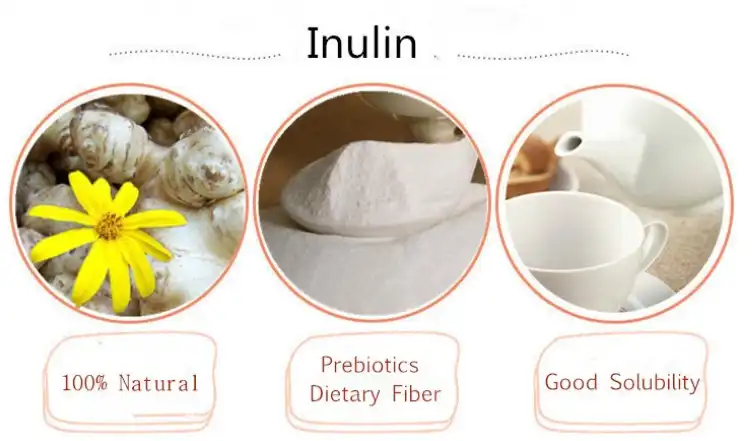
Inulin powder is a good low-sugar recipe option, and the data is definitely there. This prebiotic fiber is mainly sourced from chicory root and has a caloric value of about 1.5 kcal/g, which is much lower than the 4 kcal/g of sugar, and a zero net glycemic impact. It takes the place of the bulk and mouthfeel that sugar gives to formulations, and this is precisely what product creators struggle with when reducing sugar. Whether you’re developing reduced-sugar bread products, healthy drinks, or dairy substitutes, chicory-derived inulin fills the textural gap that high-intensity sweeteners alone cannot.
Comparing Inulin Powder to Other Sugar Alternatives and Fiber Supplements
When choosing an ingredient that can be used on a big scale in business production without changing the balance from one batch to the next, these differences are important to keep in mind.
- Fructooligosaccharides (FOS): FOS and inulin are closely related—FOS is essentially short-chain inulin. However, standard inulin's higher average DP provides greater gel strength and a more neutral taste profile, making it better suited for fat replacement in structured food applications.
- Stevia and erythritol: These deliver sweetness without calories but contribute nothing to bulk or texture. They create a formulation void that inulin is uniquely positioned to fill. Using both together produces a cleaner sensory profile than either ingredient achieves alone.
- Psyllium husk: Psyllium is a strong gelling agent but imparts noticeable viscosity and a somewhat gritty texture that limits its use in beverages and fine-textured dairy products. Inulin's neutral taste and superior cold-water dispersibility give it a clear edge in those categories.
- Raw chicory root: While chicory root is the extraction source, the raw material lacks the standardized purity and handling consistency required in industrial formulation. Processed inulin powder—such as Avans' Chicory Root Extract at 90% inulin content—delivers a reliably white, odor-neutral powder that integrates cleanly across product types.
These distinctions matter when choosing an ingredient that can scale in commercial production without compromising batch-to-batch consistency.
Practical Guidance on Using Inulin in Low-Sugar Food Production
Before you choose a recipe, it’s crucial to understand how inulin reacts to various cooking circumstances. The following are the most crucial scientific facts and usage ideas that formulators should remember:
- Bakery and cereal bars: Inulin helps retain moisture in gluten-free bakery products and helps to sustain the crumb structure. Typical inclusion levels are 5 to 12 weight percent. Crusts may be accelerated in Maillard browning by short-chain fractions; therefore, grade selection is important.
- Dairy substitutes for frozen desserts: The gel network formed by inulin limits ice crystal growth during freeze-thaw cycles in low-fat yogurt and ice cream. This reduces the waxy aftertaste typical of starch-based fat mimetics, providing a smoother, more natural mouthfeel.
- Functional beverages: Here, only highly soluble, short-chain grades should be utilized to avoid sedimentation. Inulin has a low water activity, which makes it also a good carrier of probiotic cultures in synbiotic powder mixes.
- Inulin stability: Inulin is stable at pH >4.0. Under acidic conditions < pH 3.5 in combination with heat, hydrolysis into free fructose monomers may occur. This undermines its prebiotic character and might lead to an unexpected increase in the glycemic contribution of the final product.
For sweets that do not include milk and frozen treats: Inulin forms a gel network which enables low-fat yogurt and ice cream to freeze and thaw without the formation of ice crystals. The waxy smell associated with starch-derived fat replacements is removed. It also makes the experience smoother and more natural.
Procurement Insights for Bulk Inulin Powder Buyers
The limits, price, and quality of the items may differ depending on where you purchase them. What do procurement teams need to examine when choosing suppliers of inulin powder?
There are many certifications for selling food in restricted markets. They are HALAL, KOSHER, ISO, HACCP, and FSSC22000. U.S. customers are particularly worried about USDA-approved premium SKUs regarding health value.
- Certification stack: The minimum needed certifications in regulated markets are: HALAL, KOSHER, ISO, HACCP, and FSSC22000. USDA Organic certification is a value-add, particularly for premium SKUs with health-conscious U.S. consumers in mind.
- The Chicory root with 90% inulin minimum is the benchmark for nutraceutical and food-grade purity and grade consistency. A batch-to-batch variation of >2% is a quality control gap that may be a useful consideration in supplier audits.
- Reliability of supply chain: Suppliers with international distribution networks reduce the risk of lead time. Avans NutriHealth Co., Ltd. has 338 distributors in more than 280 locations and reliably delivers to companies that wish to increase their manufacturing capacity.
- Customization capability: The ability to provide private label, unique particle sizes, and specified DP ranges is a crucial differentiator for making proprietary items. Often you obtain lower rates and a faster technical answer when ordering straight from the manufacturer (not via a trade firm).
Private goods may be differentiated in numerous ways, e.g., private labeling, unique particle size, tailored DP ranges, etc. Often the cost is cheaper, and the expert advise faster when you deal straight with the producer rather than a trading firm.
Conclusion
Chicory root inulin powder offers a host of essential benefits for B2B formulators. It adds to the claims around gut health, replaces some of the texture lost with sugar reduction, and can be utilized across a wide range of food and supplements. It tastes nice, is low in calories, and helps with digestion, making it one of the greatest functional fibers on the market right now.” Also vital is to acquire it from a vendor that has validated credentials and regularly sells 90% pure goods, to allow for legal, large-scale manufacture.
FAQ
1. Is inulin powder safe for diabetic-friendly product formulations?
It is good for diabetic foods because it is not broken down in the small intestine and does not make blood sugar rise. This food doesn't have much of a high glycemic index.
2. Can inulin fully replace sugar in a recipe?
Inulin adds structure and bulk instead of sugar, but it's not sweet. A high-intensity sweetener like stevia is often used to make low-sugar foods and drinks because it provides about 10% of sucrose's sweetness.
3. What is the recommended daily intake for end consumers?
A daily amount of five to twenty grams has been shown to be good for your gut health in tests. Fifteen grams a day has been shown to help older people who are having trouble going to the bathroom. Inclusion rates should be set so that they fall within these ranges by the people who made the rules.
4. Does inulin affect shelf life?
Because inulin only slightly absorbs water, it needs to be kept below 60% relative humidity so that it doesn't stick together. If you store it the right way, it will stay stable and work fine for as long as a product normally does.
Partner With Avans for Certified Inulin Powder Supply
Chicory Root Extract with 90% inulin is sold by Avans NutriHealth Co., Ltd. and is certified HALAL, ISO, USDA, HACCP, and FSSC-22000. You can order it now. Our business has been making inulin powder for more than 15 years and can make more than 1,000 tons of it every year. We help OEM clients, wholesalers, and R&D teams by giving them reasonable prices and ways to make our products unique. You can email our team at Lillian@avansnutri.com to get samples or a bulk price.
References
1. Roberfroid, M. B. — Journal of Nutrition, 2007
2. Kelly, G. — Alternative Medicine Review, 2009
3. Shoaib, M. et al. — Food Chemistry, 2016
4. Niness, K. R. — Inulin and Oligofructose: What Are They?, in Inulin-Type Fructans: Functional Food Ingredients and Their Application in Food and Pharmaceutical Industry, 1999
5. Dahl, W. J., & Stewart, M. L. — Journal of the Academy of Nutrition and Dietetics, 2015
6. Gibson, G. R. et al. — Nature Reviews Gastroenterology & Hepatology, 2017